
How AI Learns Your Driving Style—and When It Gets It Wrong
Anúncios
How AI Learns Your Driving Style!
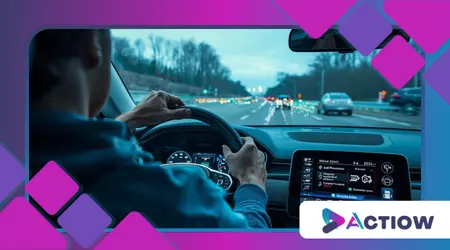
Cars today feel less like machines and more like evolving partners, quietly observing how you brake for that familiar pothole or ease into lanes during rush hour.
Artificial intelligence powers this subtle shift, turning raw sensor data into personalized responses that aim to match your rhythm on the road.
Anúncios
Still, the system occasionally stumbles, reminding us that even advanced learning has limits when facing the unpredictable nature of real-world driving.
Keep reading!
Summary of Topics Covered
- What Exactly Is AI-Powered Driving Assistance? – Unpacking the technology that makes vehicles adapt.
- How Does AI Actually Learn Your Driving Style? – Step-by-step breakdown of data collection and model refinement.
- What Benefits Come from This Personalization? – Exploring gains in safety, efficiency, and daily comfort.
- When and Why Does AI Get Your Driving Style Wrong? – Digging into failure modes and underlying reasons.
- Practical Examples, Key Data, and a Fresh Perspective – Original stories, a current statistic, analogy, and engagement question.
- Frequently Asked Questions – Straight answers to common reader concerns.
What Exactly Is AI-Powered Driving Assistance?
AI-powered driving assistance goes beyond basic cruise control, using machine learning to interpret surroundings and driver inputs in real time.
Sensors like cameras, radar, and ultrasonic detectors feed constant streams of information into neural networks that classify objects, predict trajectories, and decide actions.
For instance, adaptive systems now adjust following distances not just by speed but by recognizing patterns in how you handle merges or traffic slowdowns.
Moreover, this goes hand-in-hand with over-the-air updates that refine performance based on fleet-wide experiences while incorporating your specific habits.
Consequently, features evolve from rigid rules to dynamic suggestions that feel intuitive after repeated use.
However, the foundation remains probabilistic—AI calculates likelihoods rather than certainties, which introduces room for occasional misalignment.
++ Why Software Updates Matter More Than Horsepower in 2026 Vehicles
Additionally, integration across systems creates a unified experience: lane-keeping might soften if it detects your preference for earlier signals, while emergency braking thresholds adjust subtly to avoid false triggers during your typical aggressive city driving.
As a result, the vehicle transitions from tool to tailored companion, though always with human override as the final safeguard.
How Does AI Actually Learn Your Driving Style?
AI starts by passively recording telemetry during every drive: throttle inputs, steering angles, braking force, and even how quickly you resume speed after stops.
Over hundreds of miles, these data points form clusters that machine learning algorithms analyze to identify signatures unique to you.
++ How Regenerative Braking Changed Motorcycle Maintenance Routines
Therefore, instead of applying one-size-fits-all rules, the system builds a behavioral map that predicts your next move with increasing confidence.
Furthermore, reinforcement techniques play a key role—when you override an AI suggestion (say, by accelerating harder than predicted), the model receives a signal to weigh that preference higher next time.
In addition, unsupervised learning uncovers subtle patterns, like your tendency to coast longer before braking or favor wider turns on highways.
Thus, the personalization deepens gradually, often without any explicit input from you.
Nevertheless, this learning relies heavily on diverse conditions; if your routine stays mostly highway commuting, adaptations shine there but may lag in sudden urban chaos.
As such, manufacturers push continuous updates to incorporate broader datasets, ensuring the model doesn’t overfit to narrow habits.
Ultimately, the goal is seamless anticipation that feels like an extension of your instincts rather than an external imposition.
What Benefits Come from This Personalization?
Personalization delivers tangible safety improvements by aligning interventions with your actual risk profile.
For example, if data shows you brake firmly but predictably, the system might delay automatic emergency braking slightly to avoid unnecessary jolts while still catching true threats.
++ Best Urban Cars of 2026 Based on Parking and Visibility
Consequently, false activations drop, building trust and reducing driver fatigue over long trips.
Moreover, efficiency gains emerge naturally—AI-tuned regenerative braking in EVs matches your smooth deceleration style, recapturing more energy without feeling restrictive.
In particular, route planning incorporates learned preferences for scenic detours or fuel-saving paths, often shaving percentages off consumption without conscious effort.
Therefore, both wallet and environment benefit quietly.
Additionally, comfort rises through holistic adjustments: climate zones warm faster on cold mornings if patterns indicate you prefer it, or audio equalizes based on road noise you typically tolerate.
However, the deeper value lies in inclusivity—drivers with mobility limitations gain independence as controls adapt precisely to their capabilities.
As a result, the technology quietly expands accessible mobility for wider groups.
When and Why Does AI Get Your Driving Style Wrong?
Misinterpretations often stem from context gaps—AI excels at patterns but struggles when rare variables collide.
Heavy fog might make radar miss subtle cues you intuitively read, prompting overly conservative slowing that clashes with your confident approach.
Thus, what feels like overreaction to you stems from incomplete sensory input rather than poor learning.
Furthermore, abrupt life changes disrupt the model: after months of calm suburban routes, a sudden shift to aggressive city delivery driving confuses the system, which clings to outdated caution.
In addition, training data biases toward average behaviors can flag culturally normal maneuvers (like close following in dense traffic) as risky.
Therefore, edge cases reveal the limits of generalization.
Nevertheless, software glitches during updates occasionally reset nuances or introduce temporary inconsistencies.
As a result, drivers experience jarring shifts until the model re-accumulates miles.
However, multi-sensor fusion and edge computing advancements steadily narrow these windows, though perfection remains elusive in dynamic environments.
Practical Examples, Key Data, and a Fresh Perspective
Picture João, a São Paulo commuter who zips through gaps with precise, quick lane changes to beat congestion.
His crossover’s AI quickly learns this fluidity, preemptively signaling merges and easing throttle for smoother flows.
Yet during a family vacation on winding coastal roads, sudden downpours reduce visibility—the system, tuned to his usual assertiveness, hesitates on slick curves, forcing manual corrections and highlighting how urban-tuned habits falter in low-grip scenarios.
In contrast, consider Priya, who prefers measured highway cruising with generous following distances.
Her SUV adapts beautifully for relaxed interstate runs, softening accelerations and alerting early to slowdowns.
However, when she lends the car to her son for rush-hour errands, the conservative profile causes delayed merges that draw honks and near-misses.
This illustrates the friction when shared vehicles encounter mismatched learned styles without quick profile switching.
Have you noticed how your car sometimes seems to “forget” your usual confidence right when you need it most?
This question captures that frustrating yet revealing moment of human-machine disconnect.
Think of AI learning your driving style like a longtime co-pilot who has flown countless routes with you: they anticipate turns flawlessly in familiar skies but might grip the controls tighter during unexpected turbulence, showing the value of experience balanced against adaptability.
According to Tesla’s Q3 2025 Vehicle Safety Report, vehicles using Autopilot recorded one crash for every 6.36 million miles driven, compared to the U.S. national average of roughly one crash every 702,000 miles—demonstrating strong performance in monitored conditions while underscoring that personalization still depends heavily on context and driver engagement.
| Aspect of Personalization | How AI Achieves It | Real Benefit | Common Limitation |
|---|---|---|---|
| Acceleration & Throttle Response | Analyzes historical pedal inputs | Smoother, less fatiguing drives | Over-conservative in new weather |
| Following Distance & Braking | Learns preferred gaps from patterns | Fewer false alerts, better flow | Struggles with sudden cut-ins |
| Lane Change Suggestions | Predicts based on your merge style | Proactive, confident assistance | Hesitant in dense, unpredictable traffic |
| Overall Comfort Settings | Ties to route/time habits | Automatic climate/seat tweaks | Requires miles to re-adapt after changes |
How AI Learns Your Driving Style: Frequently Asked Questions
| Question | Answer |
|---|---|
| How long does it take for AI to learn my style accurately? | Most systems show noticeable adaptation after 100–300 miles, with refinement continuing over thousands as conditions vary. |
| Can multiple drivers share the same personalized vehicle? | Yes—many use key fobs, phone proximity, or facial recognition to switch profiles instantly, though full re-learning occurs if habits differ sharply. |
| What happens if AI makes a dangerous mistake? | Drivers retain ultimate control; overrides are immediate, and systems log events for future improvements via updates. |
| Does this personalization share my data externally? | Data stays mostly onboard and anonymized for fleet learning; privacy controls (often GDPR-compliant) let users limit sharing. |
| Will resetting erase everything learned? | Yes, but most allow partial resets or profile saves—re-building typically takes fewer miles the second time around. |
Conclusion
Ultimately, the push-pull between AI’s pattern mastery and human unpredictability defines this technology’s current state.
Proponents argue it prevents countless errors through tireless vigilance, yet skeptics highlight over-trust risks when systems misread intent.
Therefore, the smartest path forward combines vigilant learning with preserved driver agency.
Moreover, as edge cases multiply in diverse global driving cultures, inclusivity demands broader datasets that capture everything from chaotic megacity flows to quiet rural lanes.
In particular, ethical data handling becomes non-negotiable to prevent biased interpretations that disadvantage certain groups.
Additionally, regulatory evolution must keep pace—clear guidelines on explainability and liability ensure accountability without stifling innovation.
Consequently, trust grows when users understand why decisions occur.
Nevertheless, psychological comfort matters enormously; feeling truly “seen” by the vehicle encourages adoption, while repeated mismatches breed frustration.
As such, transparent feedback loops (visual explanations of choices) bridge that gap effectively.
Furthermore, sustainability ties in—personalized efficiency reduces unnecessary acceleration, cutting emissions subtly across millions of trips.
Thus, individual habits scale to planetary impact.
However, cybersecurity cannot be overlooked; vulnerabilities could allow malicious style overrides with catastrophic results.
Therefore, layered protections remain essential.
In addition, integration with smart cities promises synchronization—AI could negotiate traffic lights based on collective styles, easing congestion holistically.
Moreover, accessibility expands dramatically for aging populations or those with impairments, as controls mold precisely to needs.
Consequently, mobility equity advances quietly.
Nevertheless, cost barriers persist; premium personalization often hides behind subscriptions, limiting reach.
As such, equitable rollout requires thoughtful pricing.
Furthermore, ongoing education helps drivers calibrate expectations—no system replaces judgment entirely.
Therefore, hybrid awareness maximizes benefits.
In fact, this balanced view positions AI not as replacement but as amplifier of human capability on the road.
How AI Learns Your Driving Style: Relevant Links
