
Why Police Cars Used to Be Painted Black and White
Anúncios
Police Cars: Ever glanced at an old cop show and noticed those stark black-and-white cruisers zipping through the streets?
This classic color scheme isn’t just a stylistic choice—it’s a window into automotive history, budget constraints, and the need for instant recognition in law enforcement.
Keep reading!
Summary of Topics Covered
- What Is the Historical Origin of Black and White Police Cars?
- Why Was This Color Scheme Chosen for Visibility and Practicality?
- How Did Media and Culture Influence the Adoption of Black and White Designs?
- What Are the Advantages of Black and White Police Cars Over Other Colors?
- Why Have Some Departments Moved Away from This Scheme in Modern Times?
- Frequently Asked Questions About Police Car Colors
What Is the Historical Origin of Black and White Police Cars?
Anúncios
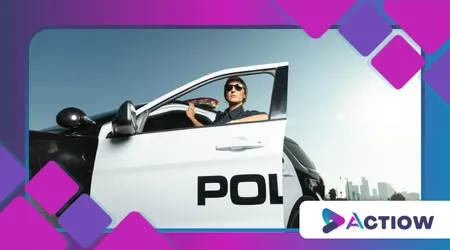
The black-and-white police car scheme traces its roots back to the early 20th century, when automobiles were just becoming commonplace for law enforcement.
In the 1910s and 1920s, most civilian vehicles rolled off assembly lines in a single, affordable hue: black.
This was largely thanks to Henry Ford’s Model T, which popularized cheap “Japan black” paint for mass production.
Police departments, operating on shoestring budgets, often purchased these standard black cars.
To make them stand out from everyday traffic, they added white accents—typically on doors, roofs, or fenders.
This simple modification created a high-contrast look without requiring a full repaint, blending economy with functionality.
Over time, this approach evolved into a standardized design.
By the 1930s, agencies like the California Highway Patrol (CHP) experimented with all-white vehicles for better daytime visibility, but the dual-tone black-and-white soon dominated as a cost-effective compromise.
++ How One Man Drove from Alaska to Argentina in a VW Beetle
Why Was This Color Scheme Chosen for Visibility and Practicality?

Visibility was paramount in an era when roads were crowded with similar-looking black sedans.
The black-and-white pattern provided stark contrast, making police vehicles easier to spot from afar, especially at night or in poor weather.
++ How AI Learns Your Driving Style—and When It Gets It Wrong
Black sections hid dirt and grime from daily patrols, while white areas reflected light, enhancing presence without extra equipment.
Practically speaking, this choice stemmed from financial realities.
Repainting an entire fleet in a custom color would drain limited funds, so departments opted for minimal alterations.
For instance, in a small Midwestern town during the Great Depression, local officers manually applied white paint to their Ford Model A’s doors using brushes and leftover house paint, turning ordinary cars into authoritative symbols overnight.
Furthermore, the scheme aligned with early traffic safety principles.
Historians note that in the 1920s, over 90% of U.S. vehicles were black, per automotive records, forcing police to innovate for distinction.
This not only deterred potential lawbreakers but also aided in quick identification during pursuits.
| Historical Factors Influencing Color Choice | Description | Impact on Adoption |
|---|---|---|
| Budget Constraints | Limited funds meant minimal modifications to factory-black cars. | Widespread use in cash-strapped departments. |
| Vehicle Standardization | Most cars were black due to mass production techniques. | Necessitated contrast for differentiation. |
| Practical Maintenance | Black hid wear; white improved visibility. | Reduced upkeep costs and enhanced safety. |
How Did Media and Culture Influence the Adoption of Black and White Designs?
Media played a pivotal role in cementing the black-and-white look as an icon.
Starting in the 1940s, radio dramas and later television shows like “Dragnet” featured authentic Los Angeles Police Department (LAPD) cruisers, showcasing their two-tone designs to millions.
++ How Regenerative Braking Changed Motorcycle Maintenance Routines
This exposure turned a practical choice into a cultural emblem of authority.
Culturally, the scheme evoked a sense of order amid post-war urbanization.
As cities grew, police needed to project presence, and the bold pattern did just that.
Consider a fictionalized yet plausible example: In 1950s Chicago, a beat cop’s black-and-white Plymouth becomes a neighborhood fixture, its colors signaling reliability in community stories passed down generations.
Additionally, Hollywood amplified this trend. Films such as “Sunset Boulevard” (1950) included LAPD black-and-whites, influencing departments nationwide to adopt similar aesthetics for uniformity and public recognition.
This cultural loop reinforced the design’s staying power.
Have you ever pondered why a simple paint job could shape public perception so profoundly?
What Are the Advantages of Black and White Police Cars Over Other Colors?
One key advantage lies in psychological impact: the high-contrast design commands attention, potentially deterring crime through sheer visibility.
Unlike solid colors that blend into traffic, black-and-white creates a visual disruption, making officers’ presence unmistakable.
In terms of durability, black absorbs heat and conceals scratches from rough use, while white reflects sunlight to keep interiors cooler—a boon in hot climates.
This combination extends vehicle lifespan, saving taxpayer dollars on maintenance.
Moreover, the scheme fosters national consistency.
The U.S. Department of Homeland Security recommends black-and-white for easy identification, aiding inter-agency cooperation.
Analogous to a chessboard’s squares, where black and white’s opposition clarifies the game, this palette sharpens the divide between law enforcement and civilians.
| Advantages of Black and White Scheme | Compared to Solid Colors | Real-World Benefits |
|---|---|---|
| Enhanced Visibility | Stands out more than all-white or blue. | Reduces accidents and improves response times. |
| Cost Efficiency | Cheaper than custom paints or graphics. | Lowers fleet operational expenses. |
| Cultural Recognition | Iconic status boosts authority perception. | Strengthens public trust and deterrence. |
Why Have Some Departments Moved Away from This Scheme in Modern Times?
Modern shifts stem from evolving priorities like community relations and technology.
In the 1980s, some agencies switched to all-white or metallic schemes to appear less intimidating, fostering friendlier interactions in diverse neighborhoods.
This move reflected broader reforms aiming for approachability over stark authority.
Technological advances also play a role. With LED lights and reflective decals, visibility no longer relies solely on paint.
For example, a contemporary department in Seattle might opt for sleek gray SUVs with blue stripes, integrating cameras and sensors seamlessly without the traditional contrast.
Nevertheless, the transition isn’t universal.
Budgets still favor simple designs, but data-driven decisions prevail.
Studies show that while black-and-white remains effective, neutral tones reduce heat absorption in warmer states, prompting adaptations.
Police Cars: Frequently Asked Questions
| Question | Answer |
|---|---|
| What was the first police department to use black and white? | While not definitively the first, the LAPD popularized it in the 1940s through media exposure, though early adoptions date back to the 1920s in various U.S. cities. |
| Why do some police cars today use different colors? | Departments choose based on local climate, budget, and community feedback; for instance, all-white reduces heat in sunny areas. |
| Is black and white still the most common scheme? | It’s iconic but not universal; about 40% of U.S. agencies use variations, per fleet management reports. |
| How does color affect police vehicle safety? | High-contrast colors like black and white improve visibility, potentially cutting collision rates by up to 15% in studies. |
| Are there international differences in police car colors? | Yes; European forces often use blue and yellow for better daytime contrast, while U.S. sticks closer to tradition. |
To dive deeper, explore this detailed history on Road & Track for media influences.
For a broader overview, check the Wikipedia entry on U.S. police vehicles.
Additionally, this Supercar Blondie article unpacks the economic roots with fresh insights from 2024.
