
How Harley-Davidson Survived More Than a Century of Competition
Anúncios
Harley-Davidson has shaped global motorcycle culture for over a century, transforming two-wheeled transport into a symbol of personal freedom.
While dozens of American motorcycle manufacturers vanished during the twentieth century, this Milwaukee-born brand managed to endure, evolve, and ultimately dominate.
The story of this survival is not merely about mechanical engineering, but rather a masterclass in emotional branding, community building, and resilience.
Anúncios
Navigating through two World Wars, the Great Depression, intense foreign competition, and multiple economic recessions, the company turned metal and oil into a global lifestyle.
To understand how this brand survived when others failed, we must analyze its history through specific strategic lenses.
This article explores how the company navigated economic crises, built an unmatched community, adapted its engineering, and preserved its cultural legacy.
What Lies Ahead
- The Survival Blueprint: How economic crises were conquered.
- The Cult of the V-Twin: The psychology behind community building.
- Engineering vs. Tradition: Balancing modern tech with classic heritage.
- Historical Data: A direct breakdown of key milestones.
- Common Questions: Answers to burning enthusiast queries.
Why Did Economic Storms Fail to Kill This Legend?
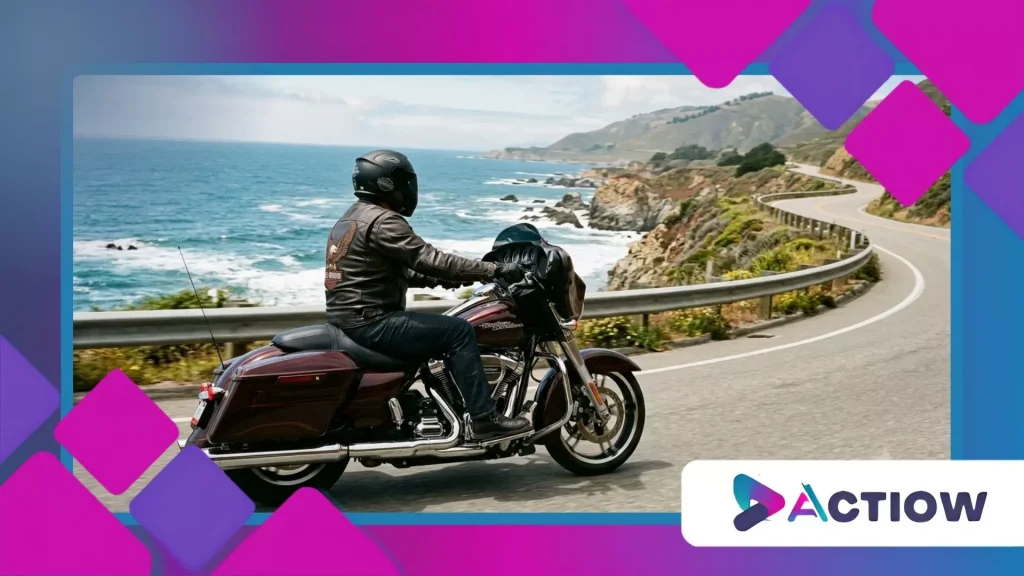
How does a company survive when 99% of its early competitors go completely bankrupt?
During the Great Depression, the American motorcycle landscape was decimated, leaving only two major players standing: Indian and our featured Milwaukee brand.
The company’s survival strategy relied on drastic diversification, manufacturing industrial engines, and securing crucial military contracts that kept assembly lines moving when consumer spending collapsed.
By pivoting to support Allied forces during World War II, they produced over 80,000 WLA models, ensuring immediate post-war relevance and cash flow.
How did the Great Depression reshape the company?
The economic collapse of 1929 forced a brutal rationalization of the product lineup and a heavy focus on industrial utility.
Management realized that luxury toys would not sell, leading them to market the three-wheeled Servi-Car, which became a staple for police departments and mobile mechanics nationwide.
This utility-focused pivot kept the factories humming, proving that adaptability is far more important than rigid adherence to a single market segment.
By serving municipal needs, the brand kept its workforce employed and its tooling active while competitors starved.
++ Why two stroke cars vanished despite their simple engineering
What role did military contracts play in survival?
During World War II, civilian production halted entirely to feed the war effort, turning the factory into an arsenal of democracy.
The rugged WLA model became legendary on the battlefields of Europe, introducing thousands of young soldiers to the thrill and reliability of heavy American cruisers.
When these soldiers returned home, they sought that same sense of camaraderie and freedom on domestic highways, fueling the post-war biker boom.
This massive demographic shift effectively created the modern cruiser market overnight, born directly from wartime necessity.
Also read: Why the Toyota Supra Became a Legend Again in 2026
How did the AMF era almost destroy the brand?
In 1969, American Machine and Foundry (AMF) acquired the struggling manufacturer, streamlining production but severely damaging build quality.
This era represents a dark chapter where leaky oil tanks and electrical failures threatened to permanently destroy the brand’s reputation for rugged reliability.
Relief came in 1981 when a group of thirteen executives, including Willie G. Davidson, staged a historic leveraged buyout to reclaim the company.
They restored quality control, embraced the brand’s heritage, and proved that passionate riders, not corporate conglomerates, should run a motorcycle company.
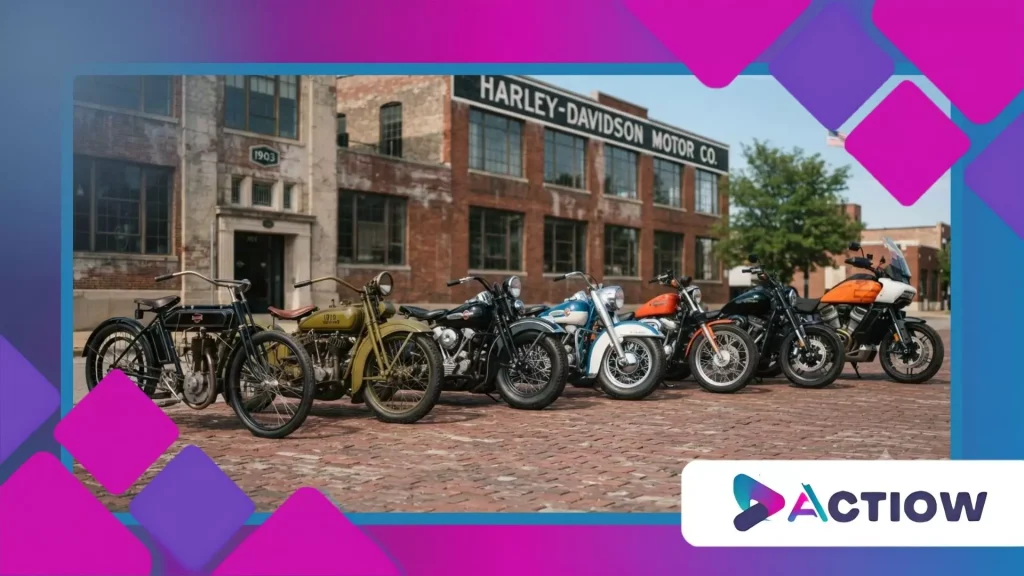
How Did a Cult Brand Community Become a Corporate Shield?
The absolute bedrock of Harley-Davidson is its ability to turn customers into active brand evangelists. Buying one of these motorcycles is not just a retail transaction; it is an initiation into a massive, lifelong family.
No other automotive brand has its logo tattooed on its customers’ skin so frequently, illustrating an unmatched emotional connection.
This tribal loyalty acts as an economic shield, protecting the company from fluctuating market trends and temporary financial downturns.
Read more: The Hidden History of Women in Early Motorcycle Racing
What is the power of the Harley Owners Group?
Established in 1983, the Harley Owners Group (H.O.G.) turned casual riders into an organized, hyper-loyal community network.
H.O.G. chapters allowed the company to bypass traditional advertising, engaging consumers through rallies, charity rides, and shared weekend adventures.
By selling an identity rather than just horsepower, the brand established a recurring revenue stream of parts, accessories, and apparel.
This brilliant ecosystem ensures that a rider’s relationship with the dealership only begins when they purchase the actual motorcycle.
How does the brand sell a lifestyle instead of steel?
The roar of a classic V-Twin engine is not just noise; it is a carefully protected acoustic signature of freedom and rebellion.
Marketing campaigns focus on the open road, self-reliance, and escape from the mundane routines of modern corporate life.
This emotional appeal acts like a time-tested recipe, transforming a heavy, premium-priced machine into an essential tool for personal transformation.
Customers do not buy these bikes to go fast; they buy them to feel something deeply visceral.
Why does the custom culture matter so much?
From the very beginning, owners have stripped down and customized their cruisers, creating the iconic bobber and chopper movements.
The factory embraced this trend, designing motorcycles as blank canvases that practically demand personalization from their new owners.
Selling thousands of catalog accessories allows each rider to express their unique identity while driving massive profit margins for dealerships.
This customization culture turns every garage into a collaborative space between the manufacturer and the owner.
How Does Modern Engineering Coexist with Century-Old Tradition?
Maintaining a classic aesthetic while meeting strict modern emissions and performance standards is a delicate tightrope walk.
To survive in 2026, the brand must continuously innovate without alienating its traditional, fiercely protective core customer base.
This means hidden technological advancements, like advanced rider aids and liquid-cooled cylinder heads, must be seamlessly integrated into classic frame lines.
The challenge is making a highly sophisticated, modern machine look and feel like an uncomplicated vintage cruiser.
How did the Evolution engine save the company?
Introduced in 1984, the Evolution engine, or “Evo,” was a critical mechanical breakthrough that cured the reliability issues of the AMF era.
Built with aluminum heads and cylinders, it ran cooler, stopped leaking oil, and could be ridden hard for hundreds of thousands of miles.
The Evo engine restored consumer confidence, showing the world that American cruisers could compete with Japanese reliability without losing their soul.
This single engine design revitalized the brand and laid the physical foundation for the massive sales boom of the 1990s.
Why was the V-Rod a necessary cultural shock?
Developed in collaboration with Porsche, the 2001 V-Rod featured a liquid-cooled, overhead-cam Revolution engine that shocked traditionalists to their core.
It was a high-revving, modern performance cruiser designed to attract younger, sport-oriented riders who valued speed over vintage nostalgia.
While initially controversial, the V-Rod proved that the engineering team could build world-class, high-performance engines when freed from historical constraints.
It paved the way for future liquid-cooled platforms, demonstrating a willingness to break rules to attract new demographics.
What does the future look like with electrification?
The release of the LiveWire brand showed that Milwaukee is not afraid of the impending electric vehicle revolution.
Moving electric bikes under a distinct sub-brand allows the company to court tech-savvy urban commuters while keeping the core lineup focused on traditional V-Twins.
This dual-track strategy ensures survival in an environmentally conscious future without diluting the heritage that built the brand.
It is a bold acknowledgment that while the rumble of gas engines remains vital, quiet electric torque is inevitable.
Mapping the Milestones of Survival
The historical data demonstrates how strategic adaptations during moments of crisis allowed the brand to survive over the decades. The following table highlights the critical eras, challenges, and solutions that defined this journey.
| Era / Year | Primary Challenge Faced | Strategic Survival Move | Long-Term Brand Impact |
| 1929–1933 | Great Depression & market collapse | Developed the Servi-Car & industrial engines | Kept factories open and preserved skilled labor |
| 1941–1945 | World War II production strain | Manufactured 80,000+ rugged WLA military models | Created a generation of loyal post-war riders |
| 1969–1981 | AMF ownership & severe quality decline | Historic executive-led buyout in 1981 | Restored quality, pride, and owner-led direction |
| 1983–1984 | Intense Japanese imports & bankruptcy risk | Launched H.O.G. & the reliable Evolution engine | Rebuilt customer trust and created lifestyle branding |
| 2019–2026 | Aging demographics & green emissions | Spun off LiveWire EV & updated liquid-cooled lines | Secured relevance with younger, tech-focused riders |
The Open Road Ahead
Ultimately, the survival of Harley-Davidson is a testament to the power of authentic brand identity over mere product utility.
By transforming transportation into a deeply personal lifestyle, the brand outlasted recessions, quality crises, and global competitive shifts.
They did not just build motorcycles; they engineered a community that refused to let the brand die.
As the industry moves toward electrification and automated transport, the appeal of the raw, open road remains a powerful human desire.
Will the brand continue to adapt its iconic formula for the next generation of riders? Share your thoughts, your road trip memories, or your favorite classic models in the comments below!
Frequently Asked Questions
Why is the brand’s engine sound so distinct?
The iconic “potato-potato” sound is a direct result of the 45-degree V-Twin engine design, where both pistons connect to a single pin on the crankshaft.
This unique arrangement causes uneven firing intervals, creating a rhythmic, syncopated rumble that enthusiasts love.
How did the company fight off Japanese competition in the 1980s?
In 1983, the company successfully petitioned the U.S. government to introduce temporary tariffs on Japanese motorcycles with engine displacements over 700cc.
This crucial breathing room allowed the brand to launch the reliable Evolution engine and restructure its manufacturing processes.
Is the company still making motorcycles in the USA?
Yes, the company maintains major manufacturing and assembly facilities in Pennsylvania and Wisconsin.
While some components are sourced globally and some assembly occurs internationally for foreign markets, the core heavyweight cruisers destined for North American roads are built in York, Pennsylvania.