
ADAS Calibration Needs After Repairs: Maintenance Essentials
Anúncios
You bring your car in for a windshield replacement or a fender repair, pay the bill, drive away feeling sorted—and then the lane-keep assist starts pulling you toward the shoulder like it has a personal grudge.
That’s the moment ADAS calibration needs after repairs stop being abstract paperwork and become very real.
These systems aren’t optional extras anymore; they’re the difference between a quiet commute and a near-miss you’ll replay in your head for weeks.
Anúncios
Keep reading and learn more now in our article!
Summary of Topics Covered
- What Exactly Are ADAS Calibration Needs After Repairs?
- How Does the Recalibration Actually Happen?
- Why Skipping It Is a Gamble You Probably Don’t Want to Take
- Which Repairs Almost Always Demand It?
- What Does It Really Cost—and What Does It Save?
- Frequently Asked Questions
What Exactly Are ADAS Calibration Needs After Repairs?
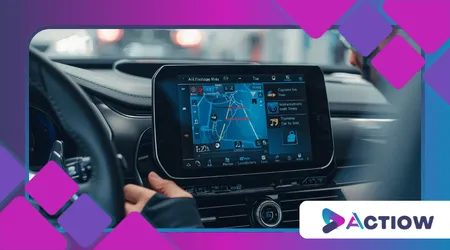
ADAS calibration needs after repairs exist because every camera, radar, and lidar in your car is mounted with tolerances measured in fractions of a degree.
Swap a windshield, straighten a bumper, even swap out a strut, and that alignment drifts.
The algorithms—trained on perfect factory geometry—suddenly see the world slightly tilted, slightly shifted, slightly wrong.
Since roughly 2016–2017, when forward-collision warning and automatic emergency braking became mandatory on most new vehicles sold in the U.S. and Europe, service manuals started carrying the same stern warning: recalibrate after structural or glass work.
Manufacturers aren’t being fussy; they’re covering themselves legally and trying to keep drivers alive.
There’s something quietly unsettling about it. We hand over trust to these black boxes so we can scroll less and drive more safely—yet one hurried repair can quietly corrupt the whole system.
Most owners never feel the difference until the moment they do.
++ Maintaining Cars with Over-the-Air Updates: What You Still Need to Check
How Does the Recalibration Actually Happen?
It starts in the shop with a scan tool pulling codes and live data.
Static calibration is the controlled part: car parked dead level, targets (big checkerboards, triangles, circles) positioned at exact distances and heights according to the OEM procedure.
Cameras stare, software thinks, parameters update. Takes an hour or two if everything cooperates.
Dynamic calibration is the road part. You drive a pre-set route—usually 20–60 miles—following specific instructions: steady speeds, lane changes, gentle curves.
The system watches real-world lines, traffic signs, vehicles ahead, and slowly corrects itself using wheel-speed sensors and GPS as reference points.
++ Entry-Level EVs Reviewed for First-Time Buyers
Some brands (Subaru, Honda) lean heavily dynamic; others (BMW, Mercedes) mix both.
The tools matter. Generic scanners often can’t talk the right language to a VW or a Tesla.
Certified shops invest in brand-specific platforms—think Bosch DAS, Autel MaxiSys, or dealer-level subscriptions. Skip that step and you’re basically guessing.
++ The Hidden Tech Behind Modern Adaptive Suspension
Why Skipping It Is a Gamble You Probably Don’t Want to Take
An uncalibrated forward camera might miss a stopped vehicle at dusk. A radar that’s off by a hair can trigger phantom braking on the highway or fail to see a motorcycle filtering up the inside.
NHTSA crash data from recent years shows post-repair ADAS malfunctions contributing to a measurable uptick in secondary collisions—exact numbers vary by study, but the pattern is consistent enough to make insurers nervous.
There’s also the human factor. When the car nags you with false alerts (“BRAKE!” when nothing’s there), you start ignoring it. The boy-who-cried-wolf effect is real and dangerous.
Argumentatively, as we edge closer to hands-off driving, treating calibration as optional is like removing guardrails from a mountain road because “it looks fine.”
Think of the ADAS suite as a pair of prescription glasses. After a fall the lenses are crooked—you can still see shapes, but edges blur, distances warp.
You wouldn’t keep driving like that for long.
Wouldn’t it be wild if the feature designed to save you from mistakes ended up creating new ones just because someone didn’t want to spend another hour in the bay?
Which Repairs Almost Always Demand It?
Windshield replacement is enemy number one. The camera cluster sits right behind the glass; even a new windshield with perfect adhesive can shift mounting points enough to throw aiming off.
Front-end collisions come next—bumpers, grilles, crash bars. Any structural pull on a frame bench usually requires it.
Less obvious triggers: suspension work that changes ride height (new springs, struts, air bags), wheel alignments (especially thrust-angle corrections), side-mirror replacements with blind-spot modules, even battery disconnects on some brands that reset adaptive values.
Quick cheat sheet:
| Repair Type | ADAS Components Affected | Typical Calibration Needed |
|---|---|---|
| Windshield replacement | Forward camera, rain sensor | Static |
| Front bumper / radar housing | Millimeter-wave radar, night vision | Dynamic or both |
| Suspension / alignment | Lane-keep camera angles, height sensors | Dynamic |
| Side mirror or door skin | Blind-spot radar | Static + dynamic |
| Rear-end collision | Rear cross-traffic, backup camera | Usually dynamic |
What Does It Really Cost—and What Does It Save?
Static-only jobs usually land between $150 and $350 depending on the shop and region. Full static + dynamic can run $400–$700 if multiple sensors are involved.
Dealer service is often pricier but carries OEM software updates; independent specialists with the right gear can match or beat that price.
Insurance usually picks up the tab after a covered collision—most comprehensive and collision policies include it under “related repairs.” Out-of-pocket hurts more on routine stuff like glass or alignment.
Real stories make the math clearer. Sofia in Austin skipped calibration after a rock cracked her windshield in 2024.
Two months later the adaptive cruise started slamming the brakes for shadows on overpasses—three near-misses before she paid $620 to fix it properly.
Contrast with Daniel in Denver: after a low-speed parking-lot tap he insisted on full recal.
His Pilot’s blind-spot monitor caught a delivery van drifting lanes on I-25 the next week. That $380 felt cheap.
The long game favors doing it right. Properly calibrated systems last longer, trigger fewer nuisance complaints, and—most importantly—actually work when they’re supposed to.
Frequently Asked Questions
Questions that keep coming up when owners start digging:
| Question | Straight answer |
|---|---|
| How do I know if my car needs it after a repair? | Dashboard warnings, erratic behavior (phantom braking, lane ping-pong), or the shop should flag it during scan. |
| Can I skip it if the car “feels fine”? | Technically yes. Legally and morally no. You’re gambling with partial functionality. |
| Does insurance always cover calibration? | Post-collision: usually. Non-collision (glass claim, alignment): depends on policy. Ask your adjuster. |
| How long does the process take? | Static: 1–2 hours in shop. Dynamic: 30–90 minutes of driving + setup. |
| What if my car is older (pre-2018)? | Many don’t have full ADAS or require calibration. Check your owner’s manual or VIN-specific service info. |
Want to read more straight talk? Check Auto Glass 360’s practical guide, RevvHQ’s no-nonsense breakdown, and TFLcar’s expert explainer for 2026.