
كيفية إطالة عمر محركك المزود بشاحن توربيني
إعلانات
A turbocharged engine requires specialized maintenance strategies to preserve its high-performance capabilities and ensure long-term mechanical reliability across its operational lifespan.
As downsized forced-induction powerplants become the definitive standard for global vehicle manufacturing in 2026, understanding proper mechanical care is absolutely vital for every modern driver.
Failing to respect the extreme thermal environments created inside these compact, highly pressured mechanical systems will inevitably lead to catastrophic component degradation.
إعلانات
By implementing disciplined daily driving habits and choosing high-quality fluids, you can actively shield your vehicle from expensive, premature repair facility visits.
Essential Maintenance Summary
- Fluid Discipline: Frequent oil changes using exact factory-spec synthetic oils prevent harmful carbon buildup within volatile turbo bearing housings.
- إدارة الحرارة: Allowing proper warm-up cycles and implementing brief cool-down periods preserves the integrity of internal turbine seals.
- Component Protection: Consistent air filter replacements protect high-speed compressor wheels from catastrophic debris impact damage.
Why Does Oil Selection Dictate Turbo Longevity?
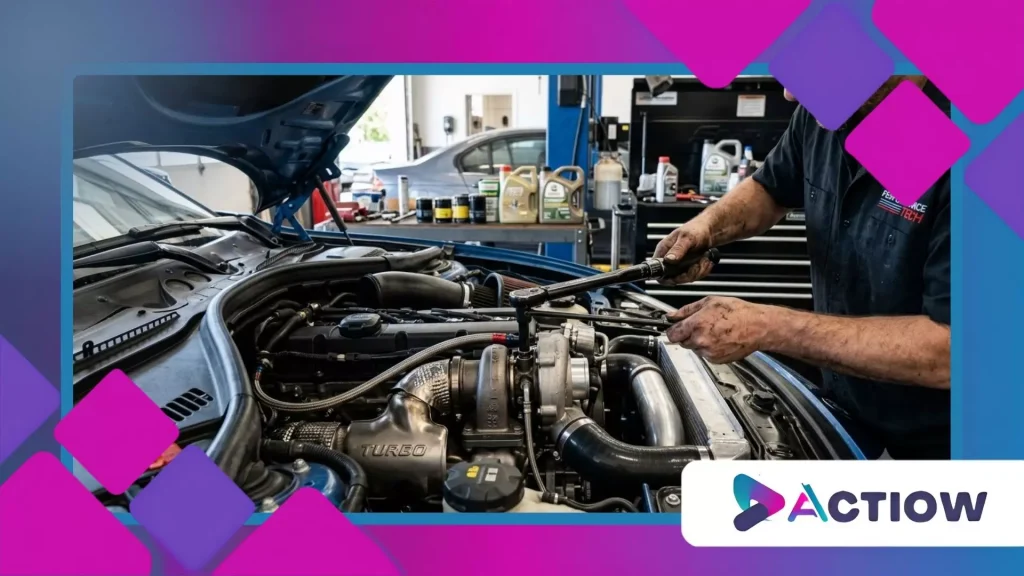
How Does Extreme Thermal Stress Degrade Engine Oil?
The spinning turbine shaft inside a modern turbocharged engine routinely encounters scorching exhaust gases that easily surpass 1,000 degrees Fahrenheit.
This intense thermal environment acts like a high-powered furnace, actively trying to cook the passing engine oil into hard, crusty carbon deposits.
Cheap conventional lubricants simply cannot withstand this punishment, breaking down rapidly into a sluggish sludge that chokes vital internal oil feed lines.
When these narrow oil passages become blocked, the turbine shaft loses its protective pressurized cushion of fluid while spinning at 200,000 RPM.
This instantaneous lack of lubrication creates destructive metal-on-metal friction, destroying the precision bearings and causing total component failure within seconds.
Utilizing premium full synthetic oil is your absolute best defense against this brutal heat-induced mechanical breakdown.
What Is the Danger of Carbon Coking After Shutdown?
Engineers use the specific technical term “coking” to describe the destructive process of baked oil hardening inside a hot turbine housing.
This phenomenon typically occurs when a driver drives aggressively on the highway and immediately shuts off the ignition upon parking.
The sudden termination of the oil pump forces stagnant fluid to sit trapped inside the blistering hot center bearing cartridge.
Think of it like leaving a frying pan full of butter sitting directly over a hot stove flame after turning off the burner.
That trapped oil chars instantly, leaving behind abrasive carbon particles that scratch the precision shaft assemblies during your next morning start.
Allowing the vehicle to idle quietly for a minute before shutdown keeps fluid circulating, gently lowering the core temperature.
++ كيف تحمي إزالة تلوث الطلاء قيمة إعادة بيع السيارة؟
Why Must You Adhere to Certified Factory Specifications?
Modern automotive manufacturers publish strict oil certifications, such as Dexos1 Gen 3 or VW 508.00, tailored specifically to combat low-speed pre-ignition.
These advanced chemical formulations contain specialized detergent additives engineered to keep high-pressure piston rings clean while minimizing toxic deposits inside the turbocharger.
Deviating from these exact guidelines to save a few dollars at the auto parts store is a dangerous gamble.
A comprehensive study by the Society of Automotive Engineers (SAE) confirmed that substandard lubricants accelerate high-load component wear by over 40 percent.
This statistical reality highlights why precise oil chemistry is a foundational requirement for maintaining forced-induction reliability.
Protect your investment by verifying the exact oil specification code printed directly inside your owner’s manual.
How Do Daily Driving Habits Prevent Turbo Failures?
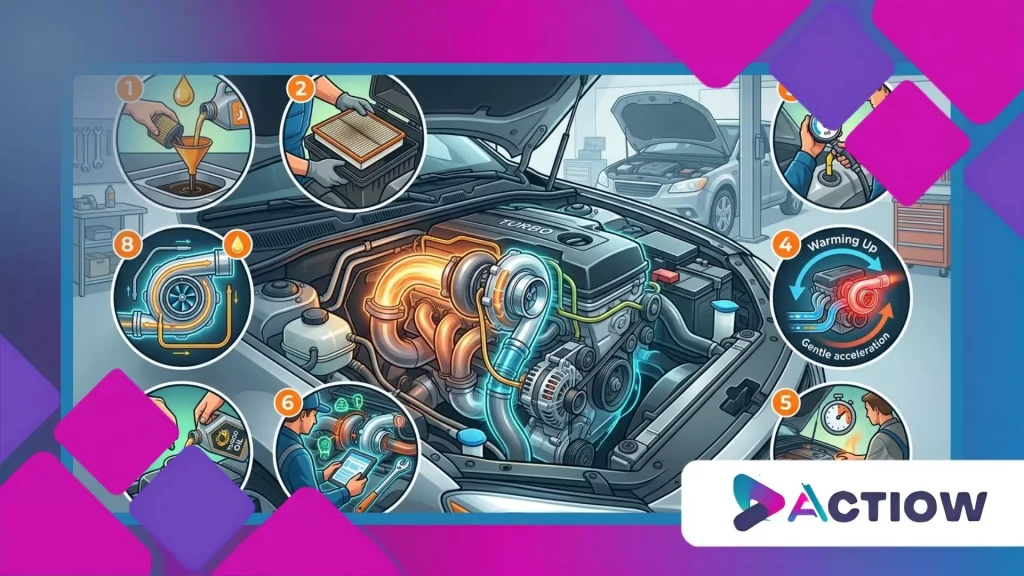
Why Is Cold Start Acceleration Highly Destructive?
Launching your vehicle down the street immediately after a freezing cold start causes immense structural stress to internal engine components.
Thick, cold engine oil moves slowly, taking several critical seconds to travel from the bottom pan up to the turbo bearings.
Pinning the throttle instantly forces the turbocharger to build massive boost pressure before receiving a stable, fully pressurized stream of lubricant.
Imagine trying to run an Olympic sprint the exact second you open your eyes in the morning without stretching your muscles.
You must give the vehicle at least thirty seconds to stabilize its idle before shifting into gear and driving away smoothly.
This brief pause allows vital oil pressure to coat every spinning surface, ensuring complete mechanical safety before boost demands increase.
اقرأ أيضاً: عشر علامات تدل على احتمال تعطل بطارية سيارتك قبل حلول فصل الشتاء
How Does a Gentle Cool-Down Period Protect Bearings?
Implementing a brief cool-down period after completing a long, high-speed highway commute is an incredibly effective habit for extending engine life.
Driving calmly for the final mile of your journey allows the constant rush of oncoming atmospheric air to cool the engine bay.
This proactive thermal management prevents the cooling system from experiencing heat-soak issues once you park the car and turn it off.
If you cannot drive gently before parking, simply let the vehicle idle in your driveway for roughly sixty seconds before turning off the key.
This simple practice allows the engine coolant and oil pumps to pull destructive heat away from the delicate turbine shaft assemblies.
Why risk baking your expensive internal components when a minor drop of patience can completely eliminate the hazard?
اقرأ المزيد: كيف تقلل أفلام حماية الزجاج الأمامي من أضرار الزجاج المكلفة
What Is the Correct Way to Use Boost Safely?
Operating a modern turbocharged engine efficiently requires understanding how to manage throttle inputs relative to current engine RPM levels.
Flooring the accelerator pedal while the engine is lugging at low RPM puts immense load on the pistons and connecting rods.
This unsafe operating condition can trigger destructive pre-ignition chips that can destroy an engine block in a fraction of a second.
Instead, downshift to a lower gear to raise engine RPM smoothly before demanding maximum acceleration from your power plant.
This mechanical adjustment matches the turbocharger’s operating efficiency curve, delivering crisp acceleration without subjecting the internal components to excessive structural strain.
Smart driving habits allow you to enjoy brisk performance while actively preserving the mechanical integrity of your vehicle.
Which Additional Components Require Consistent Inspection?
Why Do Restricted Air Filters Corrode Compressor Blades?
A clean air filter acts as the frontline shield protecting your high-speed compressor wheel from microscopic road debris and abrasive dust.
If the air filter becomes clogged with dirt, the vacuum pressure inside the intake track increases dramatically during hard acceleration.
This intense suction can pull microscopic dirt particles straight through the filtering material, blasting them directly into the spinning aluminum blades.
Because the compressor wheel spins at incredible supersonic speeds, even tiny dust particles act like a high-powered sandblaster upon impact.
Over time, this constant abrasion erodes the sharp edges of the blades, severely degrading the aerodynamic efficiency of the system.
Inspecting your air filter every six months guarantees a clean, unhindered stream of air that keeps your induction system healthy.
How Does a Malfunctioning Wastegate Impact System Pressures?
The wastegate functions as the critical pressure relief valve, regulating the maximum amount of boost pressure the turbocharger can safely create.
If this mechanical valve gets stuck closed due to rust or carbon corrosion, the system will experience dangerous overboost conditions.
This excessive pressure forces the engine to run lean, creating extreme combustion temperatures that can easily melt spark plugs.
Conversely, a wastegate that gets stuck open prevents the vehicle from building any meaningful boost, causing severe power loss.
Ensuring your mechanic checks the mechanical movement of the wastegate linkage during routine service prevents these costly control issues from developing.
A smoothly operating valve ensures your engine receives the exact amount of pressure required for safe, predictable performance.
What Role Do Quality Intercoolers Play in Intake Temperatures?
Compressing atmospheric air naturally raises its temperature, resulting in hot, less dense oxygen entering the combustion chambers of the vehicle.
The intercooler solves this problem by routing the compressed air through a series of cooling fins to drop its temperature.
A clean, efficient intercooler ensures the engine receives a dense charge of cool air, maximizing combustion efficiency while reducing heat stress.
Over time, road road debris can block the exterior cooling fins, or oil vapor can accumulate inside the internal core.
Cleaning the exterior of your intercooler removes leaves, bugs, and dirt that block vital airflow through the cooling channels.
Maintaining optimum intercooler performance protects your turbocharged engine from encountering dangerous detonation issues caused by excessively hot intake air.
Forced-Induction Maintenance Operational Matrix
The informative table below contrasts standard maintenance routines against specialized practices required for forced-induction longevity.
| Maintenance Focus | Standard Naturally Aspirated Care | Advanced Turbocharged Engine Care |
| Oil Change Intervals | 7,500 to 10,000 Miles Average | 5,000 Miles Maximum (Strict Schedule) |
| Lubricant Base Requirement | Conventional or Blend Acceptable | 100% Premium Full Synthetic Only |
| Ignition System Schedule | Standard Long-Life Intervals | Frequent Spark Plug Inspections Required |
| Cold Start Procedure | Immediate Driveaway Is Permissible | 30-Second Minimum Oil Pressure Delay |
| Engine Shutdown Habit | Instant Ignition Key Turn | 60-Second Thermal Cool-Down Idle |
| Air Intake Monitoring | Visual Inspection During Annual Tuneup | Bi-Annual Checks to Protect Blades |
A Disciplined Path to Reliable Performance
Caring for a modern turbocharged engine is an ongoing exercise in proactive mechanical discipline rather than a series of complex repairs.
By recognizing the extreme thermal environments operating beneath your hood, you can adapt your daily habits to protect critical internal components.
Changing your engine oil frequently, using the correct factory specifications, and allowing proper thermal cycles completely changes your long-term ownership experience.
Ultimately, these highly efficient powerplants offer an incredible blend of performance and economy when treated with the respect they deserve.
Implementing these simple, cost-effective maintenance habits ensures your vehicle remains fast, responsive, and completely trouble-free for hundreds of thousands of miles.
The health of your vehicle is entirely in your hands; drive smart, protect your hardware, and enjoy the ride.
Have you established a dedicated cool-down routine for your vehicle after long highway trips? Share your personal maintenance tips and automotive questions in the comments below!
الأسئلة الشائعة
Why does my turbo engine consume more oil than a standard car?
Forced-induction systems operate under immense internal pressures, which can naturally blow minor amounts of oil vapor past seals into the intake.
Can I use regular 87 octane fuel in my turbocharged vehicle?
You should always check your fuel cap; most high-pressure engines require premium octane fuel to prevent destructive engine knocking conditions.
How do I know if my turbocharger is beginning to fail?
Common warning signs include a sudden drop in acceleration, loud whining noises, or thick blue smoke exiting the tailpipe during acceleration.
Are aftermarket turbo timers necessary for modern production cars?
Most modern vehicles utilize electronic auxiliary cooling pumps that continue circulating fluid after shutdown, making manual timers redundant for daily drivers.