
مقارنة استهلاك الوقود للدراجات النارية باختلاف أحجام المحركات
إعلانات
Motorcycle fuel economy isn’t just numbers on a sticker—it’s the quiet math that decides whether your weekend escape feels like freedom or another line item you’re quietly resenting.
Most riders chase horsepower the way kids chase fireworks.
Then reality shows up at the pump: that glorious 1300cc V-twin you fell for now costs more per mile than your old commuter car.
إعلانات
Meanwhile the guy on the 250 single next to you is already thinking about the next tank without checking his bank app.
The gap isn’t small, and it isn’t abstract. It’s measured in stops you didn’t plan for, evenings you cut short, trips you never took.
Ever caught yourself doing the quick mental division at a gas station while the big bike beside you is still gulping?
Continue reading the text to learn more!
جدول المحتويات
- What Really Drives Motorcycle fuel economy (Beyond the Cubic Centimeters)
- How Displacement Actually Rewrites Your MPG in the Real World
- Why the Smaller Engines Keep Winning the Long Game
- Side-by-Side: Motorcycle fuel economy from Pocket Bikes to Heavy Cruisers
- Two Riders, Two Tanks, Two Very Different Stories
- The Hidden Costs of Chasing (or Ignoring) Better Mileage
- Questions That Actually Come Up When Riders Talk Fuel
What Really Drives Motorcycle fuel economy (Beyond the Cubic Centimeters)
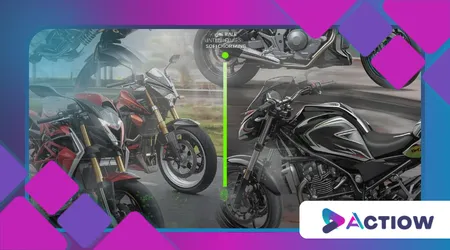
Displacement gets the headlines, but it’s rarely the whole story.
A naked 400cc twin can return worse numbers than a fully faired 650 parallel simply because wind becomes an enemy at 70 mph.
Add rider weight, luggage, tire pressure that’s drifted low, and the habit of leaving the bike in too low a gear on the highway, and suddenly the “efficient” engine isn’t.
Gearing is the silent partner most people ignore.
A tall sixth gear that drops revs to 3,800 at cruise turns a mid-size bike into something that sips fuel almost absent-mindedly.
Drop two gears for the same speed and you’ve just invited the pump back into your life.
Smooth throttle discipline does more for mileage than most aftermarket mods ever will.
The bikes that surprise you most are usually the ones that don’t try to impress. They reward patience instead of punishing it.
How Displacement Actually Rewrites Your MPG in the Real World
Anything under 250cc lives in its own efficiency universe.
Owners regularly see 90–110 MPG in mixed city riding because the engine spends most of its life barely working.
There’s almost no parasitic loss; everything is light and direct.
Between 300 and 500cc you enter the zone where most thoughtful riders settle.
These engines give enough shove to carry a passenger or tackle a mountain pass without drama, yet still return 65–85 MPG when you don’t treat every green light like a drag strip.
The curve flattens here—gains get harder, but the bike still feels generous.
Past 800cc the physics turn punitive.
Extra cubes demand extra fuel just to stay awake at cruising speed.
Even the most modern adventure-tourers struggle to crack 50 MPG loaded; cruisers and naked superbikes often live in the high 30s.
The torque is addictive until you realize how many refills it buys.
++ كيف تُستخدم التوائم الرقمية في تطوير المركبات
| Displacement Class | Realistic Mixed MPG (2024–2026 models) | Typical Bikes Showing These Numbers | What the Numbers Feel Like on the Road |
|---|---|---|---|
| ≤ 250 cc | 85–115 | Grom, Z125, RS125, Hunter 350 | Playful, almost free |
| 251–500 cc | 65–88 | Rebel 500, Meteor 350, Duke 390, CB500X | Usable power without constant guilt |
| 501–800 cc | 52–68 | Ténéré 700, MT-07, Versys 650, Tracer 7 | Strong but still reasonable |
| 801+ cc | 34–48 | R1300GS, Road Glide, Africa Twin, Multistrada | Glorious until the next station |
Why the Smaller Engines Keep Winning the Long Game
There’s something almost philosophical about it. Smaller engines force cleaner inputs—less aggressive throttle, earlier upshifts, fewer revenge passes.
The bike becomes a mirror of your habits instead of a mask for bad ones.
Weight is the quiet multiplier. Every extra pound needs fuel to move.
A 400-pound middleweight carries momentum more cheaply than a 650-pound heavyweight.
++ كيف تحمي العناية بنظام إدارة الحرارة في السيارات الكهربائية أداء البطارية؟
That difference compounds over thousands of miles.
Modern electronics narrow the gap somewhat—ride-by-wire, lean-sensitive traction, variable valve tricks—but they can’t rewrite displacement.
The physics still lean hard toward smaller when the destination is distance, not drama.
++ مقارنة بين سيارات السيدان متوسطة الحجم من حيث راحة القيادة على الطرق الوعرة
Side-by-Side: Motorcycle fuel economy from Pocket Bikes to Heavy Cruisers
Sub-250s are pocket-sized rebellions against waste. A Grom or Zontes 125 can turn 1.6 gallons into 160+ miles of urban chaos.
They’re not fast in a straight line, but they’re fast at staying out of the gas station.
Mid-sizers around 400–700cc hit the pragmatic sweet spot.
Enough character to make backroads interesting, enough range to forget about fuel for half a day.
Most riders never feel deprived once they adjust expectations.
Big-displacement machines sell presence.
The sound, the stance, the effortless roll-on—they deliver experiences no 250 can touch. But presence costs.
You pay at every pump, and eventually you start planning routes around station locations instead of scenery.
Two Riders, Two Tanks, Two Very Different Stories
A friend in São Paulo rides 42 miles each way, five days a week, on a Royal Enfield Classic 350. The bike averages 82–87 MPG even in brutal traffic.
Over twelve months he spent roughly R$1,900 less on fuel than he did the previous year on a 1200cc cruiser doing the same commute.
He says the smaller bike feels slower for about three days, then the wallet starts talking louder than the ego.
Another guy I know did a 4,200-mile loop through Patagonia on a Ténéré 700 instead of his usual Africa Twin.
Loaded with soft bags and camping gear, the 689cc twin averaged 54 MPG while the big 1084cc would have been lucky to see 42 under the same conditions.
He lost count of the extra fuel stops he avoided—and the extra hours he spent riding instead of waiting.
Engine size is like shoe choice on a long trek: the light, flexible trail runner carries you farther before fatigue sets in.
The heavy leather boot looks badass and feels planted—right up until your feet (and your credit card) start to hurt.
The Hidden Costs of Chasing (or Ignoring) Better Mileage
Chasing maximum MPG can leave you under-gunned on open roads or two-up.
A 250 feels heroic in the city but turns anxious merging into a calculated risk on the interstate.
Bigger bikes erase those moments but introduce others—more frequent fill-ups, heavier feel in parking lots, higher insurance in some markets.
Resale and maintenance tilt the scales too. Smaller, simpler engines tend to age gracefully and cost less to keep alive.
Big motors command higher prestige (and higher parts prices). The choice isn’t purely financial; it’s emotional arithmetic.
The riders who get it right treat motorcycle fuel economy as one vote in a bigger conversation, not the only one.
They ride what matches their actual life instead of the one they post about.
Questions That Actually Come Up When Riders Talk Fuel
| سؤال | No-BS Answer |
|---|---|
| Is displacement the only thing that matters? | Not even close. Aero, weight, gearing, tires, and especially how you use the throttle win more battles. |
| Can a big bike ever touch small-bike mileage? | Almost never in real conditions. Best-case big adventure bikes hit mid-40s; small singles clear 90+. |
| What’s a believable 2025–2026 average? | Sub-500 cc: 70–95 MPG. 800+ cc: 35–48 MPG. Mid-range 500–700 cc usually lands 58–75. |
| Does aggressive riding really kill that many MPG? | Yes—10–25 MPG difference is common between smooth and “spirited.” |
| Are we finally getting hybrids or electrics that change everything? | Electrics rewrite the equation entirely. Hybrids exist but haven’t moved the needle much yet. |
The bikes that last longest in your memory aren’t always the fastest or the loudest.
They’re often the ones that let you keep riding—quietly, affordably, without second-guessing every mile.
Smaller displacement still holds the high ground when the goal is simply more saddle time.
Current reads worth your time: