
Audi A6 e-tron vs BMW i5: which luxury EV wins on range now?
Anúncios
Audi A6 e-tron vs BMW i5 isn’t just a numbers game anymore—it’s a quiet debate about how electric luxury should feel over distance.
Something has shifted in this segment. Range used to dominate headlines, reduced to a single figure that supposedly settled the conversation.
That simplicity doesn’t hold up anymore.
Anúncios
Two cars can offer similar mileage on paper and still feel completely different over a long drive.
Set the Audi A6 e-tron vs BMW i5 side by side, and the contrast becomes less about who goes farther—and more about how each car interprets the idea of “enough.”
Continue reading the text to learn more!
Table of Contents
- What Defines the Audi A6 e-tron vs BMW i5 Comparison Today?
- How Do Range and Efficiency Actually Compare?
- What Shapes Real-World Range Beyond Official Figures?
- Which Driving Experience Supports Long Distance Better?
- Real-World Examples: Range in Practice
- Charging, Infrastructure, and Daily Use
- Key Comparison Table
- Frequently Asked Questions (FAQ)
What Defines the Audi A6 e-tron vs BMW i5 Comparison Today?
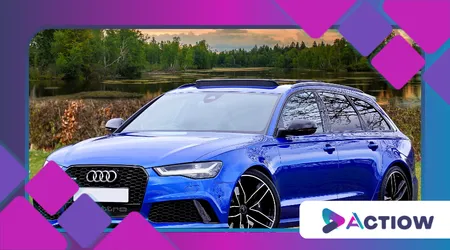
Looking at Audi A6 e-tron vs BMW i5, the comparison quickly moves past traditional luxury checklists.
Materials, screens, acceleration—those are almost assumed at this level. Range, though, carries more weight, but not in the way it used to.
The Audi A6 e-tron arrives with the advantage of a platform built specifically for electric driving.
Everything about it—proportions, aerodynamics, battery placement—feels optimized with efficiency in mind.
The BMW i5 approaches things differently. It evolves from an existing lineage, adapting a familiar sedan into an electric format.
That decision isn’t necessarily a limitation, but it does shape how the car behaves, especially when efficiency becomes the focus.
There’s a subtle tension here. One car feels engineered around electricity. The other feels like it’s negotiating with it.
++ How vehicle cybersecurity systems prevent remote car hacks
How Do Range and Efficiency Actually Compare?
On paper, the Audi A6 e-tron vs BMW i5 comparison leans in Audi’s favor when it comes to maximum range.
Its design prioritizes low drag and steady energy consumption, particularly at highway speeds.
That advantage isn’t accidental. Aerodynamics play a quiet but decisive role.
The A6 e-tron cuts through air resistance in a way that feels almost invisible to the driver—but very real in terms of efficiency.
The BMW i5, however, resists being reduced to a simple deficit. Its energy usage feels more responsive, adjusting to driving conditions rather than strictly optimizing for them.
In urban settings, the difference in range becomes less pronounced than expected.
A useful analogy emerges here. The Audi behaves like a long-distance specialist, pacing itself carefully.
The BMW feels more like an all-rounder—less focused on stretching every mile, more concerned with how those miles feel.
According to insights from the International Energy Agency, improvements in efficiency—not just battery size—are now driving EV range gains.
That context explains why two cars with similar capacities can perform so differently.
++ How ADAS sensor misalignment leads to unsafe driving errors
What Shapes Real-World Range Beyond Official Figures?
The Audi A6 e-tron vs BMW i5 debate starts to blur once real-world variables enter the picture.
Driving style is one of the most immediate factors.
Smooth, consistent inputs tend to favor the Audi’s efficiency-focused setup.
More dynamic driving can highlight the BMW’s strengths, though it may come at the cost of higher consumption.
Weather conditions complicate things further.
Cold temperatures affect battery performance in both vehicles, but thermal management systems respond differently.
That difference isn’t always visible, yet it influences how quickly range drops.
Infrastructure also changes perception. Access to reliable fast charging reduces the importance of absolute range.
A car that charges quickly can feel more practical than one that simply travels farther on a single charge.
This is where the conversation becomes less technical and more experiential.
Range stops being a fixed number and becomes something shaped by context.
++ Mercedes CLA EV vs Tesla Model 3: best electric sedan for 2026
Which Driving Experience Supports Long Distance Better?
Driving experience tends to sit outside range discussions, but separating the two doesn’t quite work here.
In the Audi A6 e-tron vs BMW i5 comparison, Audi leans toward calm efficiency.
The car encourages a steady rhythm—smooth acceleration, minimal interruption, a kind of quiet consistency that naturally conserves energy.
The BMW i5 takes a different route. It invites engagement.
Steering feedback, acceleration response, chassis balance—these elements create a more active driving experience.
That engagement is rewarding, though it subtly nudges energy consumption upward.
There’s no clear superiority, only preference.
One approach makes efficiency feel effortless. The other makes driving itself feel like the priority, even if it trims a few miles from the total range.
And that raises a question that doesn’t have a clean answer: is range something to maximize, or something to coexist with?
Real-World Examples: Range in Practice
Example 1: The Predictable Commute
A driver covering a consistent 50-mile daily route—mostly highway—would likely notice the Audi’s efficiency advantage.
The car settles into a rhythm, maintaining low consumption without demanding attention.
The BMW i5 handles the same route confidently, but with slightly higher energy use at sustained speeds.
Over time, that difference becomes visible, though not necessarily disruptive.
What stands out is how each car shapes the experience.
The Audi feels composed and distant. The BMW feels more interactive, even in routine driving.
Example 2: The Long Weekend Drive
On a 300-mile mixed journey, the Audi A6 e-tron vs BMW i5 dynamic shifts again.
The Audi may stretch further between charging stops, offering a more linear travel experience.
The BMW, however, introduces a different kind of comfort—one tied to engagement rather than distance alone.
Charging availability becomes part of the equation. A well-placed fast charger can erase much of the Audi’s range advantage in practical terms.
These scenarios reveal something easy to overlook: range isn’t just measured—it’s felt.
Charging, Infrastructure, and Daily Use
Range without charging is only part of the story. The Audi A6 e-tron vs BMW i5 comparison gains clarity when charging behavior is considered.
Audi’s newer platform supports higher peak charging speeds under optimal conditions.
That can reduce downtime on longer trips, making its extended range more usable in practice.
BMW counters with a refined charging experience. The interface, integration, and overall usability feel polished, even if peak speeds are slightly lower.
Daily use often simplifies things. Home charging reduces dependence on public infrastructure, making differences in maximum range less critical for many drivers.
There’s an interesting shift here. The conversation moves away from “how far can it go?” toward “how easily can it fit into daily life?”
Key Comparison Table
| Feature | Audi A6 e-tron | BMW i5 |
|---|---|---|
| Platform Design | EV-dedicated | Adapted architecture |
| Estimated Range | Higher | Slightly lower |
| Aerodynamics | Highly optimized | Balanced |
| Driving Dynamics | Smooth, efficiency-focused | Engaging, responsive |
| Charging Speed | Faster in ideal conditions | Competitive |
| Real-World Efficiency | Consistent | Context-dependent |
Frequently Asked Questions (FAQ)
| Question | Answer |
|---|---|
| Which model offers more range? | The Audi A6 e-tron generally leads in maximum range figures. |
| Is the BMW i5 less efficient overall? | Not necessarily; its efficiency varies more with driving conditions. |
| Does driving style impact range significantly? | Yes, especially in vehicles with more dynamic characteristics. |
| Which charges faster? | The Audi holds an advantage in peak charging speed. |
| Is range the most important factor? | It depends on usage patterns and charging access. |
| Which is better for long trips? | Both are capable, with the Audi requiring fewer stops in some cases. |
++ Compare EV specifications at Car and Driver
Audi A6 e-tron vs BMW i5 doesn’t resolve into a simple winner. The difference runs deeper than range figures or charging speeds.
One car stretches efficiency as far as possible, refining every detail to extend distance.
The other accepts small compromises in range to preserve a more engaging drive.
What emerges isn’t a clear hierarchy, but a choice.
Not just between two vehicles, but between two interpretations of what electric luxury should feel like when the road stretches ahead.