
Die Technologie, die es Autos ermöglicht, Bauteilausfälle vorherzusagen
Anzeigen
Technology That Allows Cars to Predict Component Failure quietly turns your vehicle into its own watchful mechanic, spotting the faint tremors of trouble long before they shake the steering wheel or light up the dashboard.
The old ritual of scheduled oil changes and “check engine” surprises is giving way to something subtler.
Sensors embedded deep in the drivetrain, battery cells, and suspension now listen constantly, feeding streams of vibration, temperature, voltage flicker, and torque variation into models that have studied millions of real-world miles.
Anzeigen
The car doesn’t just react anymore. It anticipates.
What if the vehicle knew its own weak points better than the person driving it?
Lesen Sie weiter, um mehr zu erfahren!
Inhaltsverzeichnis
- What Exactly Is Technology That Allows Cars to Predict Component Failure?
- How Does Technology That Allows Cars to Predict Component Failure Gather and Process Data in Real Time?
- What Tangible Gains Appear When Technology That Allows Cars to Predict Component Failure Is Deployed?
- Why Has Technology That Allows Cars to Predict Component Failure Become Essential Right Now?
- Two Stories That Show Technology That Allows Cars to Predict Component Failure Moving from Lab to Driveway
- What Practical Hurdles Still Limit Broader Use of Technology That Allows Cars to Predict Component Failure?
- Questions Drivers and Fleet Managers Actually Ask About Technology That Allows Cars to Predict Component Failure
What Exactly Is Technology That Allows Cars to Predict Component Failure?
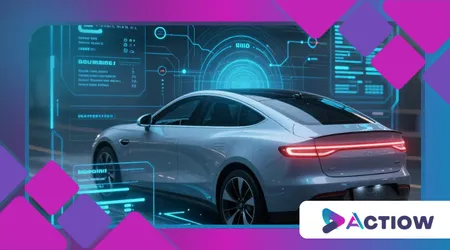
It combines onboard sensors, edge computing, and machine-learning models trained on vast fleets to build a living health profile for every critical part.
Rather than waiting for a brake pad to scream or a battery cell to drop range suddenly, the system tracks subtle deviations—micro-changes in vibration signatures or thermal gradients—that almost always precede real trouble.
Traditional maintenance ran on calendars and rough mileage guesses.
This approach builds a personalized baseline for each car, adjusting for the driver’s habits, climate, and road conditions.
A commuter in stop-and-go traffic develops a different wear signature than a highway driver.
The predictions feel almost intimate because they are.
There’s something quietly unsettling about it. The car is no longer a passive machine.
It studies itself in the background, learning its own rhythms the way a seasoned mechanic learns the quirks of a favorite customer’s ride.
How Does Technology That Allows Cars to Predict Component Failure Gather and Process Data in Real Time?
Hundreds of existing sensors—accelerometers, thermistors, current monitors—now feed continuous data streams.
Much of the initial processing happens at the edge inside the vehicle so urgent anomalies don’t wait for a cloud round-trip.
Only the most relevant patterns travel outward for deeper analysis.
Machine-learning models, trained across millions of vehicle lives, learn to separate normal aging from the early warnings of failure.
A slight rise in motor temperature paired with unusual current draw might flag bearing wear weeks before any noise appears.
The system correlates signals across subsystems, turning isolated data points into coherent stories.
Over months and years the model sharpens. It adapts to the specific life the car is living, making its forecasts more reliable than any generic service schedule ever could.
What Tangible Gains Appear When Technology That Allows Cars to Predict Component Failure Is Deployed?
Fleet operators see unplanned downtime shrink noticeably. Predictive systems routinely cut maintenance-related costs while lifting vehicle availability.
For commercial fleets where every idle hour bleeds revenue, those shifts matter on the balance sheet.
Safety edges improve in ways drivers rarely notice until they’re absent. Brake wear calculated against actual driving intensity triggers alerts before friction drops to risky levels.
Battery modules in EVs show capacity fade patterns long before range anxiety sets in.
The workshop arrives prepared, parts already ordered, labor time compressed.
Resale values and insurance considerations are beginning to reflect documented predictive histories.
A car with clean, data-backed maintenance logs tells a clearer story than service stamps alone ever did.
| Komponente | Old Trigger | Predictive Signal | Practical Difference |
|---|---|---|---|
| EV Battery | Sudden range drop or error | Gradual micro-resistance or thermal anomalies | Early balancing or module intervention |
| Bremsen | Fixed mileage interval | Wear rate modeled to driving style and terrain | Replacement timed to real friction life |
| Antriebsstrang | Noticeable vibration or noise | Subtle torque variation and harmonic shifts | Targeted repair instead of full assembly |
| Suspension | Clunk or handling complaint | Early bushing degradation via vibration patterns | Proactive bushing swap, not full strut |
Why Has Technology That Allows Cars to Predict Component Failure Become Essential Right Now?
Electric and software-defined vehicles brought complexity that fixed-interval service can no longer manage gracefully.
Thousands of battery cells age at slightly different rates depending on temperature history, charging behavior, and daily routes.
Waiting for visible failure is simply too expensive and too risky.
Fleets learned the hard way during recent supply disruptions that every unexpected breakdown carries hidden costs far beyond the repair bill.
Consumer tolerance for being stranded has also thinned. People expect their cars to behave more like reliable appliances than temperamental machines from another era.
Regulators and insurers are paying closer attention to connected data.
Vehicles that demonstrate proactive health monitoring quietly influence everything from warranty terms to premium calculations.
Two Stories That Show Technology That Allows Cars to Predict Component Failure Moving from Lab to Driveway
One EV program spotted a pattern in hot-climate fleets: certain battery modules developed micro-resistance increases months before any measurable capacity loss appeared.
Targeted software adjustments to cooling and balancing routines prevented what would have become dozens of mid-life warranty claims.
The fix cost almost nothing per vehicle yet avoided repairs measured in the hundreds.
Another case involved a premium sedan line where rear-axle vibration harmonics flagged a tight batch of supplier half-shafts only under repeated hard cornering.
Owners received proactive service notices before any driveline noise surfaced.
The manufacturer swapped affected parts under warranty with zero roadside failures, protecting both customer confidence and the car’s reputation for solid engineering.
Picture technology that allows cars to predict component failure as an experienced physician who orders quiet tests long before symptoms appear, catching the automotive version of elevated cholesterol rather than waiting for the chest pain.
What Practical Hurdles Still Limit Broader Use of Technology That Allows Cars to Predict Component Failure?
Sensor drift and calibration drift remain stubborn problems.
One unreliable reading can feed the model bad assumptions and breed false alarms that quickly erode trust.
Keeping the entire sensor web honest across a decade of ownership and multiple software generations takes serious ongoing effort.
Service networks still lag. Many dealership tools and independent shops weren’t designed for continuous cloud streams, and training technicians to act on nuanced predictive alerts takes time and investment.
The gap between what the car knows and what the wrench can immediately address hasn’t vanished yet.
Cybersecurity adds another layer of unease.
Constant data flow creates a richer attack surface.
Strong encryption and frequent security updates are mandatory, yet they add cost and complexity that smaller players sometimes struggle to shoulder.
Questions Drivers and Fleet Managers Actually Ask About Technology That Allows Cars to Predict Component Failure
| Frage | Direct Answer |
|---|---|
| Can older cars benefit from this? | Basic predictive monitoring is possible through aftermarket telematics, though factory integration delivers sharper accuracy. |
| How reliable are the predictions day to day? | Real-world systems often reach 75–90 % precision on major components once enough vehicle-specific data has been gathered. |
| What happens to my driving data? | Most manufacturers offer opt-out options for non-essential sharing; always review privacy settings carefully. |
| How much difference does it actually make? | Fleets commonly report 25–40 % reductions in unplanned downtime and associated costs. |
| Is this mainly an electric-vehicle story? | No. Combustion, hybrid, and battery platforms all gain, but high-voltage systems show the most dramatic early warnings. |
Technology That Allows Cars to Predict Component Failure has slipped from futuristic concept into the operating reality of vehicles rolling off lines today.
The cars carrying this capability don’t simply break less—they age with fewer dramas, lower lifetime costs, and fewer moments when the driver feels betrayed by sudden mechanical silence.
For readers who want to explore how these systems are reshaping both personal ownership and large-scale fleet operations, these recent reports offer grounded perspectives: