
¿Por qué cada vez más fabricantes de automóviles invierten en arquitectura zonal?
Anuncios
Arquitectura zonal Se está convirtiendo rápidamente en el referente de la ingeniería automotriz, a medida que los vehículos modernos se transforman en ordenadores de alto rendimiento sobre ruedas.
Las principales marcas automovilísticas están abandonando las configuraciones electrónicas distribuidas tradicionales para simplificar los mazos de cables y aumentar significativamente las velocidades de transferencia de datos.
Este cambio estructural responde a las enormes exigencias computacionales que requieren los sistemas avanzados de asistencia al conductor y las capacidades de actualización inalámbrica.
Anuncios
Los líderes del sector son conscientes de que los sistemas de cableado tradicionales no pueden soportar las complejas cargas de software previstas en las flotas de producción actuales.
La transformación del sistema de transmisión de señales eléctricas en los automóviles reduce el peso de los vehículos y recorta los costes de fabricación en las plantas de ensamblaje de todo el mundo.
Ahora, los ingenieros pueden agrupar las funciones del vehículo por ubicación física en lugar de por dominios de software aislados, lo que simplifica la integración del hardware.
A medida que avanzamos hacia 2026, este enfoque de ingeniería modular define la vanguardia del diseño de vehículos competitivos. ¿Estás listo para descubrir cómo los cambios en la disposición física determinan el futuro digital de tu automóvil?
Navegando la revolución eléctrica automotriz
- Comprender la transición de las unidades de control electrónico distribuidas a las zonas físicas.
- Cómo la reducción de la complejidad del cableado ahorra peso y disminuye los costes de producción.
- Desbloqueando la transmisión de datos de alta velocidad para las funciones de conducción autónoma.
- Las tendencias del mercado están impulsando a los principales fabricantes hacia nodos de procesamiento centralizados.
¿Qué es la arquitectura zonal y cómo funciona?
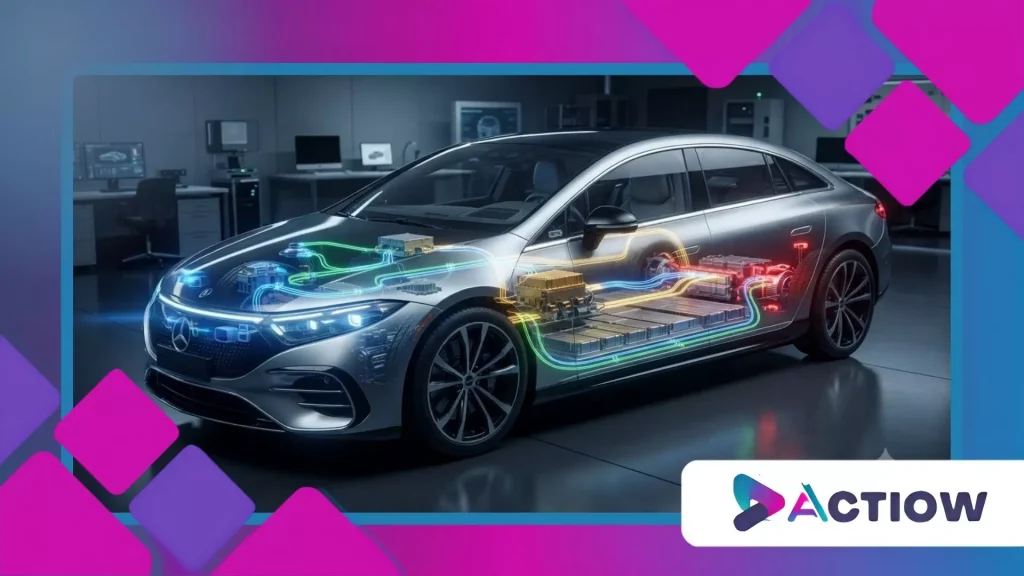
Arquitectura zonal Reorganiza la red eléctrica de un vehículo agrupando sensores, actuadores y controladores según su ubicación física en el automóvil.
En lugar de tender cables específicos desde un controlador remoto hasta cada cerradura de puerta o motor de ventana, las señales se enrutan a un módulo de zona local.
Imagínese esta estructura como una oficina corporativa moderna, donde los gerentes de sucursales regionales se encargan de las operaciones locales e informan directamente a la sede central.
Este sistema de gestión localizada elimina kilómetros de pesados cables de cobre, sustituyéndolos por cables Ethernet de alta velocidad que agilizan el flujo de datos.
Los nodos de computación centrales procesan de manera eficiente los datos regionales recopilados, lo que permite que el software avanzado gestione la dinámica del vehículo con una latencia mínima.
Por ejemplo, un sensor de colisión del parachoques delantero envía datos de inmediato a la puerta de enlace de zona más cercana, que se coordina instantáneamente con el ordenador principal.
Esta comunicación ultrarrápida es vital para tomar decisiones de seguridad en fracciones de segundo que protejan a los pasajeros durante peligros inesperados en la carretera.
Al optimizar las rutas de las señales, los ingenieros logran niveles de fiabilidad y capacidad de respuesta sin precedentes en todos los sistemas del vehículo.
¿Por qué los mazos de cables antiguos no satisfacen las exigencias modernas?
Los vehículos tradicionales suelen contener hasta cinco kilómetros de cableado de cobre pesado, lo que crea enormes cuellos de botella en la producción y añade peso innecesario al chasis.
A medida que los fabricantes añadían más pantallas digitales y funciones de seguridad, la incorporación de más cables específicos se volvió completamente insostenible para las líneas de montaje.
Este método obsoleto incrementó el consumo de combustible e hizo que el mantenimiento de los vehículos fuera excepcionalmente complejo para los técnicos de servicio en todo el mundo.
¿Cómo reemplaza Ethernet a las redes de área de controlador tradicionales?
Los cables Ethernet para automoción proporcionan el enorme ancho de banda necesario para transmitir simultáneamente señales de cámara de alta definición y datos de sensores a través de la red del vehículo.
A diferencia de los protocolos de comunicación más antiguos y lentos, Ethernet maneja paquetes de datos masivos sin esfuerzo y sin causar retrasos en la transmisión.
Esta infraestructura de alta velocidad es la base esencial para lograr hoy en día capacidades de conducción autónoma reales de nivel tres y nivel cuatro.
++ Las mejores aplicaciones para aprender a conducir
¿Puede el procesamiento centralizado gestionar las actualizaciones inalámbricas?
Computadoras centrales dentro de un arquitectura zonal El marco de trabajo gestiona las implementaciones de software sin problemas, actualizando simultáneamente múltiples dominios de vehículos sin riesgo de fallos del sistema.
Gracias a la concentración de la capacidad de procesamiento, en lugar de su dispersión, las actualizaciones de seguridad y las mejoras de rendimiento se instalan en cuestión de minutos. Esta agilidad garantiza que su vehículo siga estando tecnológicamente actualizado mucho después de salir del concesionario.
¿Cuáles son las ventajas en términos de fabricación y costes?
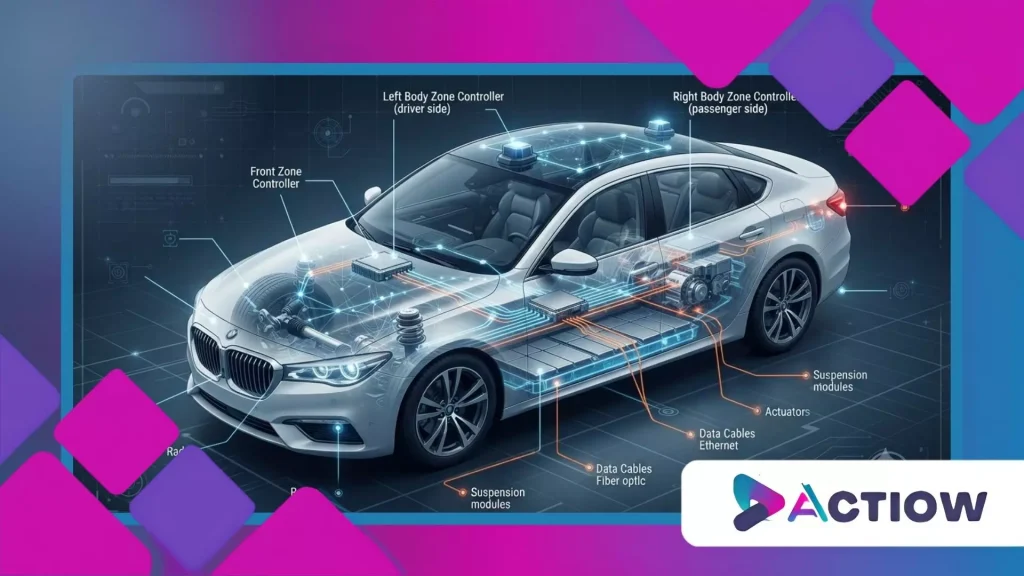
Implementación arquitectura zonal Reduce drásticamente la complejidad de la fabricación, permitiendo que las líneas de automatización de fábricas preensamblen zonas físicas completas antes de la integración del chasis.
Esta estrategia de producción modular reduce los requisitos de espacio en la fábrica y disminuye las horas de trabajo dedicadas al enrutamiento manual de engorrosos mazos de cables con múltiples ramificaciones.
Según un estudio del sector realizado por McKinsey & Company, la optimización de las redes de distribución eléctrica puede reducir el peso total del cableado hasta en un treinta por ciento.
Los vehículos más ligeros requieren menos energía para moverse, lo que mejora directamente la autonomía de los vehículos eléctricos y la eficiencia operativa general.
Además, las interrupciones en la cadena de suministro afectan menos a la producción cuando los controladores regionales modulares sustituyen a cientos de unidades de control electrónico especializadas y de un solo propósito.
Los ingenieros de marca pueden estandarizar los módulos de zona en diferentes modelos de vehículos, logrando economías de escala que reducen significativamente los costos de adquisición de componentes.
Estos ahorros en la fabricación permiten a las marcas invertir más en el desarrollo de software de vanguardia y en la mejora de las funciones de seguridad para los pasajeros.
El incentivo económico encaja a la perfección con la necesidad técnica de contar con métodos de construcción de vehículos más inteligentes y limpios.
¿Cómo afecta la reducción de peso a la autonomía de los vehículos eléctricos?
Reducir la cantidad de cableado de cobre se traduce directamente en una mayor autonomía de la batería para los vehículos eléctricos que operan en condiciones de conducción reales.
Cada gramo que se ahorra en la línea de montaje mejora la eficiencia energética, lo que proporciona a los consumidores kilómetros adicionales por cada carga.
Esta mejora en la eficiencia resulta fundamental, ya que los organismos reguladores están imponiendo normas más estrictas sobre emisiones y consumo de energía a nivel mundial.
Lea también: Cómo las baterías de estado sólido podrían cambiar los coches eléctricos en 2026
¿Por qué las líneas de montaje se benefician de las zonas modulares?
Realizar pruebas previas a cada módulo de zona antes de instalarlos en el chasis del vehículo minimiza los defectos en la línea de montaje y los costosos retrasos por retrabajo.
Los operarios pueden colocar rápidamente los arneses regionales completos, lo que agiliza el proceso de integración final del vehículo.
Esta eficiencia modular acelera la velocidad de producción, lo que ayuda a los fabricantes a satisfacer la alta demanda de los consumidores sin sacrificar el control de calidad.
Leer más: Cómo los espejos retrovisores digitales mejoran la visibilidad en el tráfico.
¿Cómo se benefician los talleres de reparación de los diagnósticos centralizados?
El diagnóstico de fallos eléctricos se vuelve mucho más rápido gracias a que los nodos de cálculo centralizados informan de códigos de error exactos, incluso a nivel de módulos de zona específicos.
Los mecánicos ya no tienen que pasar horas buscando cables individuales en los recovecos del salpicadero para encontrar una sola conexión rota.
Este proceso optimizado de resolución de problemas reduce los costos de reparación y minimiza el tiempo de inactividad de los clientes en los centros de servicio de los concesionarios.
¿Por qué los fabricantes de automóviles están acelerando esta transición?
La intensa carrera hacia la movilidad definida por software obliga a los fabricantes a adoptar arquitectura zonal para seguir siendo competitivos frente a las agresivas startups centradas en la tecnología.
Los diseños eléctricos tradicionales no pueden soportar el inmenso procesamiento de datos que requieren los sistemas modernos de infoentretenimiento, la conectividad en la nube y el autodiagnóstico continuo del vehículo.
Las marcas que no modernizan sus sistemas eléctricos se arriesgan a entregar vehículos que quedan tecnológicamente obsoletos a los pocos meses de su compra.
El mercado exige automóviles que evolucionen constantemente, lo que requiere una base de hardware robusta y flexible diseñada para actualizaciones digitales continuas.
Las expectativas de los consumidores han cambiado drásticamente; ahora los conductores esperan que sus coches reciban actualizaciones de funciones al igual que sus teléfonos inteligentes o sus ordenadores personales.
Adoptar un arquitectura zonal Esto otorga a los fabricantes la flexibilidad de vender actualizaciones de rendimiento basadas en software, paquetes de asistencia al conductor y aplicaciones de entretenimiento mucho después de la venta.
Este cambio, que pasa de la venta de hardware por única vez a los servicios digitales recurrentes, representa una enorme oportunidad de ingresos para los principales fabricantes de automóviles a nivel mundial.
Los equipos de ingeniería están diseñando los coches del futuro como plataformas actualizables, en lugar de activos mecánicos estáticos e inmutables.
¿Cómo dependen las funciones definidas por software de las zonas físicas?
Las funciones definidas por software requieren un acceso fiable y de alta velocidad a cada sensor y actuador distribuido por todo el chasis del vehículo.
Los módulos de zona regional actúan como traductores fiables entre las piezas físicas del automóvil y las aplicaciones avanzadas del sistema operativo.
Sin esta infraestructura digital estructurada, implementar de forma segura funciones complejas de asistencia al conductor en diferentes versiones de vehículos sigue siendo prácticamente imposible.
¿Qué papel desempeñan los proveedores de primer nivel en este cambio?
Los principales proveedores del sector automotriz están rediseñando sus catálogos de componentes para ofrecer controladores de zona preintegrados y enrutadores de puerta de enlace de alto ancho de banda.
Estas alianzas permiten a los fabricantes de automóviles tradicionales agilizar la transición de sus líneas de producción sin tener que diseñar internamente todos los componentes digitales.
La colaboración entre los fabricantes de automóviles y los proveedores de tecnología acelera la adopción generalizada de plataformas electrónicas estandarizadas en toda la industria.
¿Existen riesgos de ciberseguridad en las redes centralizadas?
La centralización del control de los datos de los vehículos aumenta la importancia de contar con protocolos de ciberseguridad robustos para prevenir intentos de intrusión digital maliciosa.
Los equipos de ingeniería implementan módulos de seguridad de hardware y canales de comunicación cifrados para aislar los sistemas de seguridad críticos de las redes de entretenimiento.
Proteger el perímetro digital del vehículo sigue siendo una prioridad absoluta para los desarrolladores que implementan diseños electrónicos modernos.
Comparación técnica de topologías eléctricas automotrices
La matriz comparativa que aparece a continuación describe las diferencias fundamentales entre las redes distribuidas tradicionales y los marcos electrónicos localizados modernos.
| Característica arquitectónica | Redes distribuidas heredadas | Marcos de trabajo modernos y localizados |
| Peso del arnés de cableado | Pesado (hasta 68 kg de cableado de cobre) | Ligero (cableado Ethernet optimizado) |
| Velocidad de transmisión de datos | Lento (protocolos de ancho de banda limitado) | Ultrarrápido (redes troncales Ethernet para automoción) |
| Ubicación de la unidad de control | Dispersos en cientos de unidades de control electrónico (ECU) de un solo uso. | Agrupados en módulos de zonas físicas regionales |
| Capacidad de actualización de software | Limitado o restringido a módulos específicos | Despliegue inalámbrico centralizado y sin interrupciones |
| Complejidad de fabricación | Alto tiempo de enrutamiento y montaje manual. | Preensamblaje modular simplificado |
El camino a seguir para la movilidad moderna
La adopción generalizada de sistemas electrónicos avanzados representa un punto de inflexión irreversible para la industria automotriz mundial.
Al priorizar el cableado optimizado, la transferencia de datos de alta velocidad y la informática centralizada, los fabricantes están construyendo vehículos más seguros y eficientes.
Esta evolución garantiza que nuestros coches se conviertan en compañeros inteligentes capaces de adaptarse a los futuros avances tecnológicos.
La adopción de estas mejoras estructurales garantiza la viabilidad a largo plazo de los fabricantes de automóviles que operan en un mercado global altamente competitivo.
¿Qué innovaciones te gustaría ver en el panel de control digital de tu próximo vehículo? ¡Comparte tu opinión en los comentarios!
Preguntas frecuentes
¿Los coches más antiguos recibirán adaptaciones para incorporar estos sistemas electrónicos avanzados?
No, modernizar los vehículos antiguos con sistemas electrónicos modernos es poco práctico desde el punto de vista económico y técnico, ya que requiere un rediseño completo del cableado del chasis y la infraestructura informática.
Los modelos heredados seguirán utilizando sus sistemas de control distribuido originales hasta que finalice su ciclo de vida operativo.
¿Este nuevo diseño electrónico encarece la compra de automóviles?
Si bien la inversión inicial en investigación y desarrollo para los fabricantes es sustancial, la eficiencia en la producción a largo plazo contribuye en última instancia a estabilizar los precios de los vehículos.
La optimización de los procesos de ensamblaje y la reducción del consumo de cobre compensan los costes de los procesadores avanzados, lo que permite mantener precios competitivos para el consumidor.
¿Cómo mejora esta tecnología la seguridad del vehículo durante un accidente?
Los módulos de zona regional continúan funcionando y comunicando datos críticos sobre el accidente, incluso si secciones específicas del vehículo sufren daños graves por el impacto.
Esta capacidad de respuesta localizada garantiza que los sistemas de respuesta ante emergencias se desplieguen de forma precisa e instantánea cuando cada segundo cuenta para la protección de los pasajeros.