
¿Por qué la tecnología LiDAR sigue siendo importante para los coches autónomos?
Anuncios
LiDAR Technology continues to anchor autonomous vehicle safety even as camera-only architectures and solid-state sensors mature in 2026.
Automakers and robotaxi operators still rely on laser pulses to build accurate three-dimensional maps of complex streets.
While artificial intelligence models improve every quarter, raw spatial precision remains vital when lighting shifts or unexpected hazards appear.
Anuncios
Engineers test self-driving fleets across dense cities, highways, and unpredictable weather every day. Relying on a single sensor type creates blind spots that software alone cannot resolve.
By measuring exact distances through reflected light, lasers give vehicles reliable depth data regardless of ambient brightness.
At a Glance
- Why autonomous fleets keep laser rangefinders despite rising camera performance.
- How laser sensing pairs with optical cameras and radar in real traffic.
- Practical trade-offs in cost, weather resilience, and fleet deployment.
- Key questions drivers and technologists ask about autonomous perception.
Why Do Self-Driving Cars Still Need LiDAR?
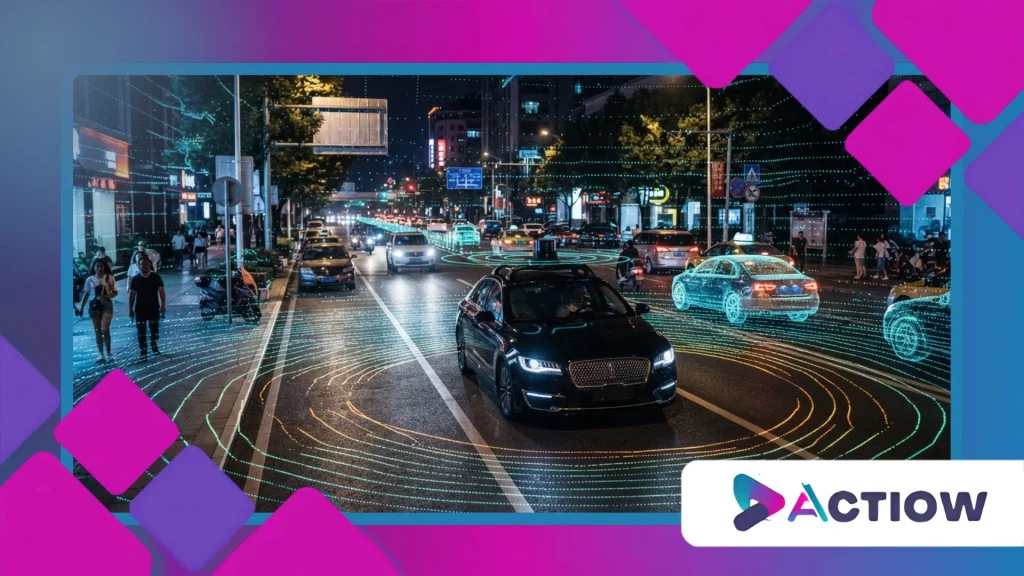
How Does LiDAR Measure Distance More Reliably Than Cameras?
LiDAR Technology calculates distance directly by timing how long infrared laser pulses take to bounce off objects and return to the sensor.
That time-of-flight measurement produces accurate depth readings without guessing object scale from two-dimensional pixels.
A parked delivery van and a distant billboard never confuse the rangefinder just because their shapes look similar from afar.
Passive optical cameras excel at reading road signs, lane paint, and traffic light colors, yet depth estimation from flat images requires stereo geometry or learned priors.
Bright sunlight, deep shadows, and headlight glare can wash out contrast in a fraction of a second. Laser emitters supply their own illumination, keeping range measurements steady across changing daylight.
What Happens When Lighting or Weather Degrades Visibility?
Nighttime driving exposes a major gap between visible-light cameras and active laser sensors. On unlit rural roads or rain-slicked avenues, camera exposures smear or struggle with low contrast.
Laser pulses penetrate darkness cleanly and map curbs, pedestrians, and stalled vehicles with consistent geometry.
Heavy fog, dense snow, and driving rain still scatter optical wavelengths and require careful signal filtering.
Even so, modern multi-return receivers and point-cloud filtering help autonomous stacks separate raindrops from solid obstacles.
Combining laser returns with radar echoes gives self-driving software a stronger fallback when weather turns harsh.
++ ¿Por qué son importantes las bombas de calor de última generación para los vehículos eléctricos?
Why Do Robotaxi Fleets Prioritize Redundant Depth Sensing?
Commercial robotaxi operations carry strict safety standards because no human driver sits behind the wheel to intervene.
Regulators and fleet operators look for independent sensing pathways so one sensor flaw does not blind the vehicle. Independent depth data helps verify what vision neural networks detect.
Consider a cyclist wearing dark clothing crossing an intersection at dusk where streetlights flicker.
Cameras might spot motion late, while three-dimensional laser points immediately outline the rider and trajectory. That extra layer of spatial certainty supports smoother braking and wider safety margins.
How Does LiDAR Complement Cameras and Radar?
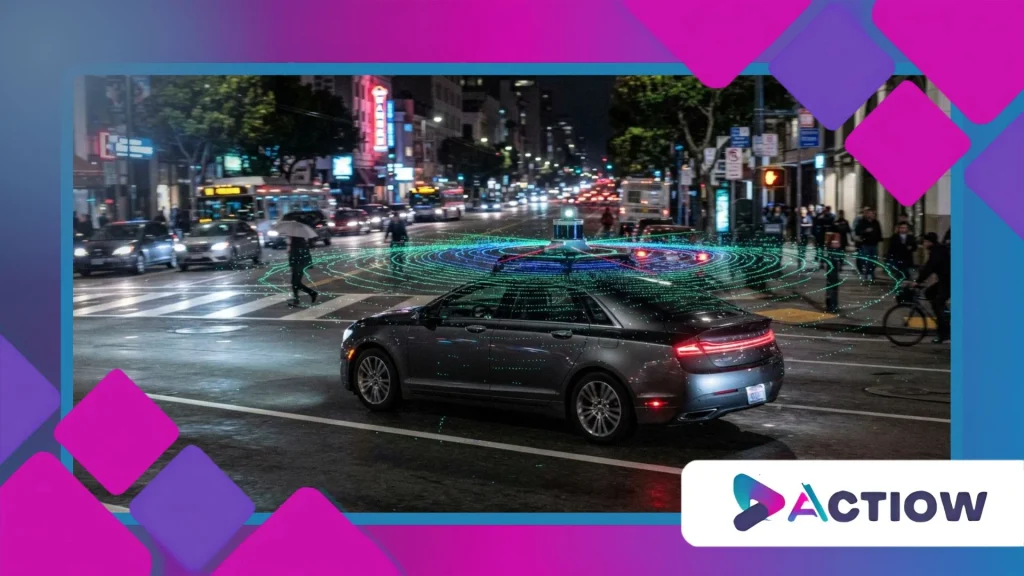
Why Is Sensor Fusion Stronger Than Any Single Sensor?
No single automotive sensor solves every driving scenario on its own. Cameras capture rich color and texture, radar tracks velocity and works through dust or spray, and lasers deliver crisp three-dimensional geometry.
Sensor fusion merges these streams into a unified world model inside the vehicle computer.
Think of sensor fusion like an orchestra where brass, strings, and percussion each carry a distinct part. Removing one section leaves the melody thinner, even if the remaining instruments play louder.
Self-driving stacks sound far more reliable when complementary sensors cross-check one another in real time.
How Do Point Clouds Improve Edge-Case Object Detection?
Edge cases on public roads rarely match clean training examples. A fallen tree branch, an overturned crate, or an unusual construction barrier challenges classifiers trained mostly on cars and pedestrians.
Point clouds describe physical volume directly in space, alerting planners to obstacles regardless of category labels.
Precise three-dimensional contours also help vehicles navigate tight lanes and temporary work zones.
When cones shift overnight or roadwork narrows a merge, dense spatial points clarify exact clearance. Planners can steer smoothly without relying solely on high-definition map updates.
++ Cómo los gemelos digitales están mejorando el desarrollo de vehículos
What Role Does LiDAR Play in Mapping and Localization?
Autonomous vehicles depend on accurate localization to know which lane they occupy down to the centimeter.
Matching live laser scans against pre-built three-dimensional maps keeps positioning steady even when satellite navigation signals weaken.
Tall downtown buildings and tunnels often disrupt global navigation satellites, making local landmark matching essential.
Fleet operators also use survey and mapping runs to spot infrastructure changes quickly. New crosswalks, altered medians, and fresh lane markings show up clearly in spatial scans.
Keeping map layers current reduces surprises for vehicles operating on familiar routes.
What Are the Real-World Costs and Limits Today?
How Much Have Sensor Prices Fallen for Automakers?
Early automotive laser units were bulky roof-mounted assemblies that cost tens of thousands of dollars per vehicle.
Advances in solid-state scanning, silicon photonics, and higher manufacturing volume have driven prices down substantially.
Tier-one suppliers now offer compact units aimed at series-production passenger cars and commercial fleets.
Lower hardware cost changes how vehicle makers design trims and safety packages.
Instead of reserving three-dimensional laser sensing exclusively for research prototypes, engineers can integrate smaller modules into bumpers, windshields, or rooflines.
Cost discipline remains critical as automakers weigh hardware bills against consumer pricing.
Lea también: Cómo las baterías de estado sólido podrían cambiar los coches eléctricos en 2026
Where Do Mechanical Wear and Packaging Constraints Still Matter?
Spinning mirror assemblies introduced moving parts that had to survive vibration, temperature swings, and years of road use.
Solid-state and optical phased-array designs reduce mechanical wear, yet thermal management and optical cleanliness remain real engineering hurdles.
Mud, road salt, and bugs on a sensor window can block laser beams just like they block a camera lens.
Packaging also shapes vehicle aerodynamics and styling. Bulky roof pods increase drag and wind noise, while recessed mounts face narrower fields of view.
Designers balance sleek bodywork against unobstructed sightlines around the car.
Which Sensor Strengths Matter Most Across Driving Conditions?
| Sensor Type | Depth & Geometry | Color & Road Signs | Low Light & Glare | Weather & Velocity |
|---|---|---|---|---|
| LiDAR | High 3D point accuracy | Limited to reflectivity | Strong active pulses | Moderate in heavy spray |
| Cámaras | Inferred from vision | High color & text detail | Sensitive to glare/dark | Affected by fog & rain |
| Radar | Coarse spatial shape | No color or sign detail | Unaffected by light | Strong velocity & weather |
Where Autonomous Perception Goes Next
LiDAR Technology remains a cornerstone of autonomous driving because physical depth measurement complements vision and radar in ways software alone cannot replace.
Falling hardware costs, cleaner packaging, and tighter sensor fusion keep laser rangefinders relevant across robotaxis, commercial trucking, and advanced driver-assistance systems.
As automakers refine self-driving architectures, the debate is shifting from all-or-nothing dogma to practical engineering trade-offs.
Safety margins, regulatory scrutiny, and real-world edge cases continue to shape which sensors earn a place on future roads.
Share your thoughts in the comments on whether autonomous cars need laser sensors or can rely on other setups.
Preguntas frecuentes
What does LiDAR stand for in self-driving cars?
LiDAR stands for light detection and ranging. Automotive systems emit rapid laser pulses and measure reflected light to build a three-dimensional map of surrounding objects and road surfaces.
Can self-driving cars operate safely without LiDAR?
Some developer teams build vision-focused systems that rely primarily on cameras and neural networks.
Many other automakers and robotaxi operators keep laser sensors for independent depth verification in complex traffic and low light.
Does LiDAR work well in heavy rain or fog?
Light rain usually causes manageable interference when paired with multi-return processing and radar.
Dense fog or heavy downpours can still scatter laser beams and shorten effective range, which is why multi-sensor fusion matters.
Why is LiDAR expensive compared with standard car cameras?
Standard automotive cameras use mature, high-volume smartphone-style image sensors that cost very little per unit.
Laser rangefinders require precision emitters, receivers, and optical components built to automotive durability standards.
Do consumer cars already use LiDAR for driver assistance?
Yes, several production passenger vehicles offer forward-facing laser sensors as part of highway driver-assistance packages.
Automakers use them to support object detection, emergency braking, and highway automation features.
