
Comparatif des véhicules électriques d'entrée de gamme pour les primo-accédants
Annonces
Se lancer pour la première fois dans l'univers des véhicules électriques suscite souvent ce mélange d'excitation et d'incertitude, comme lorsqu'on s'aventure en eaux inconnues.
Essai des véhicules électriques d'entrée de gamme Cet article se concentre sur des modèles simples et économiques, en éliminant le superflu pour révéler ce qui est réellement utile aux débutants.
Poursuivez votre lecture pour en savoir plus !
Résumé des sujets abordés
- Que sont les véhicules électriques d'entrée de gamme et pourquoi sont-ils importants pour les débutants ?
- Quels modèles se démarquent ? Essai des véhicules électriques d'entrée de gamme?
- Comment fonctionnent la recharge et l'autonomie pour les nouveaux propriétaires ?
- Quels sont les coûts réels liés à l'achat d'un tel appareil ?
- Pourquoi choisir un véhicule électrique d'entrée de gamme dès maintenant ?
- Questions fréquentes
Que sont les véhicules électriques d'entrée de gamme et pourquoi sont-ils importants pour les débutants ?
Annonces
Les véhicules électriques d'entrée de gamme sont ceux dont le prix est inférieur à 14 000 £, conçus dans un souci de simplicité : une batterie suffisante pour les besoins quotidiens, sans technologie excessive.
Elles constituent une incitation douce à s'éloigner des véhicules gourmands en essence, facilitant la transition pour quelqu'un qui n'a jamais branché de voiture auparavant.
Ces véhicules sont dotés de dispositifs de sécurité essentiels qui inspirent confiance, comme le freinage automatique, mais ils font l'impasse sur les options superflues qui pourraient désorienter un novice.
Cette retenue a quelque chose de rassurant ; elle permet de se concentrer sur la conduite elle-même, et non sur le décryptage d'un tableau de bord rempli d'icônes.
Historiquement, les véhicules électriques ont débuté comme des expériences de niche au début des années 2000, mais ils sont aujourd'hui devenus des outils courants pour réduire les émissions dans les villes surpeuplées.
Pour un jeune professionnel jonglant entre trajets domicile-travail et courses, un modèle d'entrée de gamme change la donne : transformer le transport, d'une corvée, en un geste discret en faveur du développement durable, sans contrainte financière.
++ Les meilleures voitures urbaines de 2026 selon le stationnement et la visibilité
Quels modèles se démarquent ? Essai des véhicules électriques d'entrée de gamme?
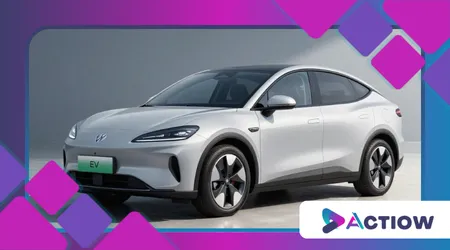
En passant au crible Essai des véhicules électriques d'entrée de gamme, La Nissan Leaf 2026 attire mon attention par son prix abordable et sans fioritures, à partir d'environ $31 485 avec une autonomie allant jusqu'à 212 miles dans l'option de batterie plus performante.
Elle est compacte, se faufilant dans la circulation urbaine comme une ombre, et ce système e-Pedal — où l'on relâche l'accélérateur pour freiner — semble intuitif, presque naturel pour quelqu'un qui découvre les véhicules électriques.
Ce qui reste, c'est sa longévité ; en tant que pionnière, la Leaf a résisté aux fluctuations du marché et bénéficie désormais d'une recharge rapide CHAdeMO, même si elle exige un peu plus d'anticipation pour les longs trajets.
Ce n'est pas tape-à-l'œil, mais pour les débutants, cette fiabilité dissipe les doutes, prouvant qu'il n'est pas nécessaire de faire des folies pour passer à l'électrique.
Côté espace, il est insuffisant pour les familles nombreuses, mais dans Essai des véhicules électriques d'entrée de gamme, Cela souligne comment de faibles barrières à l'entrée peuvent favoriser une adoption généralisée.
La Fiat 500e, proposée à partir de $32,495 avec une autonomie d'environ 260 km, apporte une touche italienne originale qu'il est difficile d'ignorer.
Son format compact lui permet de se garer partout, et à l'intérieur, la recharge sans fil pour téléphone assure une utilisation optimale pour les personnes toujours connectées.
La conduire donne l'impression de se déplacer à toute vitesse sur un vélo électrique haut de gamme : ludique et réactive dans les espaces restreints.
Pour les néophytes, cela redéfinit les véhicules électriques comme des extensions du style personnel, injectant une dose de plaisir dans les routines quotidiennes.
Son autonomie la limite à la vie urbaine, où les prises électriques abondent, mais dans Essai des véhicules électriques d'entrée de gamme, Elle brille en rendant le banal mémorable.
Il y a ensuite le Hyundai Kona Electric à $34,470, offrant une autonomie allant jusqu'à 261 miles, ce qui ouvre la voie à des escapades de fin de semaine.
Assez spacieux pour quatre personnes, son écran tactile vous guide sans effort, sans courbe d'apprentissage abrupte.
Son accélération vive (de 0 à 60 km/h en 6,4 secondes) remet en question l'idée que les véhicules électriques sont lents, à l'image des voitures à essence, mais avec une ambiance plus propre.
Cet équilibre fait pencher la balance en faveur des hésitants, démontrant que puissance et efficacité ne sont pas incompatibles.
Dans les confrontations directes de Essai des véhicules électriques d'entrée de gamme, sa garantie prolongée rassure les débutants, offrant ainsi une valeur ajoutée et une tranquillité d'esprit.
Le Chevrolet Equinox EV est proposé à partir de $34 995 $, avec une autonomie de 319 miles qui paraît presque luxueuse pour son prix.
En tant que SUV compact, il peut accueillir aussi bien du matériel que des passagers, idéal pour ceux qui ont besoin de flexibilité.
Conçue sur la plateforme Ultium, elle promet des mises à jour automatiques, garantissant ainsi sa compatibilité avec les évolutions technologiques. Les débutants ont l'impression d'investir dans un appareil évolutif, conçu pour durer.
Parmi Essai des véhicules électriques d'entrée de gamme, Elle démontre de manière convaincante que la praticité n'exige pas un prix élevé, tout en assurant une traction constante sur des routes variées.
Pour compléter, la Kia EV3 à environ $38 000 offre jusqu'à 375 miles dans les configurations haut de gamme, mettant l'accent sur l'utilité quotidienne.
Son coffre de 460 litres surpasse celui de ses concurrents, et sa forme cubique maximise l'espace intérieur.
Les aides à la conduite accompagnent en douceur les novices, renforçant ainsi leur confiance.
Dans Essai des véhicules électriques d'entrée de gamme, Elle se positionne comme la solution polyvalente pour les vies dynamiques, faisant subtilement évoluer la perception des véhicules électriques, passant de jouets à outils essentiels.
Voici un tableau comparatif pour simplifier les détails :
| Modèle | Prix de départ (US$) | Autonomie maximale (miles) | Points forts | Inconvénients |
|---|---|---|---|---|
| Nissan Leaf | 31,485 | 212 | Abordable et facile à manipuler | Gamme de base en version d'entrée de gamme |
| Fiat 500e | 32,495 | 162 | Un design charmant, une ville agile | Espace restreint pour les passagers |
| Hyundai Kona électrique | 34,470 | 261 | Garantie solide, conduite dynamique | Style subtil |
| Chevrolet Equinox électrique | 34,995 | 319 | Espace généreux, technologie évolutive | Un gabarit plus lourd a un impact sur les ascensions |
| Kia EV3 | 38,000 | 375 | Rangement pratique et polyvalent | Coût d'entrée légèrement plus élevé |
Comment fonctionnent la recharge et l'autonomie pour les nouveaux propriétaires ?
La recharge se résume aux prises domestiques : niveau 1 pour les recharges lentes pendant la nuit, ajoutant quelques kilomètres par heure, ou niveau 2 pour des sessions plus rapides que vous pouvez installer vous-même.
Les débutants s'en tiennent souvent au niveau 1, effectuant leurs trajets quotidiens sans problème.
L'autonomie réelle diminue en cas d'utilisation intensive ou de forte consommation de la climatisation, mais elle s'améliore en utilisation normale, un peu comme la gestion de la batterie d'un téléphone tout au long de la journée. Les applications permettent de planifier ces déplacements et de transformer le stress potentiel en habitude.
N'est-ce pas étrangement libérateur de troquer les stations-service contre une simple prise domestique ?
Considérez la gestion de l'autonomie comme l'accordage d'un instrument de musique : vous ajustez au feeling, et cela devient vite instinctif, d'autant plus que la plupart des trajets quotidiens restent inférieurs à 80 kilomètres.
Pour les longs trajets, les bornes de recharge rapide CC permettent de recharger le 80% en une demi-heure grâce aux réseaux cartographiés. Les nouveaux propriétaires constatent rapidement que la planification enrichit l'aventure, au lieu de la compliquer.
++ Comment l'IA apprend votre style de conduite — et quand elle se trompe
Quels sont les coûts réels liés à l'achat d'un tel appareil ?
Il faut d'abord prendre en compte le prix de la voiture et l'installation du chargeur (de $500 à $1500). Les remises fédérales peuvent réduire ce prix de $7500, selon le modèle, ce qui atténue l'impact financier.
L'entretien courant est considérablement réduit : plus besoin de vidange, le freinage régénératif préserve les plaquettes de frein. L'électricité coûte deux fois moins cher que l'essence, permettant d'économiser environ 1 000 € par an sur 19 300 km.
Prenons l'exemple d'Alex, un enseignant de 28 ans vivant dans une ville de taille moyenne : il a acheté une Leaf, a dépensé $800 pour un chargeur domestique et ne dépense plus que $40 par mois en électricité au lieu de $150 en carburant.
Au bout de deux ans, ces économies ont compensé les dépenses supplémentaires, avec un air plus pur en prime.
L'assurance pourrait augmenter la couverture de la batterie 10-20%, bien que les réductions écologiques compensent cela.
Prenons l'exemple de Lena, une artiste indépendante équipée de panneaux solaires : sa batterie Kona Electric se recharge quasiment gratuitement, alliant une gestion financière avisée à un discret geste de responsabilité environnementale.
++ Maintenance des véhicules avec mises à jour à distance : ce que vous devez encore vérifier
Pourquoi choisir un véhicule électrique d'entrée de gamme dès maintenant ?
Le marché des véhicules électriques s'est stabilisé, surmontant les problèmes de jeunesse.
Les données de JD Power montrent que 941 % des propriétaires rachèteraient ce modèle, ce qui témoigne d’une fiabilité croissante et rassure les sceptiques.
Elles réduisent considérablement l'empreinte carbone individuelle, atténuant ainsi le smog urbain – un effet d'entraînement des politiques favorisant l'électrification depuis les années 2010.
Pour commencer, c'est une première étape vers un changement plus global, sans pour autant s'engager de manière excessive.
Refuser les véhicules électriques maintenant risque d'entraîner une plus grande volatilité des prix des carburants à l'avenir. Les modèles analysés témoignent de progrès rapides, notamment grâce à l'amélioration de la durée de vie des batteries et aux ajustements apportés à la chaîne d'approvisionnement.
Véhicules électriques d'entrée de gamme : revue des questions fréquentes
Un tableau répondant aux questions typiques des débutants :
| Question | Répondre |
|---|---|
| Quelle est la durée de vie des batteries des véhicules électriques ? | Généralement, la durée de vie est de 8 à 10 ans ou de 160 000 à 240 000 kilomètres, avec des garanties. Le remplacement se fait désormais plus fréquent (5 000 à 10 000 km) grâce aux progrès technologiques. |
| Les véhicules électriques sont-ils sûrs en cas de fortes pluies ? | Absolument — les systèmes étanches empêchent les chocs ; ils sont souvent plus performants que les voitures à essence en cas d'inondations mineures, selon les tests de sécurité. |
| Puis-je recharger ma voiture dans un appartement sans garage ? | Utilisez les stations publiques ou discutez avec les propriétaires des possibilités de colocation ; les applications permettent de localiser les options à proximité. |
| Quelle est la différence avec un véhicule hybride électrique ? | Les véhicules 100 % électriques fonctionnent exclusivement à l'électricité, sans émettre de polluants locaux, contrairement aux véhicules hybrides avec système d'appoint à essence. |
| Les véhicules électriques se déprécient-ils rapidement ? | C’est moins vrai avec une demande croissante ; un modèle comme la Leaf conserve une valeur de 60 à 70% après trois ans. |
Pour des analyses plus approfondies, consultez Tests de véhicules électriques de Consumer Reports, Classement des voitures électriques d'Edmunds, et Les meilleurs véhicules électriques selon Car and Driver.