
La voiture qui pouvait flotter sur l'eau — et qui fonctionnait réellement
Annonces
Imaginez la scène : nous sommes en 1964. Vous roulez sur une route tranquille au bord d'un lac du Michigan, fenêtres ouvertes, la radio diffuse de la Motown.
Vous vous garez sur le bas-côté, actionnez un levier, et soudain, la petite décapotable verte ne roule plus ; elle file sur l’eau comme si l’idée que la terre et le lac puissent être deux choses distinctes n’avait jamais effleuré l’esprit de personne.
C'était l'Amphicar 770.
Annonces
Le voiture qui pourrait flotter sur l'eau. Et contrairement à la plupart des rêves “ amphibies ” qui sont restés à l'état de projet, celui-ci est bel et bien sorti d'une chaîne de production.
Poursuivez votre lecture pour en savoir plus !
Résumé des sujets abordés
- Qu'était-ce que le Une voiture qui pourrait flotter sur l'eau?
- Comment ce truc fonctionnait-il, au juste ?
- Qu'est-ce qui a mal tourné durant sa courte existence ?
- Pourquoi en parle-t-on encore soixante ans plus tard ?
- Histoires vraies et ce qu'elles nous apprennent aujourd'hui
- Foire aux questions
Qu'était-ce que le Une voiture qui pourrait flotter sur l'eau?
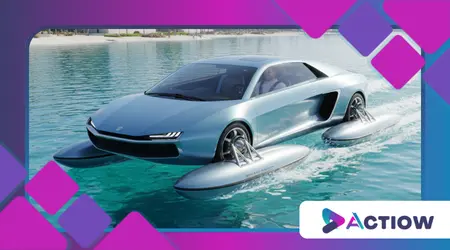
Le voiture qui pourrait flotter sur l'eau elle s'appelait Amphicar 770.
Construite à Lübeck, en Allemagne de l'Ouest, entre 1961 et 1965 (avec quelques exemplaires vendus jusqu'en 1968), elle a produit un total de 3 878 exemplaires dans le monde.
Sous le capot se trouvait un moteur Triumph Herald quatre cylindres de 1147 cm3 développant une puissance très raisonnable de 43 chevaux.
Sur route goudronnée, la vitesse de pointe avoisinait les 110 km/h si vous étiez courageux et que le vent était favorable.
Sur l'eau, il atteignait environ 7 nœuds — soit environ 8 mph — avec l'enthousiasme d'un bateau ponton décontracté.
On aurait dit que quelqu'un avait pris un cabriolet européen des années 1950, lui avait infligé une légère crise d'identité et lui avait dit d'apprendre à nager.
La carrosserie était en acier embouti, étonnamment étanche à l'état neuf, les portes étaient scellées par des joints en caoutchouc et l'échappement était placé en hauteur.
Le prix neuf oscillait entre $2 800 et $3 300 selon l'année et le marché.
En valeur actuelle, cela représente environ $28 000 à $33 000, une somme considérable pour ce qui n'était au fond qu'une expérience joyeuse.
Son existence a quelque chose d'étrangement touchant. L'Europe et l'Amérique de l'après-guerre étaient obsédées par la mobilité et les loisirs.
L'Amphicar ne cherchait pas tant à résoudre un problème qu'à poser une question que personne ne s'était vraiment posée auparavant : pourquoi une voiture ne peut-elle pas simplement continuer à rouler lorsque la route s'arrête ?
++ Pourquoi les voitures de police étaient autrefois peintes en noir et blanc
Comment ce truc fonctionnait-il, au juste ?
Sur la terre ferme, elle se conduisait comme n'importe quelle autre petite voiture à propulsion arrière de l'époque : une boîte manuelle à quatre vitesses un peu lourde, un essieu arrière oscillant qui pouvait devenir instable si l'on levait le pied en plein virage.
Rien de révolutionnaire là-dedans.
La magie opérait au bord de l'eau. Vous vous arrêtiez, actionniez un second levier qui déployait deux hélices tripales en nylon dans l'eau, derrière l'essieu arrière.
Le même moteur qui vous propulsait sur l'autoroute faisait maintenant tourner ces hélices grâce à une boîte de vitesses marine.
La direction ? Les roues avant restaient dans l'eau et servaient de gouvernail. Simple. D'une simplicité brutale.
La coque a déplacé juste assez d'eau pour faire flotter le poids à vide de 2 300 livres avec une marge de sécurité raisonnable.
Deux pompes de cale électriques étaient installées sous le siège arrière au cas où l'intérieur deviendrait humide (ce qui était généralement le cas).
Après chaque baignade, il fallait graisser treize points — dont un mal placé sous le siège arrière — pour assurer le bon fonctionnement des arbres d'hélice et des joints.
Les propriétaires qui ont négligé cette étape l'ont appris à leurs dépens.
C'est cette honnêteté mécanique qui me séduit. Pas d'ordinateurs, pas de systèmes hydrauliques qui prétendent être intelligents.
De simples leviers, des arbres et la conviction tenace que si quelque chose est suffisamment bien construit, cela fonctionnera probablement.
++ Comment un homme a conduit de l'Alaska à l'Argentine en Coccinelle VW
Qu'est-ce qui a mal tourné durant sa courte existence ?
L'argent, surtout. Le groupe Quandt (oui, la même famille liée plus tard à BMW) a sous-estimé le coût de la construction d'une voiture qui devait également être homologuée comme bateau.
Chaque unité nécessitait une finition manuelle pour garantir une étanchéité parfaite. La corrosion est apparue plus vite que quiconque ne voulait l'admettre, surtout dans les zones d'eau salée.
Puis vint la paperasse. Les États-Unis.
Les garde-côtes insistaient sur la présence de feux de navigation, d'un avertisseur sonore approprié et de gilets de sauvetage à bord – des choses qui avaient du sens pour un bateau, mais qui paraissaient absurdes sur un engin qui ressemblait à une voiture.
Les normes d'émissions commençaient à se durcir. Les ventes n'ont jamais vraiment décollé en dehors d'un petit cercle d'excentriques et de rêveurs au bord de l'eau.
La ligne a fermé ses portes en 1965. Quelques wagons restants ont continué à circuler jusqu'en 1968. voiture qui pourrait flotter sur l'eau avait prouvé que c'était possible, mais pas de manière rentable.
++ Les Kei Cars japonaises : petite taille, grand impact
Pourquoi en parle-t-on encore soixante ans plus tard ?
Parce que c'est absurde, mais dans le bon sens du terme.
Lyndon Johnson a un jour conduit un groupe d'invités surpris directement dans le lac de son ranch texan, les a laissés crier pendant une seconde, puis est retourné calmement sur la rive en souriant comme un enfant.
Ce seul coup d'éclat a probablement permis de vendre plus d'Amphicars que n'importe quelle brochure.
Aujourd'hui, un exemplaire en bon état se vend aux enchères pour $50 000 à $100 000.
L'International Amphicar Owners Club organise toujours des rassemblements annuels où des dizaines de ces véhicules se retrouvent pour nager ensemble, comme lors d'un rassemblement de voitures flottantes.
Il se dégage de cette scène une certaine chaleur — des gens qui aiment quelque chose de profondément imparfait, qui comprennent que la perfection n'est pas l'essentiel.
D'une certaine manière, l'Amphicar a prédit notre obsession actuelle pour le transport multimodal.
Concepts de véhicules amphibies électriques, dérivés de la Gibbs Aquada, voire certains prototypes militaires : tous portent un peu de l’ADN de ce cabriolet allemand atypique.
Histoires vraies et ce qu'elles nous apprennent aujourd'hui
Un ami d'un ami, vivant dans le nord du Minnesota, utilise encore son Amphicar rouge de 1964, restaurée, pour aller faire ses courses de l'autre côté du lac en été.
Il parcourt les deux kilomètres et demi de route départementale, puis descend tout droit la rampe de mise à l'eau, traverse l'eau et remonte l'autre rampe.
Durée totale du trajet : vingt minutes. Le ferry met quarante-cinq minutes. Ce n’est pas de la théorie : c’est son quotidien, mardi.
Autre anecdote : un biologiste marin travaillant dans la baie de Tampa en possédait un au début des années 2000.
Il chargeait le matériel d'échantillonnage dans le coffre, traversait les baies peu profondes sans décharger, récupérait ses carottes, puis rentrait. Pas de remorque, pas de problème de rampe, pas les pieds mouillés. Une utilité pure déguisée en fantaisie.
Ce ne sont pas des hypothèses. Ce sont des preuves que voiture qui pourrait flotter sur l'eau Ce n'était pas qu'un gadget. Cela a résolu de vrais problèmes pour les gens qui vivaient là où la terre et l'eau se confondent.
Au vu du monde actuel — zones inondables en expansion, communautés côtières, cabanes isolées —, l'idée paraît moins farfelue qu'en 1961. L'Amphicar était peut-être en avance sur son temps, mais pas forcément erronée.
Foire aux questions
Les vraies questions qui reviennent sans cesse chaque fois qu'on en voit une flotter dans un port de plaisance :
| Question | Réponse directe |
|---|---|
| À quelle vitesse allait-il sur l'eau ? | Environ 7 nœuds (≈8 mph). Pas rapide, mais plus rapide qu'à la pagaie. |
| Une Amphicar est-elle toujours homologuée pour la route ? | Oui, dans la plupart des endroits, même si certains États exigent l'immatriculation à la fois comme voiture et comme bateau. |
| Quel moteur utilisait-il ? | Triumph, moteur quatre cylindres en ligne de 1147 cm³, 43 ch. Même famille que la Herald et la Spitfire. |
| Pourquoi n'en ont-ils pas fabriqué davantage ? | Trop coûteux à construire correctement, problèmes de corrosion, marché minuscule. |
| Existe-t-il des voitures modernes capables de faire cela ? | Pas en production. Ce qui s'en rapproche le plus, ce sont des prototypes électriques uniques ou des jouets très chers. |
Si vous voulez tomber dans le terrier du lapin, commencez par le Page Wikipédia sur les amphicars, lisez l'analyse approfondie et affectueuse sur Silodrome, et vérifiez L'article de Hagerty sur sa courte et étrange vie.