
How Vehicle Software Subscriptions Are Changing Ownership
Anúncios
Vehicle Software Subscriptions Are Changing Ownership in a way that quietly upends the old handshake deal of buying a car and calling it yours forever.
These days, you hand over keys to hardware that’s only half the story—the real action lives in code that can be toggled on or off with a monthly charge.
It’s less a purchase now, more a perpetual negotiation with the automaker.
Anúncios
Continue reading our article to learn more!
Summary of Topics Covered
- What Exactly Are Vehicle Software Subscriptions?
- How Vehicle Software Subscriptions Are Changing Ownership Models?
- What Real Benefits Do Drivers Actually Get?
- What Pushback and Downsides Are Showing Up?
- Why Are Automakers Doubling Down on This?
- Common Questions
What Exactly Are Vehicle Software Subscriptions?
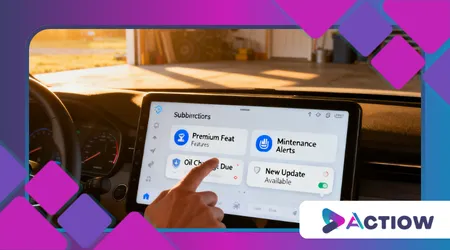
Vehicle software subscriptions lock premium features behind recurring payments, turning parts of your car into on-demand services delivered over the air.
Heated seats in some BMWs, advanced driver assists in GM vehicles, even navigation upgrades—hardware sits there ready, but access requires a credit card refresh every month.
Tesla set the template years ago with Full Self-Driving, now fully subscription-only at $99/month after dropping the one-time buy option in early 2026.
Ford’s BlueCruise, GM’s Super Cruise, Hyundai’s Bluelink extras—they all follow suit, charging for capabilities the car already has wired in.
++ ADAS Calibration Needs After Repairs: Maintenance Essentials
This isn’t just nickel-and-diming. It stems from cars becoming rolling computers, where software defines the experience more than metal.
Owners end up managing a dashboard of toggles like they do streaming apps, deciding which “extras” justify the fee this month.
++ Electric vs Gas Motorcycles for Daily Commuting
How Vehicle Software Subscriptions Are Changing Ownership Models?
Vehicle Software Subscriptions Are Changing Ownership by layering a service contract over what used to be outright possession.
You buy the chassis, the battery, the wheels—but the full potential stays conditional.
Lapse on Super Cruise and your hands-free highway driving vanishes, even if the sensors never left the car.
Resale gets messier too. A used vehicle might advertise “Super Cruise equipped,” but without the active subscription, that claim rings hollow.
++ How Your Daily Commute Shapes Vehicle Wear and Costs
Buyers start asking for transfer terms or proof of ongoing payment, turning private sales into mini negotiations with corporate gatekeepers.
It’s a subtle power shift. Automakers retain control long after the sale, pushing updates, pulling features, collecting usage data.
Vehicle Software Subscriptions Are Changing Ownership from a finite transaction into an indefinite relationship—one where the company can still reach into your driveway.
| Aspect | Classic Ownership | Subscription Layered Ownership |
|---|---|---|
| Feature Permanence | Built-in, no extra cost post-purchase | Activates/deactivates with payment |
| Updates & Evolution | Rare, mostly hardware recalls | Frequent OTA, but often paywalled |
| Long-Term Cost | Mostly upfront + maintenance | Recurring fees stacking over years |
| Resale Impact | Value tied to condition & mileage | Depends on transferable subs & active status |
What Real Benefits Do Drivers Actually Get?
The upside shows when flexibility aligns with life. A weekend warrior unlocks torque boost for towing, then drops it during the week to save cash.
Someone in stop-go traffic might keep adaptive cruise subscribed only during rush-hour seasons.
GM reported over 620,000 Super Cruise subscribers by late 2025, up 80% year-over-year, with the company pulling billions in deferred revenue—proof some drivers see enough value to pay ongoing.
Safety features evolve too; OTA tweaks can patch driver-assist glitches without a dealer visit.
Isn’t it strange, though, that something sold as “progress” often feels like paying rent on your own property?
What Pushback and Downsides Are Showing Up?
Backlash builds when the model crosses into absurdity.
BMW caught fire for heated-seat subscriptions before backing off; now similar grumbling surrounds cameras, suspension tuning, even basic assists.
Drivers resent paying monthly for hardware already bolted in.
Data privacy hangs heavy. These systems harvest driving patterns, locations, habits to refine features—or sell insights.
A 2026 PIRG report highlighted how telematics create “two-tiered” repair access, locking independents behind paywalls while dealers get free rein.
Costs creep. Stack $15 for navigation, $20 for premium audio, $99 for autonomy—it adds up faster than expected.
JD Power’s 2026 dependability study noted OTA updates often deliver “no noticeable difference” to 58% of recipients, souring the promise of continuous improvement.
Sarah, a graphic designer commuting from suburbs, subscribed to her Mercedes’ augmented-reality navigation during a busy project season.
It shaved minutes off routes, felt worth $20/month—until a tight month forced cancellation, and the downgrade stung more than she anticipated.
Mike, a contractor with a loaded GM truck, keeps Super Cruise active year-round after it caught a drift on a rainy interstate.
He values the save, but quietly fumes at the ongoing bill for safety he thinks should ship standard.
Why Are Automakers Doubling Down on This?
Recurring revenue is the siren song. GM forecast $7.5 billion in software-related deferred revenue for 2026 alone, cushioning the wild swings of hardware sales.
Tesla’s pivot to subscription-only FSD underscores the push toward predictable income streams.
It funds the arms race in autonomy and connectivity without hiking sticker prices upfront.
Software-defined vehicles promise $400–600 billion in value by 2030 per Deloitte estimates, but only if automakers capture lifetime monetization.
Loyalty plays in too—once hooked on an ecosystem of paid features, switching brands means starting over.
Vehicle Software Subscriptions Are Changing Ownership, quietly turning cars into platforms that keep paying dividends long after the initial sale.
Think of it like airlines: base ticket gets you airborne, but comfort, bags, Wi-Fi cost extra. Cars now sell the flight—and charge for the seat upgrade every month.
Common Questions
| Question | Straight Answer |
|---|---|
| Can subscriptions transfer on resale? | Usually yes via account handover, but policies vary—some expire or require reactivation. |
| Do I lose core safety if I cancel? | No—regulations protect basics; premiums enhance, don’t replace essentials. |
| Are these fees going up over time? | Possible; Tesla has hinted at increases as capabilities grow. |
| How does this hit insurance? | Little direct effect, though advanced assists might earn discounts in some cases. |
| Any way to buy features permanently? | Shrinking—more brands shift to recurring only, following Tesla’s lead. |
For more on the trend, see Deloitte’s 2026 Global Automotive Consumer Study, check JD Power’s 2026 Vehicle Dependability Study, and read InsideEVs coverage of GM’s subscription surge.