
Bagaimana tuas persneling di kolom kemudi mengubah cara berkendara sehari-hari di tahun 1950-an
Pengumuman
Column shifters completely revolutionized cabin ergonomics across North America during the post-war suburban migration period.
Drivers sitting behind the wheel of a 1950 Chevrolet, Ford, or Plymouth experienced an immediate shift in how personal transportation felt.
By relocating the gear selector lever from the center floorboard directly onto the steering column, automotive designers transformed passenger car interiors from cramped industrial workspaces into spacious family living rooms on wheels.
Pengumuman
This mechanical innovation reshaped social mobility, daily routines, and highway safety across the nation.
Key Highlights
- What Are Column Shifters? The mechanical engineering behind steering column gear selectors.
- Why Did 1950s Drivers Prefer Column Shifters? The shift to three-passenger front bench seating.
- How Did Column Shifters Change Everyday Driving in the 1950s? Daily driving habits, suburban life, and ergonomics.
- Comparative Technical Overview Historical feature comparison across 1950s transmission layouts.
- The Legacy of Steering Column Controls How 1950s ergonomics influenced modern automotive interiors.
- Pertanyaan yang Sering Diajukan Essential answers about vintage gear selection systems.
What Are Column Shifters and How Do They Work?
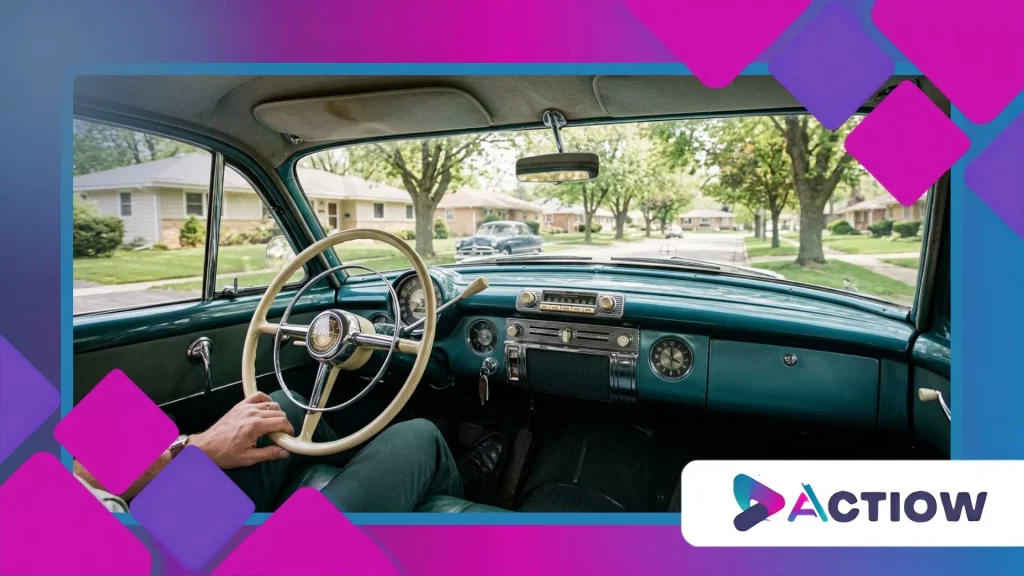
What is the mechanical design behind column shifters?
The mechanical assembly of column shifters connects the driver selector lever to the transmission linkage through a series of rigid steel rods mounted parallel to the steering tube.
When a driver selects a gear, the force travels down the steering column into selector arms located inside the engine compartment.
These arms actuate the control rods, which smoothly engage the internal shift forks inside the manual or automatic transmission housing underneath the floorboard.
Engineering teams perfected this linkage system to ensure smooth movement while isolating engine vibrations from the driver’s hand.
The complex mechanical geometry required precise alignment of bushings, pivot points, and linkage levers within a compact space.
By routing all physical connection points through the firewall rather than open floor cutouts, vehicle cabins became dramatically quieter, better insulated from heat, and far less prone to exhaust leakage during daily commutes.
++ Kisah Tak Terungkap tentang Mobil Listrik Pertama yang Pernah Dibuat
How did steering column levers operate in 1950s vehicles?
Operating a standard three-speed manual selector required a distinct movement pattern commonly nicknamed the “Three-on-the-Tree” layout by classic car enthusiasts.
From the central neutral position, pulling the spring-loaded lever toward the driver and pushing downward engaged first gear for starting from a complete stop.
Pushing the lever up through neutral and forward into the second gate engaged second gear, while pulling straight down completed the shift into third gear.
Automatic transmissions simplified this physical interaction even further by introducing standard quadrant indicators directly above the hub of the steering wheel.
Drivers could easily select Park, Reverse, Neutral, Drive, or Low without taking their eyes off the road for more than a second.
This intuitive ergonomics layout established an industry standard that made driving accessible to millions of new motorists throughout the expanding post-war road network.
Why Did 1950s Drivers Prefer Column Shifters?
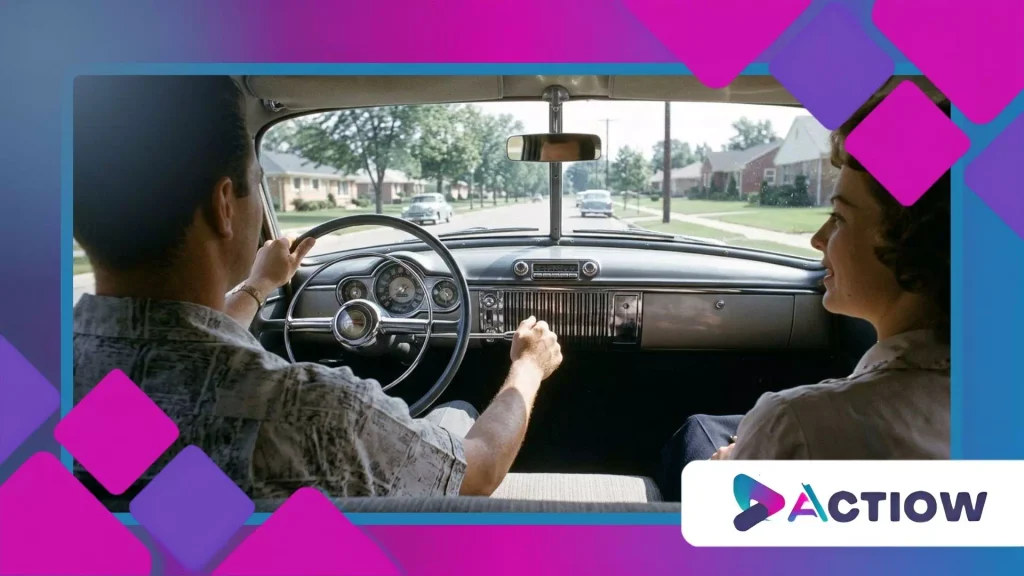
Why did bench seats make column shifters so popular?
Adopsi yang cepat column shifters made full-width front bench seats practical for everyday passenger transport.
Removing the bulky floor lever eliminated the physical barrier between driver and front passenger, allowing three adults to sit comfortably in the front row.
Automobile manufacturers heavily marketed this six-passenger seating capacity as a primary selling point for growing suburban families heading out on long road trips.
Imagine a family of six heading to a drive-in theater on a Friday evening, sitting together without anyone squeezed against a gear lever.
This spatial transformation altered the social environment inside the cabin, turning vehicles into communal spaces that mirrored the comfort of home living rooms.
The uncluttered flat floor allowed easy entry and exit from either side of the vehicle, adding unprecedented daily convenience.
Baca juga: Mengapa Toyota Supra Kembali Menjadi Legenda di Tahun 2026
How did shifting gears on the steering column improve driving safety?
Relocating control levers directly beside the steering wheel reduced physical fatigue and kept driver hands closer to the control wheel.
Historical traffic safety evaluations conducted during the late 1940s and early 1950s showed that column-mounted levers reduced the time required to perform gear selection maneuvers.
Drivers maintained better directional control on rough rural roads because their eyes remained elevated toward oncoming traffic during gear changes.
Eliminating floor openings also significantly increased structural integrity and passenger safety in cabin environments.
According to historical vehicle safety registration metrics, pre-1950 floor-shifter designs often allowed engine noise, oil vapor, and road moisture to enter through worn floor boots.
Sealing the floorboards completely created a safer, cleaner, and far more comfortable cabin environment during severe weather conditions.
How Did Column Shifters Change Everyday Driving in the 1950s?
How did steering column gear selectors shape suburban daily life?
The shift toward column shifters directly facilitated the daily routines of post-war suburban lifestyle expansion.
As suburban developments grew further from metropolitan city centers, daily driving transformed into a primary routine for errands, school drops, and commuting.
The uncluttered floor pan allowed drivers to easily slide across the seat from the curb side, avoiding dangerous street-side traffic when parking along busy downtown thoroughfares.
Could any other single interior design change have made multi-passenger suburban travel this effortless?
The open interior space allowed drivers to transport groceries, luggage, and tools on the front floorboard without interfering with gear shifts.
This practical versatility turned the American automobile into a multi-purpose tool capable of handling every family errand smoothly and efficiently.
Baca selengkapnya: Sejarah Tersembunyi Wanita dalam Balap Sepeda Motor Awal
What cultural impact did three-on-the-tree shifting leave on car culture?
The distinct movement of column gear selection became an iconic cultural ritual for an entire generation of motorists.
Learning to manage the clutch pedal while executing smooth column movements served as a standard rite of passage for teenage drivers earning their licenses in the 1950s.
The unique tactile feedback of sliding the steel lever through its gates defined the sensory experience of vintage automotive transportation.
As highway speeds increased with the opening of state turnpikes, column controls adapted seamlessly to automatic transmissions like GM’s Powerglide and Ford’s Ford-O-Matic.
This transition laid the foundation for modern interior layouts, setting ergonomic standards that dominated American car design for over four decades until center consoles resurfaced in modern sports models.
Historical Feature Comparison Across 1950s Transmission Layouts
| Transmission Feature | 1930s Floor-Mounted Manual | 1950s Column-Mounted Manual | 1950s Column Automatic |
| Front Passenger Capacity | 2 Passengers Max | 3 Passengers (Full Bench) | 3 Passengers (Full Bench) |
| Cab Floor Pan Space | Obstructed by Lever & Boot | Flat & Completely Clear | Flat & Completely Clear |
| Distance from Wheel | 12 to 18 Inches Away | 2 to 4 Inches Away | 2 to 4 Inches Away |
| Cabin Weather Insulation | Low (Open Floor Gaskets) | High (Sealed Firewall) | High (Sealed Firewall) |
| Ease of Sidewalk Entry | Restricted | Effortless Slide-Through | Effortless Slide-Through |
The Timeless Ergonomic Legacy of Steering Column Controls
The widespread adoption of column shifters in the 1950s established fundamental principles of human-centered cabin design that remain relevant today.
By prioritizing interior volume, driver sightlines, and effortless control access, post-war automotive engineers proved that mechanical layouts must adapt to human needs rather than forcing drivers to adapt to machinery.
This engineering philosophy directly paved the way for modern electronic column selectors and column-mounted drive mode stalks used in modern electric vehicles.
Sharing your passion for automotive history helps preserve the stories, engineering achievements, and cultural shifts that shaped our modern transportation landscape.
What are your favorite memories or experiences with classic column selector cars? Share your thoughts and personal stories in the comments section below!
Pertanyaan yang Sering Diajukan
What was the main advantage of column shifters in 1950s cars?
The primary advantage was clearing floor space to accommodate a full three-passenger front bench seat.
This expanded total passenger capacity to six adults in standard sedans while improving cabin insulation, safety, and slide-through entry from the curb.
Why were column shifters nicknamed “Three-on-the-Tree”?
The phrase “Three-on-the-Tree” described a three-speed manual transmission operated via a lever mounted on the steering column (the “tree”).
The nickname distinguished this layout from earlier floor-mounted manual shifters (“Three-on-the-Floor”).
Did column shifters require more maintenance than floor shifters?
Yes, column selector systems utilized extra mechanical linkages, rods, and bushings between the steering column and the transmission.
Over decades of use, these external mechanical connections could develop play or bind if not properly lubricated and adjusted.
When did automakers start moving away from column shifters?
Automakers began shifting back toward floor selectors and center consoles during the mid-1960s with the rise of bucket seats and sports cars.
However, column selectors remained standard on full-size sedans, station wagons, and pickup trucks well into the late 1990s and 2000s.
Are column gear controls still used in modern vehicles today?
Yes, modern electric vehicles and light trucks frequently use modern electronic column-mounted shifters.
This design choice frees up valuable center console space for wireless phone chargers, cup holders, and storage compartments, continuing the ergonomic legacy started in the 1950s.
