
How Technology Is Redefining the Relationship Between Drivers and Vehicles
Annunci
Il moderno relationship between drivers and vehicles is undergoing a profound digital transformation that reshapes how we view personal mobility.
Connected car platforms, predictive maintenance analytics, and advanced driver assistance systems (ADAS) are turning traditional mechanical transport into intelligent software partners.
Automobiles no longer function merely as isolated machinery controlled by manual inputs. Instead, they act as predictive companions capable of real-time environment sensing, route optimization, and proactive cabin personalization.
Annunci
Modern commuting demands higher efficiency and seamless connectivity, forcing automakers to merge automotive software architecture with consumer tech ecosystems.
As software-defined vehicles dominate market releases, understanding this tech evolution becomes essential for every motorist navigating today’s smart highways.
Cosa imparerai in questo articolo
- How Software-Defined Vehicles and OTA Updates Revolutionize Driving Dynamics
- Why AI Predictive Maintenance and Real-Time Telematics Prevent Breakdown Risks
- How Level 3 Autonomous Features and Augmented Reality Dashboards Shift Cockpit Control
- Key Hardware vs. Software Automotive Trends Compared Across Modern Platforms
- Frequently Asked Questions Regarding Autonomous Safety, Data Privacy, and Connectivity Costs
What Is Changing in the relationship between drivers and vehicles Today?
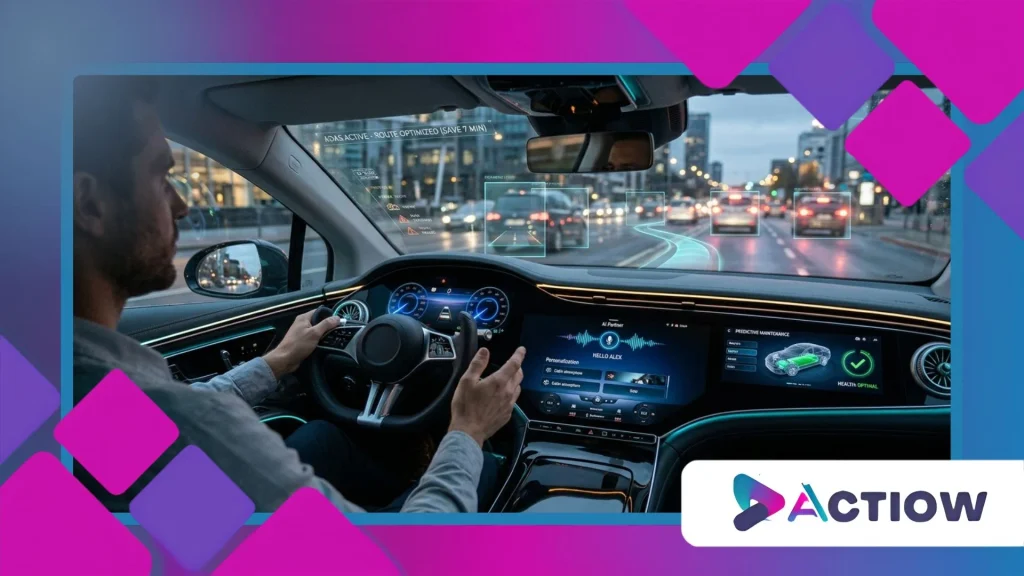
How Are Software-Defined Vehicles Redefining Modern Automobile Ownership?
Over-the-air (OTA) software updates allow contemporary cars to receive feature updates, performance recalibrations, and safety enhancements straight from cloud servers without visiting a dealership service center.
Modern automotive engineering prioritizes central computing architecture, enabling vehicles to improve their acceleration profiles, battery management algorithms, and infotainment options years after initial manufacturing.
Drivers experience an evolving digital asset rather than a depreciating mechanical assembly.
This transition shifts consumer expectation from physical durability to continuous software enhancement.
Automakers can dynamically adjust regenerative braking settings or refine steering sensitivity based on real-time fleet telematics gathered across millions of drive miles.
As a result, the owner enjoys an upgraded machine that continuously adapts to personal preferences and safety standards.
Why Is AI-Driven Cabin Personalization Transforming Daily Commute Comfort?
In-cabin artificial intelligence uses biometric sensors, optical monitoring, and climate telemetry to automatically configure seat ergonomics, ambient lighting, and temperature settings based on driver detection.
Voice-activated personal assistants learn daily commute patterns, proactively suggesting optimized navigation routes and alerting users to traffic slowdowns before departure.
Vehicles now recognize individual stress markers and fatigue levels, adjusting climate airflow or recommending restful driving pauses.
This proactive ambient intelligence turns the cabin into a responsive living environment designed to reduce operational fatigue.
Instead of forcing manual adjustments, the vehicle anticipates physical requirements and atmospheric conditions automatically.
Consequently, human and machine form a synchronized partnership where driving comfort adjusts seamlessly in real time.
++ Perché le fughe in moto del fine settimana sono in aumento tra i professionisti
How Does Real-Time V2X Communication Enhance Driver Road Safety?
Vehicle-to-Everything (V2X) communication enables automobiles to exchange operational telemetry with surrounding traffic infrastructure, nearby pedestrians, and adjacent vehicles instantaneously.
By receiving warnings about slippery road surfaces, emergency vehicle approaches, or blind intersection hazards hidden from direct line of sight, drivers gain pre-emptive situational awareness.
This networked ecosystem mitigates collision risks well before physical sensors detect immediate danger.
According to research from the National Highway Traffic Safety Administration (NHTSA), connected vehicle safety applications utilizing V2X communications can potentially address up to 80% of non-impaired light-vehicle crashes.
Drivers no longer rely solely on personal reaction speed or visual scanning capabilities during complex road scenarios. Integrated data streams provide a protective digital safety bubble around the vehicle continuously.
How Does Automation Shift Control in the relationship between drivers and vehicles?
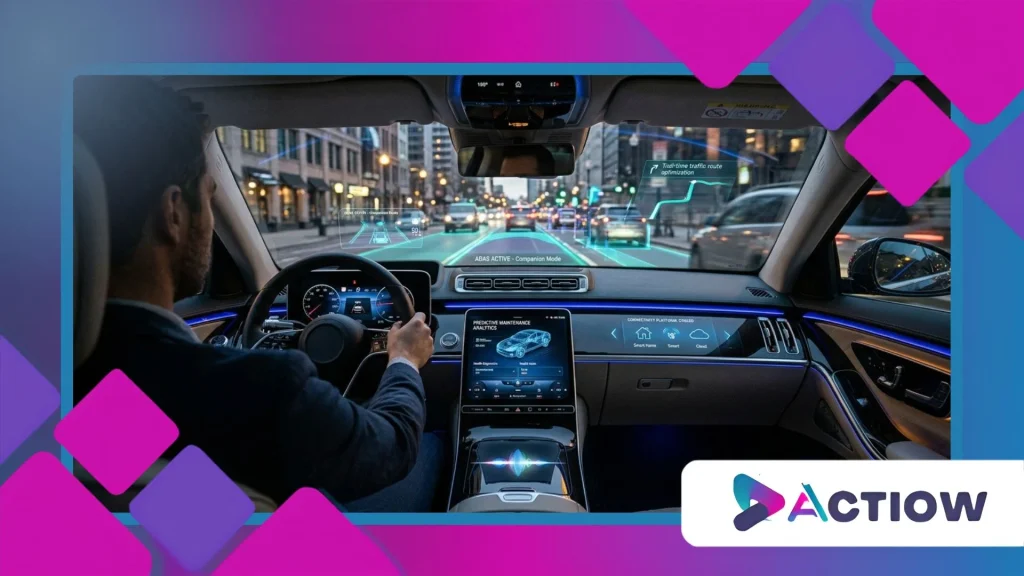
What Role Do Level 3 Autonomous Systems Play in Reducing Driver Fatigue?
Hands-off driving technology operating under specific highway conditions enables vehicles to manage steering, speed adjustments, and lane centering without continuous manual intervention.
System architectures monitor lane markers, traffic flows, and surrounding obstacles while allowing human operators to delegate tedious stop-and-go navigation during heavy traffic congestion.
The driver remains an supervisory operator ready to reassume control whenever system parameters request manual intervention.
This structural shift transforms long-distance travel by significantly lowering cognitive strain and physical exhaustion.
Vehicle sensor suites analyze radar, lidar, and camera feeds faster than human processing limits allow under low-visibility conditions.
By sharing active navigational duties, the human driver maintains focus without experiencing standard mental fatigue.
Leggi anche: Honda WN7: perché questa pluripremiata moto elettrica è importante a livello globale
How Do Augmented Reality Dashboards Keep Drivers Focused on the Road?
Augmented reality head-up displays (AR-HUD) project critical telemetry, turn-by-turn navigation arrows, and lane guidance directly onto the windshield within the driver’s natural line of sight.
Drivers no longer need to glance down at center-console displays or traditional instrument clusters to verify vehicle speed or directional changes. Important alerts appear visually overlaid onto actual lane geometry ahead.
This visual integration drastically cuts down visual distraction and off-road glance times during complex city navigation.
Critical safety warnings, such as pedestrian movement highlights or dynamic lane drift indicators, register instantly within the driver’s primary focal field.
Enhanced visual clarity ensures high operational focus while keeping hands firmly on the wheel.
Per saperne di più: I veicoli di dimensioni ridotte stanno diventando sempre più popolari nelle città.
Why Is Predictive Maintenance Eliminating Unexpected Mechanical Breakdowns?
Integrated telemetry platforms continuously analyze engine performance, battery health metrics, brake pad wear rates, and tire pressure variations to forecast component degradation.
Algorithms analyze micro-vibrations and operational thermals to alert vehicle owners regarding necessary maintenance long before physical component failure occurs.
Repairs transition from reactive emergency responses to planned maintenance schedules managed through mobile applications.
Drivers experience minimal downtime and avoid catastrophic mechanical damage on the road.
Fleet operators and individual owners gain transparent insight into component lifespans, optimizing operational expenditures over time.
This predictive capability turns potential breakdown stress into predictable, manageable vehicle upkeep routines.
Why Is Data Security Reshaping the relationship between drivers and vehicles?
How Are Connectivity Telematics Safeguarding Digital Driver Privacy?
Connected vehicles collect extensive operational telemetry, geographic location logs, and user preference profiles during daily operational cycles.
Advanced end-to-end cryptographic protocols and decentralized onboard processing ensure personal telemetry remains protected against unauthorized external access or data harvesting.
Automakers implement zero-trust cybersecurity architectures inside vehicle control unit (ECU) networks to safeguard operational integrity.
Securing personal data restores driver trust in digital automotive platforms and cloud-connected vehicle services.
Clear data transparency frameworks give users explicit control over what information is shared with insurance providers or third-party service applications.
Strong digital safeguards keep modern connected vehicles safe from cyber threats and data breaches.
How Does Electric Powertrain Software Optimize Battery Range for Drivers?
Advanced energy management software dynamically redistributes thermal regulation and power distribution across electric vehicle (EV) battery packs during driving cycles.
Intelligent routing software calculates terrain elevation changes, ambient weather impact, and real-time charger availability to deliver precise range estimates without range anxiety.
Drivers receive tailored driving efficiency tips through real-time feedback loops on the dashboard.
This software optimization extends operational range while preserving long-term battery health and energy efficiency.
Smart charging schedules automatically sync with grid off-peak hours to reduce energy expenses for vehicle owners.
Optimized power management turns electric range calculation into a reliable, stress-free component of daily travel.
Why Will Human Emotion and AI Co-Pilot Technologies Define Future Driving?
Emerging affective computing platforms use interior sensors to read driver emotional states, identifying elevated stress, aggression, or severe drowsiness instantly.
When elevated stress levels are detected, the system smoothly adjusts interior ambient audio, tempers throttle response sensitivity, and suggests calming route alternatives.
The vehicle transforms into an empathetic co-pilot devoted to preserving occupant safe keeping and emotional balance.
This empathetic integration bridges the gap between mechanical output and human psychological needs on the road.
Automobiles actively work to de-escalate stressful driving situations while supporting focused driver decision-making.
Thinking of a car as just a machine is fading as vehicles become intuitive personal travel partners.
Modern Automotive Technology Integration Matrix
| Technology Feature | Operational Function | Primary Driver Benefit | Implementation Impact |
| Over-The-Air (OTA) Updates | Remote software delivery to central vehicle control units | Continuous feature upgrades without dealership visits | Extends vehicle lifespan and improves residual resale value |
| Comunicazione V2X | Real-time wireless telemetry exchange with surrounding infrastructure | Pre-emptive hazard detection beyond line-of-sight | Reduces multi-vehicle intersection collisions significantly |
| Augmented Reality HUD | Windshield projection of navigation and safety telemetry | Eliminates off-road glance time during driving maneuvers | Improves reaction times in heavy traffic and low-visibility weather |
| Predictive Telematics | Sensor-based monitoring of thermal and mechanical wear | Prevents unexpected component failures and breakdown risks | Converts emergency repairs into planned maintenance |
Navigating the Road Ahead for Intelligent Mobility
IL relationship between drivers and vehicles has evolved into a collaborative digital alliance built on safety, intelligence, and seamless connectivity.
Software-defined architectures, predictive maintenance analytics, and automated safety systems empower drivers with unprecedented control while reducing operational fatigue.
As vehicle ecosystems become smarter and more intuitive, driving transforms from a demanding manual chore into an efficient, personalized mobility experience.
Embracing these technological innovations ensures safer roads, lower maintenance stress, and an elevated overall journey. Share your experience with connected vehicle technologies in the comments below!
Domande frequenti
How do over-the-air (OTA) updates affect my car’s resale value?
Over-the-air updates help preserve vehicle resale value by keeping software features, battery performance algorithms, and safety systems completely up to date.
Rather than running outdated onboard software, older model-year vehicles receive functional enhancements directly from the manufacturer, making them significantly more attractive to prospective pre-owned vehicle buyers over time.
Can predictive maintenance software prevent all mechanical failures?
While predictive maintenance software identifies up to 90% of routine component wear and electronic anomalies by monitoring sensor telemetry, unexpected hardware damage from external road debris or sudden environmental exposure can still occur.
However, it virtually eliminates unexpected failures caused by gradual component degradation, such as battery exhaustion or belt wear.
Is my personal location data safe in a cloud-connected vehicle?
Modern connected vehicles utilize enterprise-grade encryption protocols and strict data privacy controls to secure personal location logs and driving metrics.
Vehicle manufacturers must comply with regional data privacy regulations, allowing drivers to manage data-sharing permissions, opt out of telemetry collection, or clear personal data directly through system settings menus.
Does automated driving technology remove the need for driver attention?
Current Level 2 and Level 3 automated driving technologies handle lane positioning, acceleration, and distance monitoring, but they still require the driver to remain attentive and ready to take manual control.
Fully autonomous driving without human supervision is restricted to designated commercial driverless zones and specific structural operational parameters.
How does V2X technology work in areas with poor cellular service?
Vehicle-to-Everything (V2X) systems utilize direct short-range communication (DSRC) protocols alongside cellular V2X (C-V2X) networks, allowing vehicles to broadcast safety signals directly to nearby cars and traffic hardware.
This localized direct communication functions reliably even when commercial cellular networks or internet coverage are temporarily unavailable.
