
Why More Drivers Are Switching from SUVs to Compact Cars in 2026
広告
Drivers are switching from SUVs to compact cars because the automotive landscape in 2026 demands efficiency, agility, and a refined urban experience.
For over a decade, consumers prioritized the commanding height of crossovers, but rising operational costs and crowded metropolitan infrastructures have shifted the pendulum.
As fuel prices remain volatile and charging infrastructure for electric vehicles becomes the new gold standard, the practical appeal of smaller frames is undeniable.
広告
This transition represents a sophisticated evolution in consumer behavior, moving away from excess toward deliberate, functional engineering.
- The economic rationale behind smaller vehicles
- Navigating the urban congestion crisis
- Technological advancements in compact segments
- The psychological shift toward minimalism
Why Has the Market Shifted Toward Smaller Vehicles?
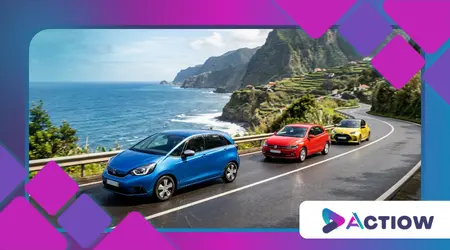
The primary catalyst for this trend is the aggressive escalation of urban density and parking scarcity.
Drivers are discovering that the traditional heavy SUV, while spacious, becomes a liability in the narrow streets of modern global cities.
Maneuverability has replaced raw power as the ultimate luxury, leading many to reassess their daily needs.
By choosing smaller vehicles, owners regain hours of their lives previously wasted circling blocks for parking spots or navigating tight garages.
Economic pressures also play a decisive role in this widespread automotive pivot.
Maintenance, insurance premiums, and energy consumption rates for massive vehicles have soared, making them difficult to justify for the average commuter.
Consequently, drivers are switching from SUVs to compact cars to align their personal budgets with the harsh reality of 2026 inflation.
This move is not merely a compromise; it is an intelligent reallocation of resources toward high-tech, efficient transportation.
Furthermore, the design revolution in the compact segment has eliminated the perceived “sacrifice” of comfort.
Manufacturers now pack these smaller frames with premium materials, advanced driver-assistance systems (ADAS), and impressive interior ergonomics.
It is like replacing a bulky, outdated winter coat with a lightweight, high-performance thermal jacket that keeps you just as warm but moves with your body.
Why settle for cumbersome metal when modern engineering offers precision?
What Are the Economic Benefits of Smaller Cars?
The cost-per-mile analysis is overwhelmingly favorable for compact vehicle owners today.
A recent report by the International Energy Agency confirms that compact electric vehicles now provide 35% more range efficiency compared to their SUV counterparts.
These savings accumulate rapidly over three years, providing owners with substantial capital to reinvest elsewhere. This data underscores why fiscal responsibility is driving the current consumer demand.
++ スーパーワンEV:ホンダは2026年にコンパクトシティEVを再び楽しいものにできるのか?
How Does Urban Infrastructure Influence Choices?
As cities evolve to prioritize pedestrians and cycling, parking spaces have shrunk in both quantity and size.
Compact cars fit seamlessly into these modified environments, providing a frictionless experience that SUVs simply cannot match.
This alignment between personal mobility and city planning is a structural change, not a temporary fad. You are essentially choosing a tool that fits the environment it was designed to operate within.
こちらもご覧ください: ホンダWN7:この受賞歴のあるEVバイクが今、世界的に重要な理由
Are Compact Cars Now Safer Than Before?
Modern safety regulations have forced compact cars to adopt rigid chassis structures and sophisticated airbag deployments.
The “size equals safety” myth is debunked by 2026 crash-test scores, where compact models frequently outperform larger, legacy SUVs.
Consumers no longer have to fear for their safety when downsizing, as digital safety nets have filled the physical gap.
These vehicles now act as protective bubbles, guided by AI-driven predictive braking and collision avoidance.
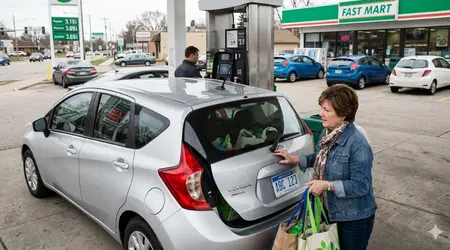
How Do Modern Compacts Compete with SUVs?
Performance is no longer defined by engine displacement but by power-to-weight ratios and instantaneous electric torque.
Drivers are switching from SUVs to compact cars because they prefer the nimble handling that comes with a lower center of gravity.
Whether navigating a hairpin turn on a coastal road or merging into dense highway traffic, the responsiveness of a compact car provides a superior driving experience. It is pure, unfiltered engagement with the road.
Moreover, the interior technology in today’s compact models often exceeds that of entry-level SUVs.
Manufacturers are prioritizing infotainment systems, wireless connectivity, and seamless smartphone integration in these segments.
These vehicles serve as mobile productivity hubs, perfect for the modern professional. They offer the perfect balance between high-end digital capability and tactile, mechanical driving satisfaction.
Consider the example of a professional commuting through São Paulo or London; the compact car becomes an ally against the chaos.
While an SUV struggles to squeeze into a restricted parking zone, the compact owner arrives early and stress-free.
This advantage repeats daily, building a case for smaller vehicles that is impossible for logic to ignore. When performance and tech meet agility, the decision is simple.
続きを読む: 都市部では小型車が人気を集めている
Why Is Range Efficiency Critical in 2026?
Energy efficiency is the hallmark of the current era, and compact vehicles excel in this domain.
Less mass requires less energy, whether that energy is derived from fossil fuels or high-density battery packs.
As charging wait times become a factor, the ability of a smaller vehicle to travel further on a single charge is a massive convenience. Efficiency is the new horsepower.
How Has Technology Bridged the Gap?
Advanced software in compact cars now mimics the features previously reserved for luxury SUVs.
Features such as active noise cancellation, adaptive cruise control, and automated parking have trickled down, making small cars feel like executive transport.
The gap in luxury has essentially vanished, leaving only the difference in exterior dimensions. Technology has effectively commoditized comfort, making it accessible in every segment.
What Role Does Sustainability Play?
Environmental awareness is at an all-time high, and consumers want to reduce their carbon footprint. Building smaller cars consumes fewer raw materials and generates less manufacturing waste.
By choosing a smaller model, drivers are switching from SUVs to compact cars as a statement of their environmental commitment.
It is a proactive step toward a sustainable future, proving that small choices lead to significant global impacts.
Understanding the Market Comparison
| 特徴 | Compact Cars (2026) | Traditional SUVs |
| Fuel/Energy Efficiency | Excellent | Average to Low |
| Parking Ease | High | 低い |
| Maintenance Cost | より低い | Higher |
| Tech Integration | Advanced/Native | Variable |
| Maneuverability | Superior | 限定 |
Is Downsizing Right for Your Lifestyle?
Evaluate your daily routine: how many passengers do you typically carry, and how much storage space do you actually utilize?
Most families find that 90% of their driving involves only one or two people and minimal cargo.
If you fall into this demographic, maintaining a massive vehicle is an inefficient use of resources. Downsizing often results in more money in your pocket and less stress in your day.
What About Resale Value Trends?
The resale market for compact, high-efficiency vehicles is currently experiencing a surge as demand outweighs supply.
While large SUVs are depreciating faster due to fuel costs and changing urban regulations, compact cars maintain their value with remarkable consistency.
This investment security is a significant factor driving the trend. It is the smartest financial play in the current automotive climate.
How Can You Make the Transition?
Start by test-driving current compact models to experience the leap in interior quality and comfort.
You will likely find that the psychological barrier of “needing a big car” disappears once you experience the ease of driving a modern compact.
Drivers are switching from SUVs to compact cars not just for convenience, but for the elevated driving experience. It is an upgrade in quality of life, not a downgrade in status.
Conclusion and Future Outlook
The shift away from massive crossovers toward efficient, agile compact cars is a defining trend of 2026.
This transition is rooted in economic logic, urban necessity, and a sophisticated approach to personal mobility.
As we have explored, the combination of technological advancement, lower operational costs, and superior maneuverability makes this the logical choice for modern life.
When you weigh the benefits of increased agility against the diminishing returns of a heavy SUV, the answer becomes clear for the discerning motorist.
Drivers are switching from SUVs to compact cars because they refuse to settle for outdated patterns that no longer serve their needs.
The automotive industry is clearly listening, delivering innovation that prioritizes intelligence and efficiency over sheer scale.
As you look toward your next vehicle purchase, consider whether you want to carry the weight of the past or embrace the precision of the future.
The road ahead rewards those who value agility and adaptability above all else. Are you ready to reclaim your driving experience from the burden of unnecessary size?
Join the conversation by sharing your thoughts or your own transition story in the comments section below, and let us know how your driving habits have changed this year.
よくある質問
Why are compact cars becoming popular again?
Compact cars are trending because they offer better fuel efficiency, easier parking in dense cities, and lower overall maintenance costs compared to large SUVs.
Are compact cars in 2026 safe for families?
Yes, modern compact cars feature advanced crash-safety technology, multiple airbags, and AI-driven collision-avoidance systems that make them highly secure.
Is it difficult to switch from an SUV to a compact car?
Most drivers find the transition smooth after test-driving, as today’s compact models provide premium interiors, high-tech features, and better handling that make them feel like a genuine upgrade.
Do compact cars have less technology than SUVs?
No, in 2026, manufacturers prioritize state-of-the-art infotainment and driver-assistance features in compact vehicles to compete with the broader market.
Will compact cars hold their resale value?
Current market trends show that efficient, well-maintained compact cars hold their value better than large SUVs, which are often hit harder by rising fuel costs and urban space restrictions.