
Hoe transparante displaytechnologie zijn intrede doet in moderne auto's.
Anúncios
Transparent display technology is changing how we perceive automobile cabins, transforming windshields and side windows into interactive digital surfaces.
Modern vehicles are no longer just mechanical transport tools; they function as mobile ecosystems where data seamlessly merges with our physical surroundings.
Automakers are aggressively integrating these optical innovations to replace traditional instrument clusters and massive central screens with floating, see-through interfaces.
Anúncios
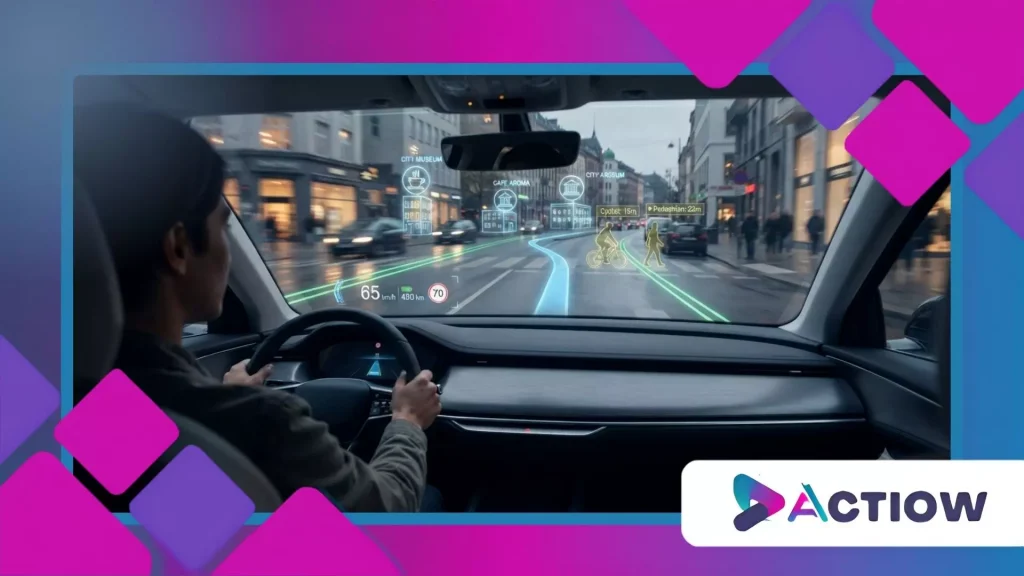
Drivers now experience an environment where critical trip telemetry, navigation markers, and safety alerts overlay directly onto the road ahead.
This shift from physical dashboards to ambient glass panels marks the most significant interior design revolution of the decade.
By merging augmented reality with high-tech glass, car manufacturers are successfully addressing both consumer demands for connectivity and safety requirements.
This technological evolution reduces driver distraction by maintaining eye focus on the road while projecting necessary real-time information.
Beyond safety, it unlocks unprecedented aesthetic freedom for interior designers who can now create minimalist, spacious cabins.
As we look closely at this automotive shift, we will explore the engineering behind the glass, the immediate safety benefits, and the commercial models hitting the market this year.
Quick Overview of This Analysis
- The Mechanics of Ambient Glass: Understanding OLED and MicroLED applications in modern vehicle cabins.
- Safety and Functional Evolution: How augmented reality overlays enhance driver focus and minimize blind spots.
- Market Adoption and Future Trends: Examining current production vehicles, industry data, and consumer expectations.
What Is the Technology Behind Glass Displays?
How Do MicroLED and OLED Systems Operate?
The integration of active-matrix organic light-emitting diodes (AMOLED) and MicroLEDs allows glass surfaces to emissively project crisp, full-color data without requiring a traditional backlight.
These systems utilize thin-film transistors layered between specialized sheets of laminated automotive glass to control thousands of microscopic, self-lit pixels.
When turned off, the pixels become completely clear, maintaining up to 85% transparency across the glass panel. This engineering milestone prevents the display from blocking the driver’s view during hardware failures or sudden power losses.
Have you ever wondered why traditional screens feel so outdated the moment you step into a next-generation concept vehicle?
The answer lies in how emitting light directly from a transparent substrate eliminates the bulky bezels and housing units that have dominated dashboards for thirty years.
MicroLED variants excel in this role because they offer extreme brightness levels exceeding 3,000 nits.
This immense brightness ensures that navigation arrows and speed readouts remain perfectly visible even under direct, blinding midday sunlight.
What Materials Make Automotive Glass Interactive?
Manufacturers embed nanometer-thin conductive coatings, such as Indium Tin Oxide (ITO), into the safety glass layers to deliver electricity to the transparent pixels.
These microscopic conductive pathways remain invisible to the human eye, allowing the entire window structure to function as a circuit board.
Polyvinyl butyral (PVB) interlayers, already standard for acoustic insulation and shatter resistance, now house these delicate display electronics safely.
This protective lamination ensures the display remains operational during extreme weather conditions, heavy cabin vibrations, and minor exterior impacts.
Think of this integration like a high-tech sandwich where the digital screen acts as a hidden, flavorful spice rather than a bulky extra layer.
This approach protects the delicate electronics from moisture, UV degradation, and physical scratches over decades of intensive vehicle usage.
Additionally, specialized anti-reflective coatings are applied to the exterior glass surface to prevent inner-cabin light reflections from distracting oncoming traffic at night.
++ Waarom 48 volt elektrische systemen de industriestandaard worden
How Does HUD Technology Differ From Transparent Displays?
Traditional Heads-Up Displays (HUDs) rely on dashboard-mounted projectors that bounce images off the windshield, creating a virtual image floating slightly above the hood.
In contrast, true transparent display technology builds the light-emitting components directly into the glass matrix itself, removing the need for bulky dashboard projection units.
This architectural shift frees up valuable dashboard space, allowing engineers to optimize climate control routing and structural reinforcement beams.
Furthermore, built-in displays offer significantly wider viewing angles, allowing passengers to see the digital information clearly from anywhere in the car.
By moving the light source from an external projector into the glass, automakers eliminate the visual distortion caused by changing windshield angles.
Projector-based HUDs often suffer from ghosting effects or blurriness if the driver shifts their seating position slightly.
Built-in transparent panels deliver pixel-perfect clarity across the entire glass surface, turning the whole windshield into a unified digital canvas.
Why Are Automakers Adopting Interactive Glass?
How Does Ambient Glass Improve Driver Safety?
Distraction remains a leading cause of highway accidents worldwide, making the ability to keep eyes on the road a vital safety priority.
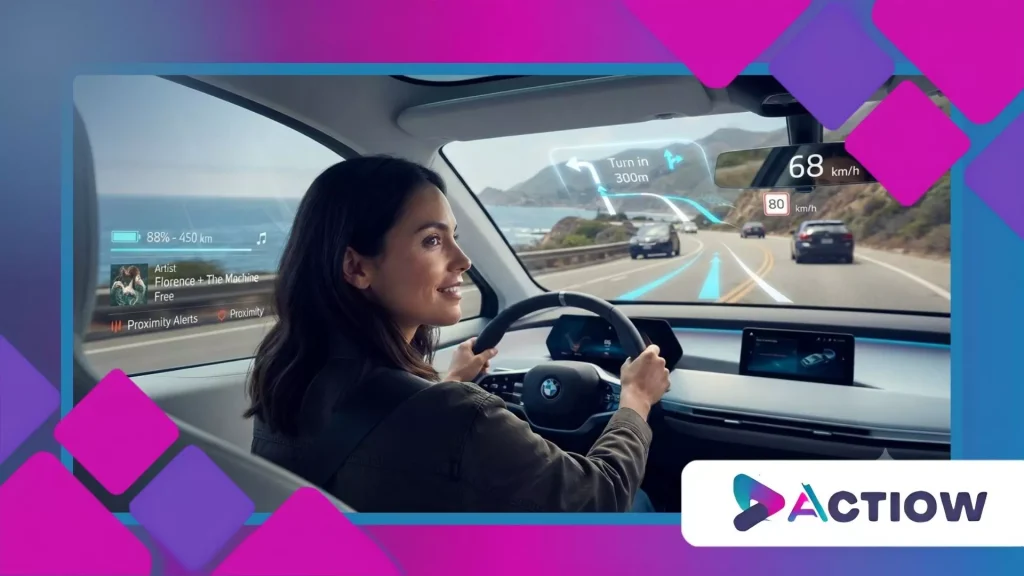
By overlaying dynamic navigation lines directly onto the actual lanes ahead, drivers no longer need to look down at a central map screen.
Sensor suites track eye movements in real time, adjusting the position of digital warnings to match the driver’s exact line of sight.
This immediate visual alignment reduces the cognitive load required to interpret complex highway interchanges during heavy traffic.
According to a comprehensive 2025 automotive safety study by the European New Car Assessment Programme (Euro NCAP), display systems that keep a driver’s gaze forward reduce emergency reaction times by up to 18%.
This split-second advantage can mean the difference between a safe stop and a severe collision.
Warning icons for pedestrians or hidden obstacles illuminate exactly where the hazard exists, directing human attention precisely where it is needed most.
Lees ook: Hoe solid-state batterijen elektrische auto's in 2026 zouden kunnen veranderen
What Are the Design Advantages for Future Cars?
Removing traditional plastic instrument cowlings allows automotive designers to lower the cowl line and significantly improve forward visibility.
This design freedom enables a sleek, minimalist aesthetic where the dashboard completely disappears when the vehicle is parked or turned off.
Cabin spaces feel larger, brighter, and more open, resembling a modern living room rather than a cramped mechanical cockpit.
Passengers can also use their side windows as independent entertainment screens without blocking the driver’s view.
This design transformation serves as a powerful copywriting tool for luxury brands looking to redefine modern premium transportation.
Stripping away heavy plastic dashboards allows manufacturers to use sustainable, premium materials like natural wood and recycled fabrics throughout the cabin.
The digital interface appears magically when needed and vanishes completely when the driver prefers a serene, distraction-free environment.
Lees meer: Hoe digitale achteruitkijkspiegels het zicht in het verkeer verbeteren
How Can Side Windows Enhance Passenger Comfort?
Side windows equipped with transparent display technology allow passengers to access localized trip details, points of interest, and entertainment features.
Travelers can touch the glass to highlight historical landmarks along the highway or check real-time weather conditions at their destination.
Advanced liquid crystal layers within the glass also allow for instant electronic tinting, blocking out heat and sunlight with a quick swipe.
This dual-purpose utility turns standard windows into dynamic surfaces that handle both entertainment and climate control simultaneously.
Imagine driving past a historic monument and seeing its historical timeline appear smoothly on your side window without blocking the scenery.
This seamless blend of reality and digital data elevates long road trips into engaging, educational travel experiences.
It also allows rear passengers to watch movies or play games on their respective windows without requiring heavy, ceiling-mounted flip screens.
How Is This Innovation Entering the Consumer Market?
Which Brands Are Leading Commercial Adoption?
Major automotive suppliers like Continental and LG Display have moved past the concept phase to deliver production-ready transparent screens.
BMW showcased its advanced panoramic vision system, which projects critical telemetry across the lower edge of the front windshield.
Hyundai Mobis developed a holographic windshield display system that transforms the entire driver-side glass into an interactive control panel.
These production deployments confirm that transparent glass is quickly moving from exclusive luxury concepts to everyday consumer vehicles.
The rapid rollout of these systems across premium electric vehicle lineups highlights how brands use advanced displays as a key differentiator.
In a highly competitive market where battery ranges are similar, the in-cabin digital experience becomes a major selling point.
Automakers are partnering directly with glass manufacturing specialists to scale production and lower manufacturing costs quickly.
What Real-World Data Proves Its Value?
Market analysis highlights a significant increase in consumer demand for advanced glass interfaces across global automotive markets.
Buyers increasingly prioritize digital connectivity and smart assists over traditional mechanical performance metrics like horsepower or acceleration times.
This shift in buyer preference has forced mainstream manufacturers to accelerate their display integration timelines.
The following table highlights verified manufacturing specifications and performance metrics for current transparent automotive installations:
| Display Attribute | MicroLED Specification | OLED Specification | Primary Automotive Benefit |
| Peak Brightness | > 3,500 Nits | 1,200 Nits | Clear legibility under bright daylight |
| Transparency Level | 80% to 85% | 40% to 55% | Maintains excellent driver road visibility |
| Operational Lifespan | 100,000 Hours | 50,000 Hours | Matches the long lifespan of the vehicle |
| Response Speed | < 1 Microsecond | < 1 Millisecond | Instant rendering for critical safety alerts |
What Hurdles Delay Mass-Market Integration?
The primary challenge facing widespread adoption centers on the high manufacturing costs of large-scale MicroLED and OLED panels.
Laminating electronic components inside safety glass requires high precision to prevent defects, bubbles, or dust particles during assembly.
Regulatory agencies also enforce strict light transmission standards for front windshields to ensure safe driving conditions at night.
Any embedded display tech must prove it will not degrade visibility as the glass ages or faces prolonged exposure to sunlight.
Replacing a cracked interactive windshield will cost significantly more than swapping out a standard piece of automotive safety glass.
Insurance companies are currently evaluating how these high component costs will impact premium rates and long-term repair workflows.
Additionally, automotive electronics must withstand extreme temperatures ranging from desert heat to freezing winter conditions without losing performance.
The Road Ahead for Digital Glass
As manufacturing processes mature, expect transparent display technology to become a standard safety feature across mid-tier passenger models worldwide.
Future developments will focus on integrating touchless gesture controls and advanced eye-tracking systems to make interacting with the glass effortless.
This evolution will turn the entire vehicle exterior into an intelligent interface capable of communicating with pedestrians and autonomous driving grids.
By blending digital graphics into the physical world, automakers are permanently changing our relationship with the open road.
How will your driving habits change when your front windshield becomes an intelligent, interactive assistant? Share your experience in the comments below.
Veelgestelde vragen
Can transparent displays be seen clearly in bright sunlight?
Yes, automotive-grade MicroLED systems deliver brightness levels over 3,000 nits, ensuring excellent visibility and readability even under direct, harsh midday sun.
Do embedded glass displays pose a safety risk if they crack?
No, the display components are safely laminated inside heavy-duty PVB layers, ensuring the structural integrity of the safety glass remains intact during an accident.
Will this technology completely replace traditional physical dashboards?
While physical buttons for critical controls will remain for safety, digital glass will phase out traditional instrument clusters and bulky center touchscreens.