
Lexus ES EV vs Mercedes CLA EV: conforto ou velocidade de carregamento?
Anúncios
O mercado de veículos elétricos de luxo em 2026 chegou a uma encruzilhada fascinante, desafiando os compradores a priorizar o que realmente importa durante longas viagens: recarga rápida ou serenidade suprema sobre rodas.
No canto vermelho, temos a tão aguardada linha Lexus ES BEV de 2026, que prioriza o conforto executivo, enquanto no canto azul está o Mercedes-Benz CLA EV, com seu design aerodinâmico radical e arquitetura ultrarrápida que quebra recordes.
Lexus ES EV vs Mercedes CLA EV Representa mais do que uma rivalidade entre o Japão e a Alemanha; é um choque fundamental de filosofias sobre como deve ser a experiência de transporte premium movido a bateria.
Anúncios
Esta comparação detalhada analisará como cada marca utiliza sua capacidade tecnológica para conquistar o consumidor moderno que busca luxo no transporte diário.
Guia rápido do capítulo
- A batalha do conforto: Como o interior do Lexus visa a privação sensorial.
- O Duelo de Velocidade de Carregamento: A potência de alta voltagem da Mercedes versus o ritmo tradicional da Lexus.
- Em resumo: Métricas do mundo real e dicas de compra.
Por que a serenidade interior define o segmento de carros elétricos de luxo?
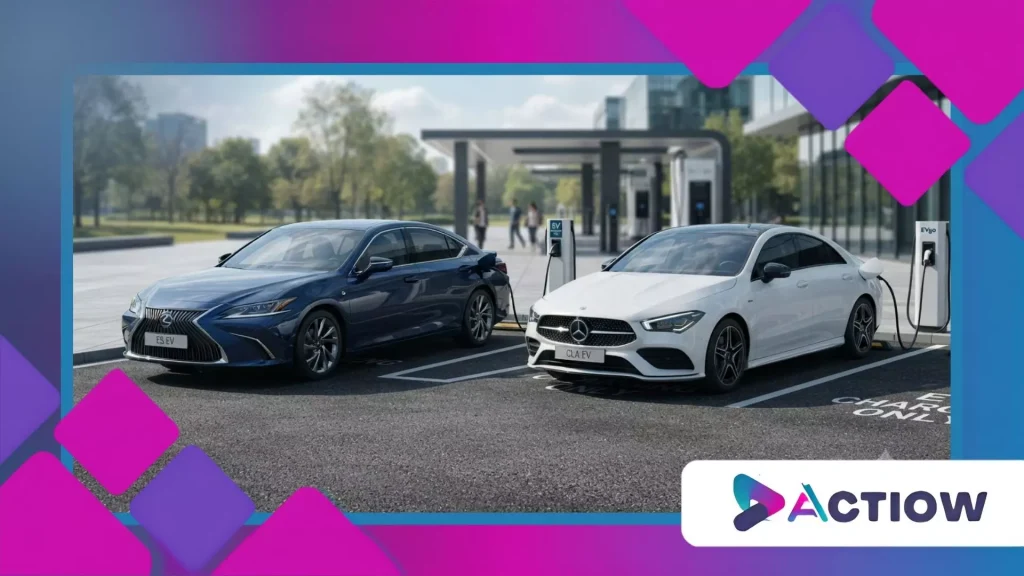
Qual é a forma mais silenciosa de viajar?
A revolução dos veículos elétricos prometia silêncio absoluto, mas a remoção do motor de combustão apenas amplifica o ruído do vento, o barulho dos pneus e os impactos da suspensão.
O sedã elétrico Lexus ES 2026 combate isso com uma fórmula avançada de vidro acústico e cancelamento ativo de ruído que funciona como fones de ouvido com cancelamento de ruído para todo o corpo.
Enquanto muitos fabricantes buscam tempos de aceleração agressivos, a Lexus se concentra na privação sensorial, garantindo que a cabine permaneça um santuário de calma.
Lexus ES EV vs Mercedes CLA EV Destaca uma diferença crucial: o concorrente japonês encara a cabine como uma sala de estar tradicional, completa com acabamento opcional em bambu e couro semi-anilina.
Ao utilizar uma arquitetura de múltiplos caminhos modificada, a Lexus preserva a condução suave e o conforto excepcional que tornaram seus antecessores híbridos famosos.
Ele desliza sobre as ruas esburacadas da cidade com uma suavidade que veículos elétricos de alto desempenho, mais pesados e rígidos, simplesmente não conseguem replicar.
Como a Mercedes aborda a tecnologia de cabine?
A Mercedes-Benz adota uma abordagem radicalmente diferente, transformando o interior do CLA EV em um lounge digital de alta tecnologia centrado na impressionante Supertela do MBUX.
Em vez de depender exclusivamente do amortecimento físico, os engenheiros alemães usam inteligência artificial generativa no assistente virtual MBUX para adaptar a iluminação, o aroma e o clima da cabine com base no humor do motorista.
Isso proporciona um ambiente de luxo altamente estimulante e personalizável, em vez de um ambiente puramente silencioso.
Esse contraste é como comparar um hotel boutique de luxo em Tóquio com uma boate techno moderna e futurista em Berlim. Se o seu trajeto diário parece uma corrida caótica, o ambiente tranquilo do Lexus oferece um antídoto relaxante.
No entanto, se você preferir se sentir conectado a um ecossistema digital de ponta, a cabine da Mercedes oferece uma modernidade incomparável.
Como a arquitetura de 800V altera a equação de carregamento?
Por que o carregamento de 320 kW está mudando o jogo?
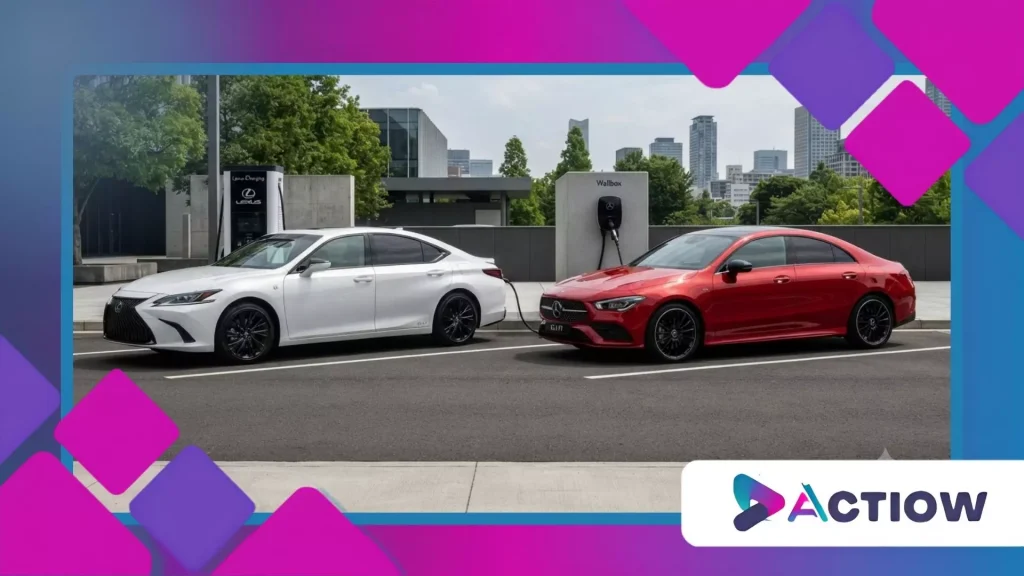
Quando se trata de viagens rodoviárias de longa distância, a velocidade de carregamento é o fator mais importante, e é aí que entra o Lexus ES EV vs Mercedes CLA EV O debate inclina-se fortemente para Stuttgart.
Construído sobre a plataforma modular MMA da marca, o CLA EV utiliza uma arquitetura elétrica avançada de 800 volts, capaz de receber até 320 kW de carregamento rápido em corrente contínua (CC). Isso permite que o Mercedes recarregue sua bateria utilizável de 85,5 kWh de 10% para 80% em apenas 18 a 20 minutos.
- Mercedes-Benz CLA EV: Carregamento de 10% para 80% em aproximadamente 18 minutos (320 kW máx. CC).
- Lexus ES BEV (350e/500e): Carregamento de 10% para 80% em aproximadamente 35 minutos (estimativa de potência máxima de 150 kW CC).
Para colocar isso em perspectiva, parar para carregar o CLA EV deixa de ser uma tarefa árdua e se torna uma breve pausa; quando você termina de comprar um café expresso e usar o banheiro, o carro já está totalmente preparado para mais 480 quilômetros de estrada.
++ Jeep Compass EV ou Peugeot E-3008: qual SUV elétrico percorre maior distância?
Quais são as limitações reais da velocidade de carregamento do Lexus ES EV?
A Lexus, fiel aos seus princípios de engenharia historicamente cautelosos, equipa o ES 350e com um sistema de carregamento mais conservador.
Embora seja totalmente compatível com as portas do padrão de carregamento norte-americano (NACS) nativamente, suas velocidades máximas de carregamento ficam em torno de 150 kW. Isso significa que uma parada padrão na estrada levará quase o dobro do tempo que levaria em um Mercedes.
Para quem se desloca diariamente para o trabalho em áreas regionais e carrega o dispositivo durante a noite em casa usando um carregador de parede de nível 2, essa diferença na velocidade de carregamento é praticamente imperceptível.
No entanto, se o seu estilo de vida exige viagens rodoviárias interestaduais espontâneas, a curva de carregamento rápido em corrente contínua (CC) mais lenta do Lexus requer um planejamento de viagem mais cuidadoso e que teste a paciência.
Leia também: Toyota Prius vs Honda Insight: O híbrido mais eficiente para o uso diário
Qual sedã executivo elétrico oferece maior autonomia no mundo real?
Quão eficientes são essas lanchas executivas expressas?
A ansiedade em relação à autonomia está rapidamente se transformando em "ansiedade em relação ao tempo de carregamento", mas a autonomia total ainda determina a usabilidade diária. O Mercedes-Benz CLA 250+ atinge uma notável autonomia de até 792 km (483 milhas) segundo o ciclo WLTP.
Essa eficiência excepcional é alcançada por meio de um perfil exterior altamente aerodinâmico e uma caixa de câmbio de duas velocidades exclusiva que otimiza o consumo de energia em rodovias.
Em contraste, o Lexus ES EV vs Mercedes CLA EV A concorrência mostra a Lexus seguindo um caminho mais tradicional no segmento de sedãs. O ES 350e com tração dianteira oferece uma autonomia estimada pela EPA de 307 milhas (aproximadamente 494 km) com uma única carga, um número bastante respeitável.
Essa autonomia é mais do que suficiente para a grande maioria dos hábitos de condução semanais, mas fica aquém das capacidades de longa distância dos Mercedes, que possuem excelente aderência em pisos irregulares.
Leia mais: Tesla Model Y ou Kia EV6: Qual SUV elétrico é melhor em 2026?
A tração nas quatro rodas compromete a eficiência desses sedãs?
Optar por mais potência altera consideravelmente a dinâmica. O Lexus ES 500e com dois motores e tração integral gera 338 cavalos de potência combinados, mas sua autonomia, segundo a EPA, cai para 444 quilômetros (276 milhas).
A Mercedes consegue manter uma eficiência superior em todas as suas variantes com dois motores graças à sua arquitetura elétrica dedicada.
Se o seu principal objetivo é maximizar cada quilowatt-hora de energia, a genialidade aerodinâmica do sedã alemão simplesmente não pode ser ignorada.
Ele corta o ar como um trem-bala em alta velocidade, enquanto o Lexus se baseia em uma presença executiva clássica e em uma postura premium mais tradicional e imponente.
Especificações técnicas: Comparação direta
Antes de tomar uma decisão final, a análise dos dados técnicos concretos revela onde cada fabricante optou por alocar seu orçamento de desenvolvimento.
| Recurso/Métrica | Lexus ES 350e (Luxo) | Mercedes-Benz CLA 250+ |
| Preço inicial (aprox.) | $57.295 USD | Aproximadamente $60.000 USD (estimado) |
| Capacidade da bateria | ~75,0 kWh utilizáveis (estimativa) | 85,0 kWh utilizáveis |
| Velocidade máxima de carregamento CC | 150 kW (estimado) | 320 kW CC |
| Tempo de carregamento de 10% para 80% | ~35 minutos | ~18 minutos |
| Campo de condução EPA/WLTP | 307 milhas (EPA) | 483 milhas (WLTP) |
| Potência máxima do sistema | 221 cavalos de potência | 268 cavalos de potência |
| Filosofia da cabana | Isolamento acústico e madeira | MBUX Superscreen e IA |
Qual sedan elétrico se adapta ao seu estilo de vida ao volante?
Em última análise, escolher entre o Lexus ES EV vs Mercedes CLA EV Tudo se resume aos seus hábitos e prioridades pessoais ao dirigir. O Lexus ES EV foi projetado para motoristas que veem seu carro como um santuário de calma e tranquilidade.
É um veículo que encara os deslocamentos diários com elegância suave e sem esforço, filtrando os ruídos caóticos do mundo exterior. Representa um investimento altamente racional e confiável em conforto diário.
O Mercedes CLA EV, por outro lado, é uma impressionante potência tecnológica construída para a era digital e acelerada.
Com seu carregamento ultrarrápido de 800V, aerodinâmica elegante e cabine de alta tecnologia, ele foi projetado para quem ama tecnologia de ponta e quer minimizar as paradas para recarga na estrada.
Independentemente do caminho que você escolher, o segmento de sedãs executivos elétricos em 2026 nunca pareceu tão promissor.
Qual dessas filosofias elétricas combina melhor com a sua garagem? Compartilhe suas opiniões e experiências de direção nos comentários abaixo!
Perguntas frequentes
O Lexus ES EV é compatível com os Superchargers padrão da Tesla?
Sim, o Lexus ES EV 2026 vem equipado com uma entrada de carregamento NACS nativa, permitindo que você use os Superchargers da Tesla compatíveis em toda a América do Norte sem precisar de um adaptador separado.
A suspensão do Mercedes CLA EV é muito rígida em comparação com a do Lexus?
Graças à configuração de suspensão mais esportiva do Mercedes CLA EV, que permite lidar com sua alta eficiência e potência, sua condução é visivelmente mais firme do que a suspensão ultraconfortável e isolante do Lexus ES.
Qual veículo oferece mais espaço para os passageiros do banco traseiro?
O Lexus ES EV sai na frente nesse quesito. Com seu design voltado para o público executivo e bancos traseiros com função de massagem e apoio para os pés (opcionais nas versões mais completas), ele oferece uma experiência muito mais espaçosa e confortável na cabine traseira do que a linha de teto inclinada, semelhante à de um cupê, do Mercedes CLA.