
Why 48 volt electrical systems are becoming industry standard
Anunțuri
48 volt electrical systems are rapidly becoming the absolute baseline for modern automotive engineering, fundamentally transforming how vehicles manage power.
As consumer demand for advanced cabin technology, autonomous driving features, and fuel efficiency reaches an all-time high in 2026, the traditional 12-volt electrical architecture simply cannot keep up with the load.
This technological transition represents a crucial evolutionary step, bridging the massive gap between conventional internal combustion engines and fully electric vehicles.
Anunțuri
By upgrading the onboard electrical grid, global automakers can drastically reduce emissions while unlocking performance capabilities that were completely impossible just a decade ago.
Essential Highlights
- Efficiency Boost: Enables advanced mild-hybrid capabilities, reducing fuel consumption and emissions without the extreme weight or cost of full high-voltage battery packs.
- Enhanced Dynamics: Powers heavy-duty chassis components like active anti-roll bars, vastly improving handling comfort and cornering stability.
- Future-Proofing: Delivers the necessary wattage to seamlessly operate data-hungry autonomous sensors, high-definition displays, and complex drive-by-wire mechanics.
What Is Driving the Transition to Higher Voltage Architecture?
Why Is the Traditional 12-Volt Setup No Longer Sufficient?
For over half a century, the standard 12-volt automotive electrical grid quietly powered everything from simple halogen headlights to basic AM/FM radios.
However, modern luxury vehicles have essentially evolved into rolling data centers packed with high-resolution touchscreen displays, heated massage seats, and complex radar safety arrays.
How much pressure can we really put on a century-old 12-volt battery before it completely gives up under the weight of modern infotainment screens and autonomous sensors?
When engineers try to pull massive amounts of power through a low-voltage system, physics demands incredibly thick, heavy copper wiring to prevent dangerous overheating.
Upgrading a vehicle’s electrical grid to 48 volt electrical systems is like replacing a narrow garden hose with a wide fire hose.
It allows a massive surge of energy to flow efficiently through the vehicle without bursting the pipes or adding unnecessary physical weight to the chassis.
How Does the 48V Architecture Reduce Fuel Emissions?
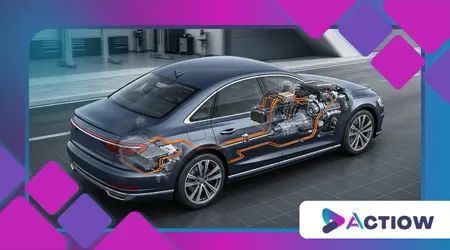
The integration of a higher-voltage grid allows automakers to implement sophisticated mild-hybrid systems that take a massive load off the internal combustion engine.
Instead of a traditional alternator, these setups utilize an integrated starter-generator capable of capturing kinetic energy during braking and storing it in a small lithium-ion battery.
The system can then deploy this stored energy to assist the engine during hard acceleration, significantly lowering fuel consumption.
Furthermore, this setup enables advanced coasting functions where the internal combustion engine can shut completely down while cruising on the highway.
Because the electrical system operates at a higher voltage, crucial components like power steering and air conditioning continue running flawlessly without engine power.
This seamless management of energy allows vehicles to cut carbon emissions without sacrificing the driver’s comfort or safety.
++ Cum ar putea bateriile în stare solidă să schimbe mașinile electrice în 2026
What Role Do Modern Environmental Mandates Play?
Strict global environmental regulations are forcing automotive manufacturers to rethink traditional engine designs to avoid paying catastrophic non-compliance fines.
Data from automotive research firm S&P Global Mobility indicates that mild-hybrid configurations utilizing 48 volt electrical systems are projected to capture over 25% of the global light vehicle market by 2026.
This statistical surge proves that higher-voltage architecture is no longer an exotic luxury feature but an absolute regulatory necessity.
By adopting this standard, manufacturers can clean up their fleet emission averages quickly without completely re-engineering their existing vehicle assembly lines.
It provides a highly cost-effective, practical solution for meeting immediate regulatory goals while the global charging infrastructure for pure electric vehicles matures.
This strategy allows combustion engines to survive sustainably in a world that demands rapid decarbonization.
How Do Consumers Benefit From This Engineering Shift?
In What Ways Does It Enhance Ride Comfort and Handling?
One of the most impressive real-world applications of this technology is the implementation of ultra-fast, electronically controlled active suspension components.
For instance, Bentley utilizes its specialized Dynamic Ride system, which uses 48V electric actuators on the anti-roll bars to counter body roll instantly during aggressive cornering maneuvers.
The system applies immense counter-force in milliseconds, keeping the heavy luxury vehicle perfectly flat and stable through sharp mountain switchbacks.
When the vehicle returns to a straight highway, the system instantly disconnects the anti-roll bars to ensure maximum comfort over rough potholes.
A traditional 12-volt system lacks the sheer electrical muscle required to twist these heavy physical components fast enough to alter handling dynamics in real time.
Consumers get the best of both worlds: the sharp, flat handling of a sports car combined with the plush ride of an executive limousine.
Citește și: Cum îmbunătățesc oglinzile retrovizoare digitale vizibilitatea în trafic
How Does It Improve Start-Stop System Smoothness?
Early iterations of automatic engine start-stop systems were notoriously clunky, causing the entire cabin to shudder violently every time the vehicle accelerated away from a red light.
This unpleasant vibration occurred because traditional 12-volt starters rely on a mechanical gear to physically engage and crank the engine flywheel.
Many drivers found this system so annoying that they routinely disabled it immediately after starting their cars.
By switching to a higher-voltage integrated starter-generator, the engine fires back to life silently in less than 400 milliseconds.
The system spins the engine up to optimal operating RPM before injecting fuel, completely eliminating the violent mechanical shudder of traditional starters.
For example, an Audi equipped with this technology can restart its engine so smoothly that passengers rarely notice the transition from electric coasting to combustion power.
Rea more: Cum previn sistemele de securitate cibernetică ale vehiculelor atacurile cibernetice de la distanță
Can Higher Voltage Support More Advanced In-Car Technology?
Modern luxury vehicles require massive computational power to process real-time data from cameras, lidar sensors, and autonomous driving computers.
These sophisticated computing modules pull significant electrical current, which can cause voltage drops and unstable performance on an old-school 12-volt infrastructure.
Operating on 48 volt electrical systems ensures a stable, clean supply of clean power to delicate electronic components, preventing system glitches.
Additionally, this extra electrical headroom allows engineers to integrate high-end audio systems with massive subwoofers and advanced climate control features without draining the battery.
It opens the door for over-the-air software updates that introduce increasingly complex digital features throughout the operational lifespan of the vehicle.
Drivers enjoy a glitch-free tech experience that mirrors the responsiveness of premium consumer electronics.
What Are the Long-Term Manufacturing and Industry Impacts?
How Does Weight Reduction Lower Total Vehicle Production Costs?
While upgrading to a higher-voltage battery and robust electrical components increases initial development costs, it saves significant money during physical vehicle assembly.
Because higher voltage reduces the electrical current required to deliver power, engineers can use much thinner copper wiring throughout the vehicle’s wiring harness.
This reduction in wire diameter removes pounds of expensive copper from every single vehicle rolling down the assembly line.
Reducing physical weight directly translates to better fuel economy ratings and cheaper shipping costs for completed vehicles.
Furthermore, the reduction in wiring harness bulk makes the car much easier for factory robots to route through the tight corners of the vehicle chassis.
These manufacturing optimizations help lower overall production overhead, allowing carmakers to offer advanced technology at more competitive retail prices.
Why Are Carmakers Integrating This Architecture into Hybrid Powertrains?
Automakers are heavily relying on 48 volt electrical systems to extract maximum performance from downsized turbo engines.
A prime example is the deployment of electric superchargers, which use an electric motor to spin up the compressor wheel instantly before traditional exhaust-driven turbo lag can occur.
This setup allows a compact four-cylinder engine to deliver the instantaneous throttle response and low-end torque historically associated with a massive V8.
The higher-voltage architecture provides the instant burst of energy required to spin these electric compressors to over 70,000 RPM in fractions of a second.
This clever integration enables manufacturers to meet strict efficiency targets without forcing consumers to accept sluggish, uninspiring acceleration.
It redefines performance, proving that eco-friendly engineering can still deliver an incredibly engaging, responsive experience behind the wheel.
What Challenges Do Mechanics Face During System Repairs?
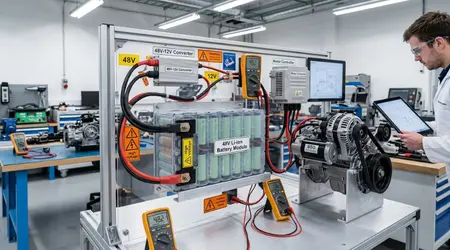
As workshops transition to servicing these advanced vehicles, independent mechanics must invest in specialized diagnostic equipment and updated safety training.
While 48 volts is generally considered safe from severe electrical shock risks, it still requires distinct handling procedures compared to traditional low-voltage setups.
Technicians must learn to identify color-coded wiring harnesses properly to avoid damaging sensitive electronic control units during routine maintenance.
Furthermore, troubleshooting complex mild-hybrid systems requires a deep understanding of software integration and digital communication protocols between different battery networks.
Shops that refuse to adapt to these technical requirements risk losing relevance as older 12-volt platforms phase out of production.
The automotive repair industry is undergoing a massive digital transformation, turning traditional mechanics into highly specialized electrical technicians.
Automotive Electrical System Architecture Comparison
The matrix below contrasts the operational capabilities of traditional and modern automotive electrical architectures.
| Technical Parameter | Traditional 12-Volt Grid | Modern 48-Volt System | Full High-Voltage EV (400V/800V) |
| Primary Use Case | Basic Electronics & Lighting | Mild-Hybrid Assist & Active Chassis | Total Vehicle Propulsion |
| Wiring Harness Weight | Heavy (Thick Copper Required) | Light (Thinned Copper Lines) | Very Heavy (Shielded Cables) |
| Start-Stop Response | Slow / Audible Shudder | Instant / Smooth Integration | N/A (Fully Electric) |
| Active Suspension Support | No (Inadequate Power) | Yes (Powers Active Anti-Roll Bars) | Yes (Full System Integration) |
| Fuel Efficiency Gain | Baseline Standard | 10% to 15% Improvement | 100% Displacement of Fuel |
| Relative Production Cost | Low / Legacy Tech | Moderate / Highly Cost-Effective | High / Large Battery Pack Needed |
The Ultimate Standard of Modern Efficiency
Adopting 48 volt electrical systems represents a brilliant, pragmatic triumph of modern automotive engineering over the physical limitations of legacy hardware.
This architecture allows automakers to comfortably satisfy strict environmental mandates while simultaneously elevating passenger comfort, vehicle handling, and digital processing speeds.
It breathes fresh, efficient life into internal combustion platforms, ensuring they remain highly relevant during the global transition toward total electrification.
Ultimately, this technology proves that true automotive progress does not always require completely abandoning traditional powertrains to achieve cleaner air.
By optimizing how energy flows through the chassis, engineers have crafted a smarter, lighter, and far more responsive breed of modern automobile.
The higher-voltage standard is no longer a futuristic concept; it is the silent engine driving the present era of transportation.
Have you noticed the smooth operation of a mild-hybrid vehicle during your daily commute? Share your personal driving experiences and technical thoughts in the comments below!
Întrebări frecvente
Can a 48V automotive electrical system cause dangerous shocks during maintenance?
No, 48 volts falls safely below the threshold of severe electrical shock hazards, though technicians still use insulated tools to protect sensitive components.
Do vehicles with this architecture completely eliminate the traditional 12V battery?
Most vehicles still utilize a small 12-volt battery to run basic components like door locks, interior lights, and central locking computers.
Does a mild-hybrid system require plugging into an electrical wall charger?
No, the system recaptures all of its energy automatically through regenerative braking and engine operation while you drive normally on the road.
Will buying a car with this technology increase my insurance premiums?
Insurance companies view these systems as standard safety and efficiency upgrades, meaning they generally carry normal premium rates identical to conventional cars.