
The Future of In-Car Payments: Toll Roads, Gas, and More
Anúncios
The Future of In-Car Payments!
Imagine pulling up to a toll booth, a drive-thru, or a gas pump — and never reaching for your wallet, phone, or even touching a screen.
Your car simply knows who you are, what you want, and pays instantly while you keep both hands on the wheel.
Anúncios
This isn’t science fiction anymore; it’s the quiet revolution already rolling out on highways and city streets worldwide.
Welcome to the future of in-car payments — a world where friction disappears, and the car becomes your seamless digital wallet on wheels.
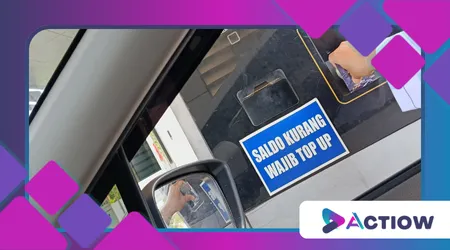
The Future of In-Car Payments: Article Overview – What We’ll Explore
- What Exactly Are In-Car Payments, and Why Do They Matter Now?
- How Do Modern In-Car Payment Systems Actually Work?
- Which Real-World Use Cases Are Already Live (With Original Examples)?
- What Are the Biggest Advantages — and the Hidden Risks?
- Who Are the Key Players Shaping This Future?
- When Will In-Car Payments Become Truly Mainstream?
- Frequently Asked Questions (FAQ Table)
++ Holographic Displays in Cars: Sci-Fi or the Next Normal?
What Exactly Are In-Car Payments and Why Do They Matter Now?
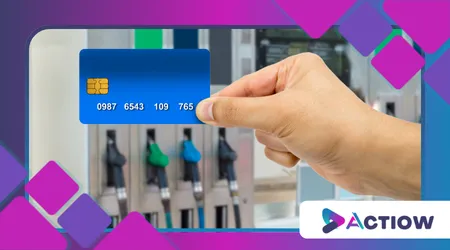
In-car payments are embedded systems that let your vehicle authenticate, authorize, and complete transactions without you leaving the driver’s seat — or even slowing down much.
Think of tolls, fuel, parking, EV charging, food orders, and even insurance micro-adjustments happening automatically.
The urgency isn’t just convenience.
++ The Growing Trend of Vehicle Subscription Apps
According to a 2024 Ptolemus Consulting Group study, the global connected car services market will surpass $220 billion by 2030, and in-car commerce alone is projected to reach $27 billion annually by 2028 — growing at 28% CAGR.
In other words, someone is going to own the dashboard wallet, and car makers, tech giants, and payment networks are racing to be that someone.
Yet this shift also forces us to ask: are we ready to hand over one of the last remaining “offline” moments of our day — the quick stop for coffee or gas — to always-on connectivity?
How Do Modern In-Car Payment Systems Actually Work?
At the core, three layers must talk to each other flawlessly:
- Identity & Authentication (usually biometric or tokenized credentials stored in the car’s secure element)
- Connectivity (5G or satellite for real-time authorization)
- Merchant integration (APIs that recognize your vehicle the moment you approach)
For instance, Mercedes-Benz’s MBUX system partnered with Visa uses a fingerprint sensor plus Cloud Token Framework.
++ Mazda CX-90 PHEV Review: A New Luxury Challenger?
When you pull into a supported Shell station, the pump reads your license plate or digital vehicle ID, the car wakes up, confirms it’s you via fingerprint, and Visa’s token completes the transaction in under two seconds. No app, no phone, no card dip.
Meanwhile, General Motors’ OnStar platform takes a different path: it links directly to your existing credit cards or PayPal account, but adds geofencing triggers.
Drive under a certain fast-food arch?
A voice prompt asks, “Large fries with that?” Say yes, and payment happens before you reach the window.
Which Real-World Use Cases Are Already Live (With Two Original Examples)?
Let’s go beyond the usual suspects.
“Drive-Thru Insurance Boost” (Pilot in Portugal, 2025)
Portuguese insurer Tranquilidade partnered with Stellantis and Mastercard to offer real-time “kilometer-top-up” insurance inside the car.
If your pay-as-you-drive policy is about to run out of covered kilometers while you’re on a weekend road trip, the dashboard gently notifies you 50 km before the limit.
One voice command adds 200 km for €9.80 — paid instantly — and you never violate your policy. Early data shows 68% of tested drivers accepted the upsell when prompted at the right moment.
“Toll-Splitting for Rideshare Carpools” (Live in Texas, 2025)
Via and Toyota Financial Services launched a feature on the Via app integrated into Toyota’s infotainment:
When four coworkers carpool using a Toyota with connected services, the system detects managed-lane tolls (e.g., Dallas North Tollway), automatically splits the fee according to who’s logged into the car (via their individual phone Bluetooth + seat-weight sensors), and charges each rider’s stored card proportionally.
No more “Hey, you owe me $1.80” texts.
| Use Case | Current Players (2025) | Payment Speed | Requires Driver Action? |
|---|---|---|---|
| Highway Tolls | Audi, Mercedes, Rivian + Visa | < 1 second | None |
| Fuel & EV Charging | Shell + Mercedes, BP + GM | 2–6 seconds | Voice or none |
| Drive-Thru Food | Starbucks + Honda, Domino’s + Ford | 4–10 seconds | Usually voice |
| Parking | EasyPark + Volvo, ParkWhiz + BMW | Instant | None |
| Insurance Micro-Topups | Tranquilidade + Stellantis | < 3 seconds | Voice confirmation |
| Carpool Toll Splitting | Via + Toyota | Real-time | None |
What Are the Biggest Advantages — and the Hidden Risks?
The upside feels almost unfair. McKinsey estimates seamless in-car commerce could save drivers 15–20 minutes per week — that’s nearly 17 hours a year just not fumbling for payment.
For fleet operators, the gain is measured in millions.
But convenience has a shadow. Every new payment surface is a new attack surface.
A 2024 Upstream Security report found connected vehicles suffered 950 cybersecurity incidents — a 225% jump year-over-year. If someone hijacks your in-car wallet, they aren’t just stealing a credit-card number; they potentially own your mobility.
Here’s the analogy that sticks: handing your car a digital wallet is like giving your house keys to a robot butler. Life becomes smoother — until the butler gets hacked.
Who Are the Key Players Shaping This Future?
Three camps are battling for dominance:
- Automakers (Mercedes PAY, GM Ultifi, Volkswagen CARIAD) want to own the dashboard and the recurring revenue.
- Big Tech & Payment Networks (Apple CarPlay Next Gen with Apple Pay, Google Automotive Services + Google Pay, Visa In-Vehicle Token Service) want to extend their existing wallets into the car.
- New entrants (Turo + Mastercard dynamic CVV for peer-to-peer rentals, Xevo Journeyware white-label platform used by 40+ brands) are betting on agnostic middleware.
Right now, the automakers hold the physical touchpoints, but Big Tech owns consumer trust in payments. Whoever solves privacy better wins.
When Will In-Car Payments Become Truly Mainstream?
By 2027, Counterpoint Research predicts 75% of new vehicles sold globally will ship with embedded payment capability.
The tipping point isn’t technology — it’s regulation and consumer opt-in rates.
Europe’s Digital Markets Act and California’s CPPA are already forcing clearer consent screens.
If drivers feel bullied into linking cards, adoption stalls.
But when the experience is genuinely magical (think pulling away from an EV charger the instant the cable disconnects because payment already cleared), resistance melts.
So here’s the rhetorical question that matters: When your car pays faster and safer than you ever could with your phone, will you still insist on doing it the old way?
The Future of In-Car Payments: Frequently Asked Questions
| Question | Answer |
|---|---|
| Do in-car payments work without internet? | Most require at least intermittent 5G/satellite. Some toll systems cache transactions and settle later. |
| Can I use any credit card? | Usually limited to cards tokenized by Visa, Mastercard, or the carmaker’s partner bank. Amex and Discover are catching up. |
| What if my car gets stolen? | Modern systems require biometric re-authentication (fingerprint/face) for high-value transactions after engine start. |
| Are the fees higher than paying manually? | Generally no — merchants often absorb or reduce fees because fraud drops dramatically with tokenized payments. |
| Will this kill traditional gas-station loyalty programs? | No — many are migrating inside the car. Shell + Mercedes still gives you Fuel Rewards points automatically. |
| Is my location data sold? | Depends on the brand. EU GDPR and California CCPA give you opt-out rights; read the 2025 updated privacy policies. |
Further Reading: