
Why station wagons ruled family travel before the SUV era
Anúncios
Station wagons anchored the post-war mid-century suburban landscape, serving as the definitive architectural vehicle for the quintessential cross-country family road trip adventure.
Long before aggressive marketing campaigns convinced the public that they required high-riding, heavy utility vehicles, these low-slung, stretched family machines efficiently transported generations of travelers across vast national highway networks.
Understanding the meteoric rise and subsequent cultural displacement of this iconic automotive segment requires analyzing structural shifts in infrastructure, manufacturing regulations, and consumer lifestyle preferences.
Anúncios
Looking back from 2026, we see a fascinating historical cycle where these long-roofed vehicles represent a pure, highly practical golden era of family mobility.
Core Historical Insights
- Industrial Foundations: Early long-roof vehicles originated as commercial depot hacks built primarily to haul passengers and heavy luggage away from remote train stations.
- Sociological Dominance: Suburban expansion combined with the rapid development of interstate highways directly elevated these vehicles into ultimate symbols of middle-class prosperity.
- Regulatory Displacement: The introduction of stringent corporate fuel efficiency mandates inadvertently doomed the classic full-size wagon while carving a legal path for SUVs.
Why Did the Long-Roof Design Dominate Suburbia?
What Are the Origins of Depot Hacks and Woodies?
The fascinating evolutionary journey of the classic long-roof profile began far away from pristine suburban driveways and manicured country club parking lots.
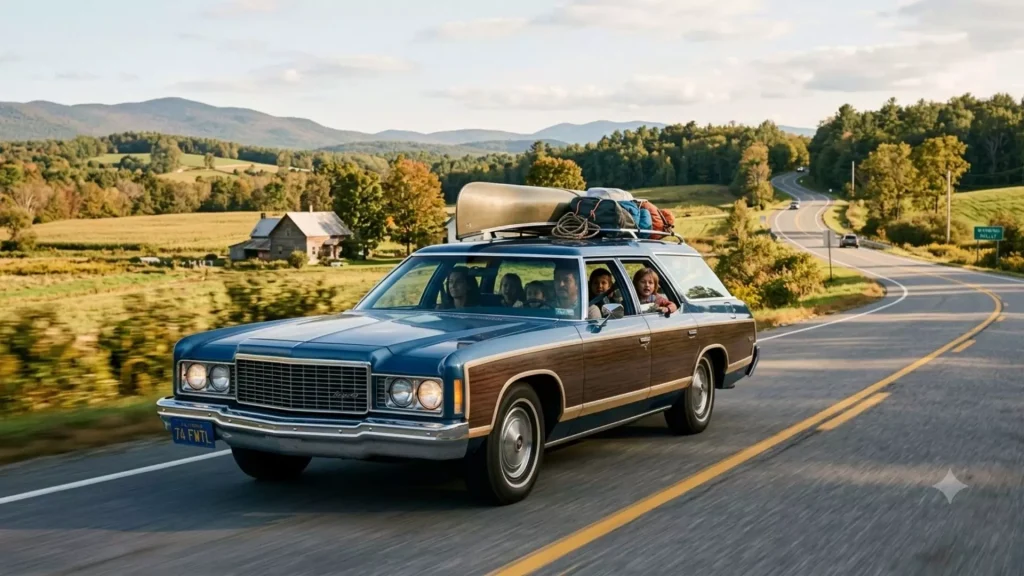
In the early twentieth century, specialized custom builders crafted utilitarian wooden utility vehicles, affectionately called depot hacks, exclusively to ferry wealthy train passengers and immense luggage trunks.
These bespoke wood-paneled machines valued absolute volumetric capacity over passenger comfort, utilizing rugged commercial truck chassis to handle punishing, unpaved muddy roads.
By the late 1930s, major global automotive manufacturers recognized the immense commercial potential of incorporating these high-capacity utility designs directly into standard passenger car product lines.
Ford and General Motors began mass-producing elegant, wood-clad station wagons that quickly captured the imaginations of wealthy estate owners who desired sophisticated, multi-purpose transport vehicles.
These gorgeous “woodies” demanded intense structural maintenance, but they permanently established the long-roof silhouette as a prestigious, highly desirable badge of aristocratic leisure.
As manufacturing technology advanced rapidly following the conclusion of World War II, costly organic wood framing gave way to durable, stamped all-steel bodies.
This crucial industrial transformation drastically lowered retail prices, making the highly versatile long-roof body style accessible to millions of middle-class households.
The vehicle smoothly transitioned from an exclusive luxury plaything for country estates into the reliable, mass-market backbone of a rapidly industrializing global workforce.
How Did Post-War Suburbia Boost Family Travel?
The massive implementation of the historic Federal-Aid Highway Act of 1956 completely altered the geographical layout of families, creating sprawling new suburban communities.
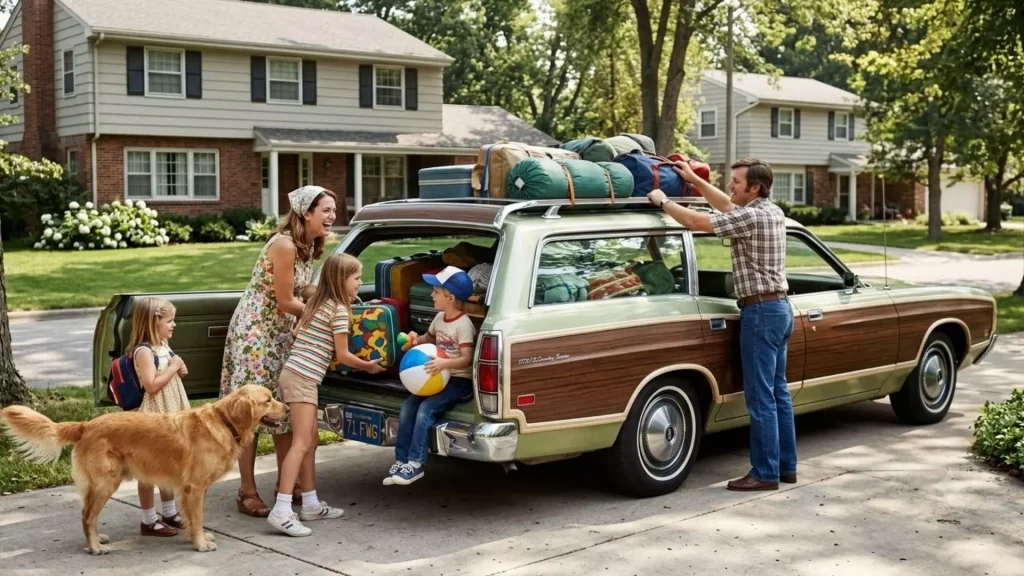
Millions of young parents migrated out of congested metropolitan city centers, establishing a fresh lifestyle centered around backyard barbecues, shopping malls, and long summer road trips.
This massive cultural shift demanded a brand-new breed of family automobile that could comfortably carry parents, multiple children, and immense luggage payloads simultaneously.
Automakers responded by lengthening standard sedan platforms, extending the steel roofline completely to the rear bumper to create an unmatched cavern of cargo utility.
Families suddenly possessed a civilized machine that drove like a premium sedan but offered the immense, flexible loading capacity of a commercial delivery van.
It quickly became the definitive rolling living room of the baby boom generation, shuttling millions of children to schools, drive-in theaters, and national parks.
++ Orijinal Ford GT40'ın Unutulmuş Hikayesi
Why Was Lower Ride Height Preferred Over Tall Trucks?
Unlike modern consumers who gravitate toward towering seating positions, mid-century drivers heavily favored the car-based driving dynamics of low-slung vehicles.
Built directly upon standard full-size passenger car chassis, these vehicles featured a wonderfully low center of gravity that guaranteed exceptional highway stability.
They sliced through crosswinds gracefully, completely avoiding the terrifying body roll and top-heavy handling quirks that plagued the commercial truck platforms of that era.
Furthermore, the low step-in height meant that toddlers, elderly grandparents, and family dogs could enter and exit the vehicle without needing step bars.
Loading heavy luggage, ice chests, and massive canvas camping tents into the rear cargo hold required minimal physical lifting compared to tall utility trucks.
The vehicle integrated seamlessly into daily domestic life, offering unmatched utility without forcing the driver to pilot a cumbersome, agricultural commercial vehicle.
How Did Engineering Innovations Elevate Cargo Versatility?
What Was the Magic of Three-Row Seating Layouts?
Automakers engaged in a fierce engineering arms race throughout the 1960s to maximize passenger density within the boundaries of a traditional car platform.
The definitive breakthrough arrived with the clever implementation of rear-facing third-row seats, turning these machines into highly efficient, eight-passenger family haulers.
This unique seating arrangement became a legendary rite of passage for millions of children who spent long summer road trips looking out the rear window.
This rear-facing perspective decoupled children from parental supervision, transforming the back row into an interactive theater for making faces at trailing drivers.
When cargo took precedence over passengers, the clever seats folded completely flat into the floorboards without requiring physical removal from the vehicle.
This engineering wizardry allowed a parent to transition from a neighborhood carpool lane to a lumberyard run within a matter of minutes.
Ayrıca okuyun: Toyota Supra 2026'da Neden Yeniden Efsane Oldu?
How Did the Dual-Action Tailgate Revolutionize Cargo Access?
Accessing the immense rear cargo hold of early utility vehicles required fighting heavy, awkward multi-piece tailgates that often leaked dust and rainwater.
Ford completely revolutionized the industry in 1966 by introducing the ingenious “Magic Doorgate” across its popular full-size family line.
This brilliant mechanical innovation allowed the rear tailgate to function either as a traditional drop-down truck gate or swing open sideways like a door.
This dual-action flexibility meant that owners could easily walk directly into the back of the vehicle to drop off heavy grocery bags.
If they needed to carry long wooden boards, dropping the gate extended the flat floor space well beyond the physical bumper line.
This single mechanical feature redefined consumer expectations, forcing competing car manufacturers to develop their own complex multi-way door systems rapidly.
Devamını oku: Motosiklet Yarışlarının İlk Döneminde Kadınların Gizli Tarihi
Why Did Faux Wood Paneling Become a Cultural Symbol?
As manufacturing evolved away from real structural wood due to high rot risks and intense maintenance costs, automakers faced a unique aesthetic dilemma.
Consumers still associated the warm look of rich timber with premium luxury, outdoor adventure, and high social status within suburban neighborhoods.
To preserve this lucrative emotional connection, designers began applying highly realistic, adhesive vinyl simulated wood-grain decals directly over the exterior steel door panels.
This decorative choice culminated in iconic legends like the Ford Country Squire and the gorgeous Chrysler Town & Country, which dominated suburban driveways.
The rich contrast between gleaming chrome trim and deep Di-Noc vinyl wood paneling became the definitive visual signature of American family prosperity.
While later generations eventually viewed it as an outdated design cliché, this distinctive look originally represented the absolute pinnacle of premium family travel.
What Caused the Sudden Downfall of the Wagon Kingdom?
How Did CAFE Regulations Inadvertently Damage the Segment?
The long, prosperous reign of full-size family station wagons came to a sudden, grinding halt due to federal environmental policy shifts.
Following the severe oil crises of the 1970s, the United States government enacted strict Corporate Average Fuel Economy rules to force automakers to improve efficiency.
These complex regulations established incredibly tough fuel economy targets for traditional passenger cars while granting much more lenient standards to light commercial trucks.
Because these long-roof vehicles legally counted as standard passenger cars, manufacturers could no longer build massive, heavy V8-powered versions without facing crushing financial penalties.
Seeking a clever loophole to satisfy the consumer demand for large family vehicles, brilliant Detroit product planners quickly pivoted toward truck-based platforms.
This legislative shift directly paved the structural highway for the modern SUV explosion, killing off the traditional full-size car-based wagon.
Why Did the Minivan Steal the Family Crown in 1984?
While regulatory pressures squeezed the traditional long-roof market from above, a revolutionary packaging alternative blindsided the industry from below.
The historic launch of the clean, front-wheel-drive Chrysler minivans in 1984 offered a quantum leap forward in efficient family transportation design.
These tall, boxy machines occupied less physical garage space than a full-size car while delivering vastly superior interior headroom and cargo volume.
The introduction of the sliding side door completely changed how parents managed chaotic school drop-off zones and tight grocery parking lots.
Children could open the doors wide without any risk of dinging adjacent vehicles, while parents could easily stand upright inside to buckle car seats.
This unmatched, hyper-focused utility instantly turned the once-beloved long-roof family cruiser into an obsolete relic of an older generation.
How Did Marketing Shift Consumer Desires Toward Rugged SUVs?
As the 1990s approached, the younger generation of parents entering the car market fiercely rejected the vehicles of their own childhoods.
Driving a traditional wood-paneled wagon signaling to the entire world that you had completely surrendered your youth to domestic suburbia.
Savvy automotive marketing departments capitalized heavily on this psychological shift, repositioning rugged four-wheel-drive vehicles as exciting symbols of outdoor athleticism, freedom, and untamed weekend adventure.
Even if a family only used their new Jeep Cherokee or Ford Explorer to commute to suburban soccer fields, the rugged image mattered immensely.
Statistics from the automotive historical archives highlight this massive structural shift across global consumer sales trends during this transformational transition era.
For instance, according to data compiled by the Bureau of Transportation Statistics, light truck sales which includes SUVs overtook traditional passenger car sales for the first time by the early 2000s, permanently altering the global automotive landscape.
Mid-Century Wagon vs. Modern SUV Historical Comparison
The informative table below tracks the functional and architectural trade-offs between classic family long-roofs and modern utility platforms.
| Core Architectural Attribute | Classic Mid-Century Station Wagons | Modern Sport Utility Vehicles (SUV) |
| Chassis Foundation | Low-Slung Passenger Car Platform | Tall Light Truck / Raised Unibody |
| Center of Gravity | Very Low (Excellent Highway Stability) | High (Prone to Body Roll and Sway) |
| Third-Row Configuration | Rear-Facing (Folds Into Floorboard) | Forward-Facing (Takes Up Cargo Space) |
| Tailgate Functionality | Dual-Action Swing / Drop-Down Gates | Vertical Motorized Liftgates |
| Step-In Clearance Height | Low (Car-Like / Highly Accessible) | Elevated (Requires Stepping Upward) |
| Regulatory Category | Passenger Car (Strict Fuel Mandates) | Light Truck (Historically Relaxed Rules) |
The Legacy of the Long-Roof Icon
Reviewing this rich automotive chronicle reminds us that the classic family wagon was a masterpiece of specialized, form-follows-function transportation engineering.
It did not try to project a false image of rugged mountain-climbing ability; instead, it focused on mastering the paved highway with smooth comfort.
This pure dedication to family utility created an enduring cultural icon that perfectly captured the optimistic, forward-looking energy of an entire generation of travelers.
While the modern automotive market remains deeply saturated with high-riding crossovers, a sophisticated enthusiast resurgence is quietly keeping the long-roof flame alive today.
True driving purists recognize that combining the sharp, agile dynamics of a sedan with a massive cargo box creates an incredibly rewarding machine.
The classic era of wood panels may have ended, but its brilliant engineering philosophy remains a benchmark of sensible design.
Did your family conquer the open highway in a classic long-roof cruiser, or did you grow up in the era of the modern SUV? Share your favorite road trip memories and vehicular stories in the comments below!
Sıkça Sorulan Sorular
Why did automakers stop using real wood on station wagons?
Real wood required intense, specialized annual maintenance and suffered terribly from weathering, rotting, and warping when exposed to harsh outdoor climates over time.
Are there any automotive brands still manufacturing station wagons in 2026?
Yes, premium European manufacturers like Audi, BMW, and Volvo continue to build ultra-high-performance long-roof luxury models for dedicated driving enthusiasts worldwide.
Was the fuel economy of classic mid-century wagons exceptionally poor?
Yes, because they utilized massive, heavy cast-iron V8 engines and lacked modern aerodynamic styling, most full-size models averaged under twelve miles per gallon.
Which classic station wagon model is considered the most collectible today?
The iconic Buick Estate, Oldsmobile Custom Cruiser, and Ford Country Squire from the late 1960s command top dollar among passionate vintage automotive collectors.