
Why long wheelbase SUVs are growing in family markets
Anúncios
Long wheelbase SUVs represent the absolute pinnacle of automotive engineering, combining expansive passenger room with uncompromising luxury and heavy-duty towing capacity.
Modern automotive markets see massive demand as families and executives demand greater cabin flexibility without sacrificing road presence.
Driving a stretched platform vehicle redefines long-distance road trips by transforming the interior into a genuine mobile lounge.
Anúncios
Choosing an extended frame configuration gives drivers unmatched cargo volume alongside superior high-speed tracking stability.
Automotive journalists across 2026 report that extended-platform utility vehicles now dominate premium dealership sales charts worldwide.
Engineers continuously refine chassis dynamics to ensure these massive cruisers handle winding country lanes with surprising agility and grace.
Evaluating whether an extra-large chassis fits your garage space requires looking past the impressive aesthetic appeal into practical daily usability.
Are you prepared to discover how extended-platform engineering changes modern family transportation forever?
Navigating Extended Platform Automotive Trends
- Evaluating structural chassis extensions and interior volume gains.
- Analyzing maneuverability challenges in tight urban parking structures.
- Comparing powertrain efficiency across heavy-duty utility vehicle classes.
- Assessing resale value trends for premium stretched-wheelbase models.
What Defines the Architecture of Extended Frame Utility Vehicles?

Long wheelbase SUVs feature lengthened floorpans that push the front and rear axles further apart to dramatically expand middle and rear row legroom.
This structural modification creates massive interior volume without altering the fundamental exterior design language of the base model.
Think of these vehicles as private executive jets designed for highway asphalt rather than high-altitude skies. Every extra inch of metal directly benefits passenger comfort and cargo hauling versatility.
Manufacturers utilize high-strength steel alloys and aluminum subframes to keep vehicle weight manageable despite the significantly expanded physical dimensions.
Suspension systems receive heavy-duty air springs and adaptive dampers to maintain a plush ride quality across severely broken pavement.
When fully loaded with passengers and luggage, these sophisticated chassis setups prevent sagging and maintain precise steering feedback. Precision engineering turns what could be an unwieldy bus into a remarkably composed luxury cruiser.
How Does Extra Spacing Improve Passenger Comfort?
Stretching the distance between the wheels creates generous second and third-row legroom that rivals executive limousines on the market.
Passengers can recline fully during long highway journeys without encroaching on the personal space of travelers seated behind them. This extra breathing room reduces travel fatigue significantly for large families crossing state lines.
Why Do Manufacturers Reinforce Chassis Frame Rails?
Lengthening a vehicle frame introduces potential structural flex points that engineers must neutralize through reinforced crossmembers and thicker steel box sections.
These modifications ensure the vehicle maintains exceptional crash safety ratings while supporting heavy towing loads. Rigidity prevents unwanted cabin rattles and ensures long-term durability under harsh operational conditions.
++ What Makes a Car Truly Reliable in Today’s Market?
What Impact Does Length Have on Cargo Capacity?
Extending the rear overhang behind the back axle unlocks cavernous trunk space even when all three rows of seats remain upright.
Drivers no longer need to compromise between carrying seven passengers and packing bulky vacation luggage for weekend getaways. This massive volumetric advantage makes extended models the ultimate choice for active households.
How Do These Large Cruisers Handle Daily Driving and Parking?
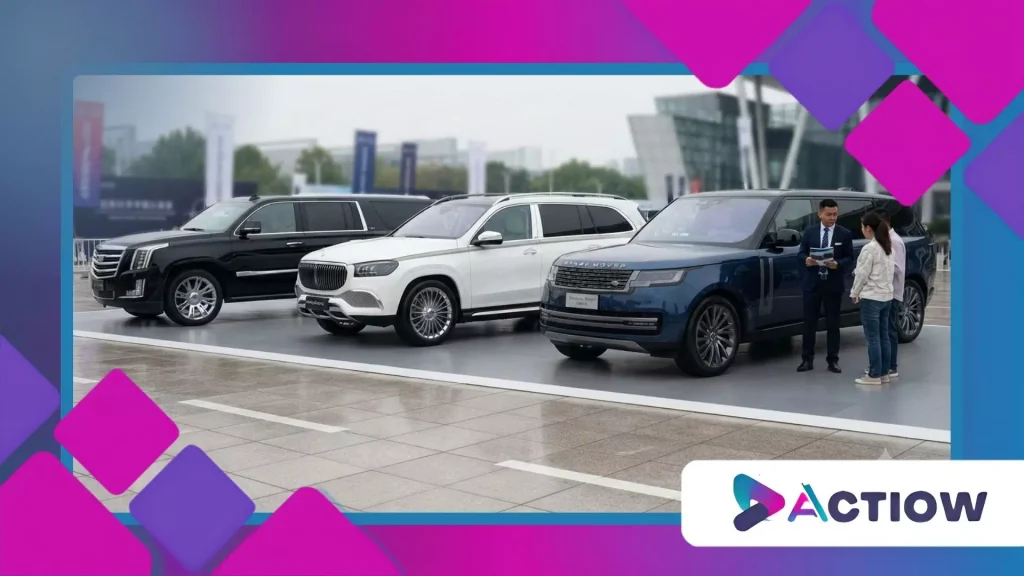
Navigating urban environments with long wheelbase SUVs requires a distinct shift in driving habits due to the expanded turning circle and overall vehicle length.
Multi-story parking garages built decades ago pose genuine spatial challenges for drivers unaccustomed to piloting heavy-duty utility dimensions.
Modern automotive brands mitigate these hurdles by equipping their flagships with advanced 360-degree camera arrays and active rear-wheel steering.
These technological interventions allow large vehicles to pivot tightly around narrow street corners with surprising ease.
Out on the open interstate, however, the massive footprint translates into unmatched straight-line stability and a serene, floating ride quality.
Crosswinds barely register against the heavy body mass, keeping the steering wheel calm and relaxed during long highway commutes.
According to recent market analysis data from automotive safety institutes, larger utility vehicles provide superior crash energy dissipation in multi-vehicle collisions.
Balancing everyday parking inconvenience against highway serenity remains the primary consideration for potential buyers.
Also read: Honda WN7: why this award-winning EV bike matters globally now
Why Is Rear-Wheel Steering Essential?
Rear-wheel steering systems turn the back wheels in the opposite direction of the front wheels at low speeds to shrink the turning radius.
This clever mechanical trick makes parallel parking a massive suburban grocery store vehicle feel like handling a mid-size sedan. At highway speeds, the rear wheels turn in phase with the fronts to enhance lane-change stability.
Read more: Smaller Vehicles Are Becoming More Popular in Cities
How Do Advanced Camera Systems Prevent Accidents?
High-definition multi-angle cameras project real-time virtual overhead views onto dashboard screens to eliminate dangerous blind spots during tight maneuvers.
Ultrasonic sensors emit audible warnings when bumper clearances shrink too close to concrete pillars or stray bicycles. Technology successfully bridges the gap between massive physical dimensions and precise driver control.
What Fuel Efficiency Realities Should Buyers Expect?
Pushing a heavy, aerodynamic-defying chassis requires substantial engine output, resulting in higher fuel consumption compared to standard compact crossovers.
Hybrid and plug-in hybrid variants help mitigate daily fuel costs by providing electric-only city commuting capability.
Buyers must factor ongoing energy expenses into their long-term ownership calculations before signing purchase agreements.
Why Are Powertrain Options Changing Across the Segment?
Powering modern long wheelbase SUVs demands robust engineering capable of moving three tons of metal, passengers, and gear with effortless authority.
Traditional V8 engines are increasingly sharing showroom floors with high-output twin-turbocharged V6 powerplants and sophisticated plug-in hybrid systems.
These modern powertrains deliver massive torque figures at lower RPM ranges, ensuring instant throttle response when merging onto fast traffic lanes.
Efficiency meets brute force in a delicate balance that satisfies both environmental standards and towing requirements.
Towing heavy boat trailers or luxury camping units requires immense cooling capacity and transmission durability that only specialized heavy-duty platforms can provide.
Industry benchmarks show that maximum towing capacities often exceed nine thousand pounds when properly equipped with integrated trailer brake controllers.
This dual capability as both a luxurious family carrier and a workhorse makes large utility vehicles uniquely indispensable.
Innovation ensures these classic automotive giants remain relevant in a rapidly changing technological landscape.
How Do Turbochargers Enhance Performance?
Turbochargers force compressed air into the engine cylinders, allowing smaller displacement motors to produce massive horsepower figures previously reserved for large V8 blocks.
This forced induction provides instant acceleration response without the lag traditionally associated with older heavy-duty turbo systems. Drivers enjoy effortless passing power on steep mountain grades even with a full cabin.
Why Are Hybrid Systems Gaining Popularity?
Integrating electric motors into heavy utility platforms provides instantaneous low-end torque while drastically reducing city fuel consumption figures.
Owners can complete short school runs and grocery trips on silent battery power alone before the gasoline engine activates for highway travel.
Sustainability features make large vehicle ownership more palatable for environmentally conscious consumers.
What Role Does Transmission Gearing Play?
Modern ten-speed automatic transmissions keep the engine operating inside its optimal efficiency band across varying road speeds and loads.
Closely spaced gear ratios eliminate surging during acceleration, delivering a seamless power delivery experience for all vehicle occupants.
Transmission intelligence adapts shift patterns dynamically based on driving style and terrain conditions.
Comparative Specifications Matrix
The structured table below contrasts key operational metrics across three popular full-size extended utility vehicle configurations currently available.
| Vehicle Model | Overall Length | Seating Capacity | Max Towing Rating | Primary Powertrain Type |
| Extended Premium Cruiser A | 227 inches | 8 passengers | 8,300 lbs | Twin-Turbo V6 Hybrid |
| Stretched Luxury Flagship B | 224 inches | 7 passengers | 7,900 lbs | Supercharged V8 Gasoline |
| Heavy-Duty Utility Titan C | 225 inches | 8 passengers | 9,000 lbs | Turbo Diesel Inline-6 |
Conclusion
Embracing the capabilities of long wheelbase SUVs transforms how families and executives approach long-distance travel and daily cargo transport.
Balancing exterior size against unmatched interior luxury requires careful consideration of your garage space and driving habits.
These engineering titans prove that comfort, capability, and space can coexist harmoniously on modern highways.
Take time to test drive an extended platform vehicle before making your next major automotive investment. What feature matters most to your family when choosing a large vehicle? Share your thoughts below!
Frequently Asked Questions
Do extended wheelbase vehicles require special driver licenses?
Standard driver licenses permit individuals to operate all consumer-grade large utility vehicles and full-size SUVs without requiring commercial endorsements.
However, learning proper spatial awareness and practicing trailer towing techniques in an empty parking lot is always recommended before navigating busy city streets.
How do extended models affect routine maintenance costs?
Routine maintenance expenses tend to run slightly higher due to larger tire sizes, increased brake pad wear from heavier vehicle mass, and higher fluid capacities.
Budgeting for premium replacement parts ensures your vehicle maintains peak mechanical reliability throughout its operational lifespan.
Are these large vehicles difficult to park in modern garages?
Standard residential garages built within the last two decades usually accommodate these vehicles, though older homes with shorter architectural depths may require careful measurement.
Always verify your garage length clearance before finalizing a purchase to avoid unexpected residential remodeling projects.
