
Kia EV9 vs Hyundai Ioniq 9: Which Three-Row Electric SUV Fits Families Better?
Anúncios
Kia EV9 vs Hyundai Ioniq 9 represents the pinnacle of modern family mobility, pitting two corporate siblings against one another in the booming three-row electric SUV segment.
Families searching for zero-emission utility face an intriguing dilemma as these magnificent machines roll out across international markets with distinct engineering philosophies.
Discerning buyers demand comprehensive comparative insights regarding driving dynamics, charging architectures, interior packaging, and long-term value retention.
Anúncios
Automotive journalism requires absolute precision when evaluating multimillion-dollar engineering projects that redefine modern highway travel.
Navigating this sibling rivalry demands a meticulous breakdown of platform architectures, battery capacities, cabin ergonomics, and technological innovations.
Modern automotive engineers utilize advanced modular systems to maximize interior volume while optimizing aerodynamic efficiency for extended highway cruising ranges.
Think of these flagship electric sport utility vehicles as custom-built executive lounges capable of traversing continents silently. Are you ready to discover which sibling truly dominates the electric family transport market?
Exploring Shared Platforms and Distinct Family Philosophies
- Evaluating structural chassis layouts derived from the advanced E-GMP skateboard architecture.
- Analyzing differences in battery pack capacities, thermal management systems, and projected driving ranges.
- Comparing interior seating configurations, cargo capacities, and luxury convenience amenity packages.
- Assessing real-world charging speeds, pricing strategies, and long-term ownership cost metrics.
How Do Mechanical Foundations and Performance Metrics Differ?
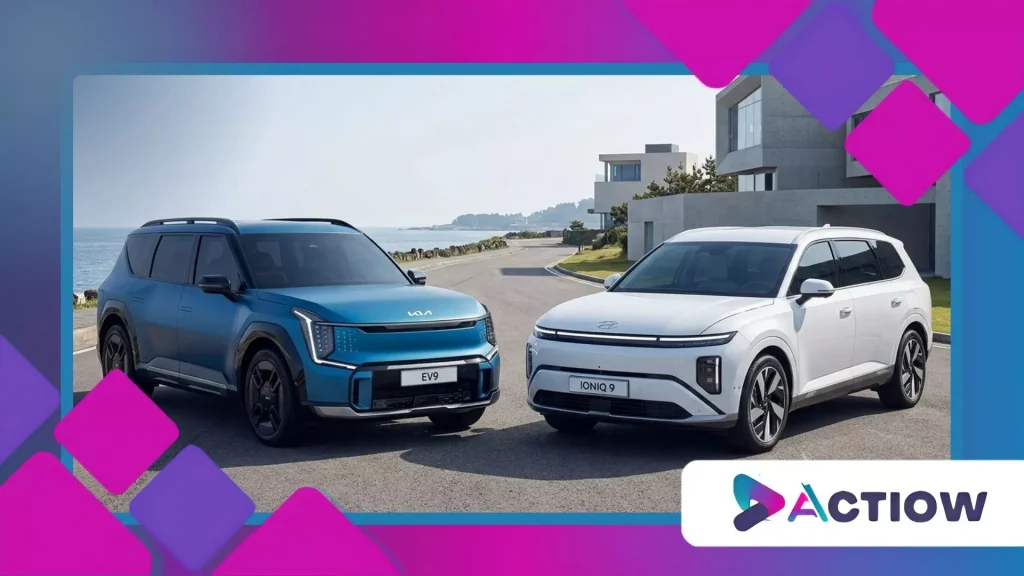
Kia EV9 vs Hyundai Ioniq 9 share the highly acclaimed Electric Global Modular Platform (E-GMP), yet engineering variations yield surprisingly distinct driving characteristics on open roads.
The Kia variant traditionally emphasizes a slightly firmer, driver-focused suspension tuning that inspires confidence during aggressive cornering maneuvers.
Conversely, its corporate counterpart prioritizes plush ride comfort, utilizing acoustic glass and active noise cancellation technologies to isolate passengers from harsh environmental sounds.
Imagine carving through winding mountain switchbacks in a heavy family hauler that handles like a responsive sports sedan.
Automotive road tests confirm that both models deliver instantaneous torque delivery and seamless power distribution across all available wheel configurations.
Battery chemistry and pack sizing represent another critical divergence point between these two formidable electric competitors.
While the Kia model typically utilizes a robust 99.8-kilowatt-hour battery pack, the newer Hyundai flagship introduces a larger 110.3-kilowatt-hour energy reservoir.
According to comprehensive automotive benchmark data published by InsideEVs, this larger capacity grants the Hyundai variant a noticeable advantage in maximum driving range.
When drivers embark on cross-country holiday road trips, every additional mile of operational range minimizes charging stops and reduces travel fatigue significantly.
Efficiency remains the ultimate currency in modern electric vehicle engineering.
What Makes the E-GMP Architecture Exceptionally Versatile?
The shared modular skateboard chassis places heavy battery cells low between the axles, creating an exceptionally low center of gravity for improved safety.
This clever structural layout simultaneously maximizes cabin legroom and eliminates intrusive mechanical transmission tunnels.
++ Jeep Compass EV vs Peugeot E-3008: which electric SUV travels farther?
Why Do Suspension Tuning Choices Matter for Families?
Balancing ride stiffness ensures that sleeping children in the third row remain undisturbed while drivers maintain crisp steering feedback during emergency maneuvers.
Fine-tuned damper settings absorb severe urban potholes without inducing uncomfortable body roll.
Also read: Toyota Prius vs Honda Insight: The Most Efficient Hybrid for Daily Driving
How Do Dual-Motor Powertrains Handle Adverse Weather?
Advanced torque-vectoring all-wheel-drive systems continuously monitor wheel slip, instantaneously transferring power to tires with optimal traction on slippery winter roads.
Intelligent software calibration guarantees secure handling during heavy rain or snowstorms.
How Do Interior Layouts and Cargo Capacities Compare?
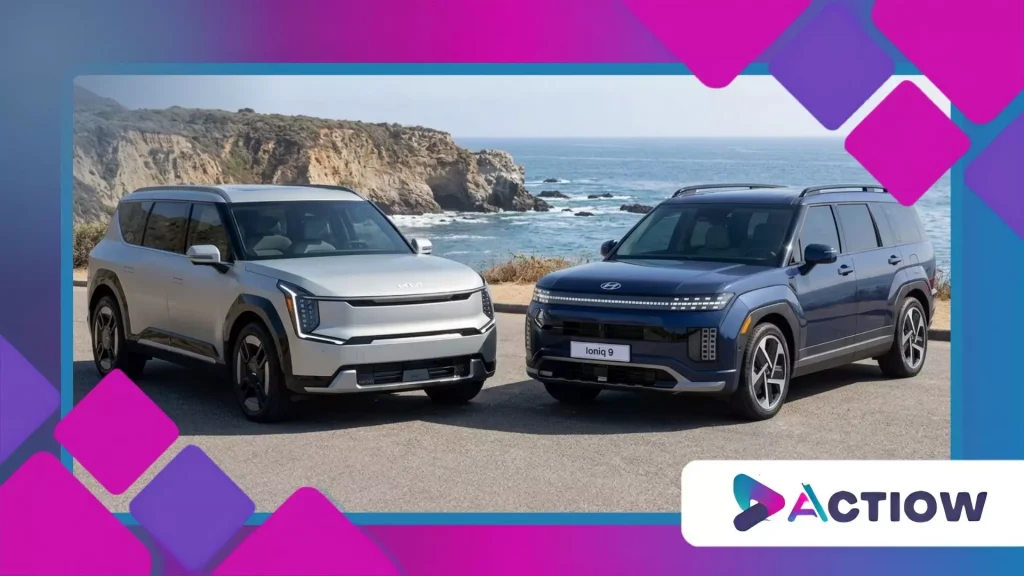
Kia EV9 vs Hyundai Ioniq 9 showcase brilliant spatial packaging, though subtle exterior silhouette modifications create distinct interior atmospheres for daily commuting.
The Hyundai entry features a slightly elongated wheelbase and a gracefully curved roofline, yielding generous cargo volume gains behind the third-row seats.
Think of packing bulky camping gear, bicycles, and luggage for a family of seven into a cavernous hold that swallows gear effortlessly.
Interior designers utilize smart sliding second-row captain chairs and fold-flat third-row benches to configure passenger cabins dynamically on demand.
Material selection inside these flagship cabins elevates eco-conscious luxury to unprecedented heights through recycled textiles, bio-polyurethane leather, and sustainable wool blends.
Ergonomic studies highlight that intuitive dual-screen infotainment interfaces reduce driver distraction while providing crystal-clear navigation and climate controls.
When families spend countless hours commuting or traveling together, ambient lighting and supportive seating transform routine drives into relaxing therapeutic experiences.
Comfort is no longer a secondary consideration in utilitarian people-movers.
Read more: Tesla Model Y vs Kia EV6: Which Electric SUV Is Better in 2026?
Why Are Flexible Seating Configurations Essential for Parents?
Growing families require adaptable seating arrangements that easily accommodate bulky child safety seats without blocking access to rear rows.
Quick-folding mechanisms allow parents to transition instantly between maximum passenger capacity and hauling oversized cargo.
How Do Infotainment Systems Enhance Daily Usability?
Integrated cloud-based navigation systems automatically route vehicles through operational charging stations while pre-conditioning battery packs for maximum charging speeds.
Voice recognition software allows occupants to adjust climate zones without lifting hands from steering wheels.
What Role Do Panoramic Glass Roofs Play in Cabin Ambiance?
Expansive glass canopies flood multi-row cabins with natural sunlight, creating an airy, open-air environment that combats feelings of claustrophobia during long journeys.
Advanced solar-tinted glass coatings effectively block harmful ultraviolet radiation and excessive cabin heat.
How Do Charging Speeds and Long-Term Ownership Costs Stack Up?
Kia EV9 vs Hyundai Ioniq 9 utilize sophisticated 800-volt electrical architecture that enables lightning-fast direct current fast charging at compatible public charging stations.
Drivers can replenish battery reserves from ten to eighty percent in approximately twenty-four minutes under optimal environmental conditions.
Imagine pulling into a highway service plaza, plugging into a high-powered DC charger, and grabbing a coffee while your vehicle fully readies itself.
Real-world ownership analyses demonstrate that both models offer exceptional vehicle-to-load capabilities, turning the SUVs into mobile power generators for household appliances.
Financial considerations, including federal tax incentives, insurance premiums, and projected resale values, heavily influence final purchase decisions for budget-conscious household buyers.
While initial purchase prices overlap closely in top-tier trim configurations, promotional lease deals and dealer incentives frequently shift the value pendulum.
Intelligent shoppers evaluate total cost of ownership over a five-year horizon, factoring in electricity rates versus traditional gasoline expenditures. Sustainable motoring continues to prove its long-term financial viability.
How Does Vehicle-to-Load Technology Benefit Outdoor Enthusiasts?
Integrated alternating current outlets inside the cargo area supply up to 3.6 kilowatts of electrical power for camping gear, laptops, or emergency tools.
Turning an electric SUV into a portable generator adds incredible utility during weekend outdoor excursions.
Why Is Public Charging Network Access Crucial?
Seamless compatibility with expanding fast-charging networks ensures drivers never experience range anxiety during interstate travel across unfamiliar territories.
Plug-and-charge protocols streamline payment authentication without requiring physical credit cards or complicated smartphone applications.
What Factors Influence Long-Term Depreciation Rates?
Battery degradation warranties, software update support, and build quality directly dictate how well luxury electric SUVs retain their market value over time.
Comprehensive manufacturer guarantees offer essential peace of mind for second-hand buyers.
Three-Row Electric SUV Specification Matrix
The structured technical comparison table below highlights key performance and dimensional metrics differentiating these prominent sibling rivals.
| Technical Specification | Kia EV9 (Long Range AWD) | Hyundai Ioniq 9 (Long Range AWD) |
| Usable Battery Capacity | 99.8 kWh | 110.3 kWh |
| EPA-Projected Max Range | Up to 304 miles | Up to 335 miles |
| Architecture Voltage | 800V Ultra-Fast Charging | 800V Ultra-Fast Charging |
| Cargo Room (Rear Seats Folded) | Approx. 1,233 liters | 1,323 liters |
Navigating the Future of Sustainable Family Transport
Kia EV9 vs Hyundai Ioniq 9 ultimately demonstrates that choosing between these remarkable family haulers depends entirely on individual design preferences and daily driving priorities.
Buyers seeking sharper styling and athletic driving dynamics will naturally lean toward the adventurous Kia aesthetic.
Conversely, families prioritizing maximum driving range, serene acoustic comfort, and maximum interior cargo space will find the Hyundai flagship hard to resist.
Modern electric mobility has officially matured, offering zero-emission solutions without a single compromise on space or capability.
Take a moment to evaluate your family’s weekend travel habits and daily commuting demands. Which electric SUV philosophy aligns best with your household lifestyle? Share your experience in the comments below!
Frequently Asked Questions
Which electric SUV offers a longer driving range?
The Hyundai Ioniq 9 provides a slightly longer maximum driving range due to its larger 110.3-kilowatt-hour battery pack compared to its sibling.
Do both vehicles support ultra-fast public charging?
Yes, both models utilize advanced 800-volt electrical architectures that allow rapid charging from ten to eighty percent in about twenty-four minutes.
How many passengers can comfortably sit inside these SUVs?
Both spacious electric sport utility vehicles feature flexible three-row cabin layouts configured to seat up to seven passengers comfortably.
Are child safety seats easy to install in the second row?
Both SUVs offer wide-opening rear doors, easily accessible anchor points, and sliding captain chairs designed specifically to simplify child seat installation.
Do these electric models qualify for federal tax credits?
Leasing qualification rules and North American assembly standards frequently allow buyers to benefit from substantial electric vehicle purchase incentives.