
How Digital Twins Are Improving Vehicle Development
Anúncios
Digital Twins are fundamentally transforming how modern automotive engineers design, simulate, and manufacture next-generation vehicles.
Traditional prototype testing relied heavily on physical crash tests and expensive wind tunnel hours, but today virtual replicas revolutionize the entire production lifecycle.
By mirroring physical components and dynamic vehicle behaviors in a real-time digital environment, automotive pioneers can iterate designs faster than ever before.
Anúncios
This technological shift reduces physical waste, slashes development timelines, and ensures higher safety compliance across global markets.
Quick Navigation Through This Article
- What Core Concepts Define Digital Twins in Modern Automotive Engineering?
- How Do Virtual Replicas Accelerate Real-Time Vehicle Development Cycles?
- Why Are Major Automakers Rapidly Adopting Simulation Technologies Today?
What Core Concepts Define Digital Twins in Modern Automotive Engineering?
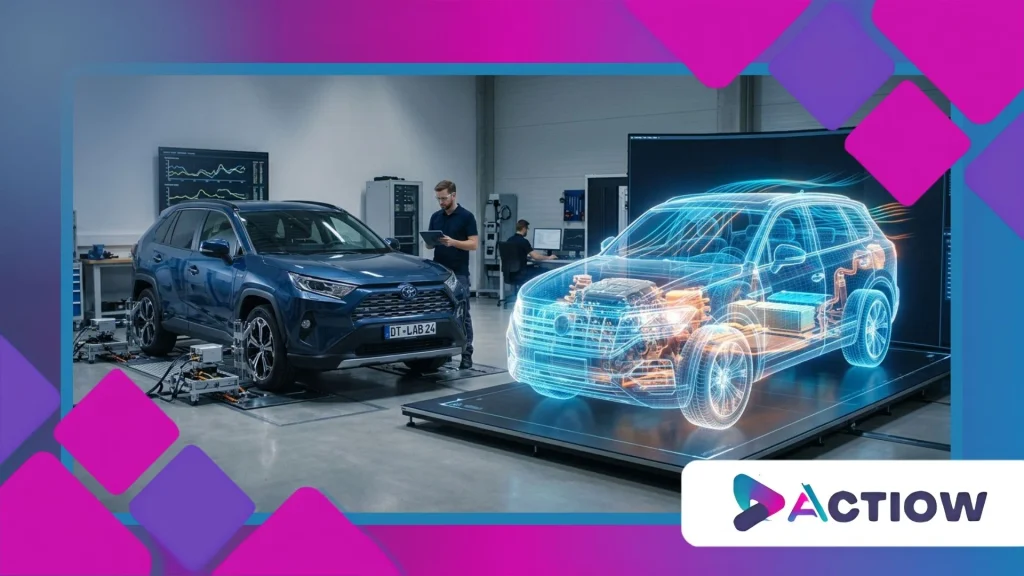
What is a digital twin architecture in modern automotive manufacturing?
A Digital Twins framework functions as a synchronized virtual counterpart of a physical vehicle system, capturing live sensor telemetry and telemetry data continuously.
Engineers utilize advanced IoT sensors embedded within prototype chassis to stream continuous telemetry directly into high-fidelity cloud simulation environments.
This uninterrupted data loop allows development teams to analyze component wear under extreme thermal and mechanical stresses without risking expensive physical prototypes.
Consequently, multidisciplinary design teams can pinpoint structural vulnerabilities during early CAD phases, avoiding costly tooling changes down the assembly line.
How do virtual simulation models predict vehicle performance accurately?
Modern simulation platforms merge finite element analysis with real-time machine learning algorithms to forecast physical fatigue and aerodynamic drag coefficients with remarkable precision.
According to recent automotive industry benchmarks published by Siemens Digital Industries Software, virtual validation workflows reduce physical prototype requirements by up to forty percent globally.
Analysts at McKinsey & Company emphasize that software-driven vehicle validation will dominate engineering budgets through the decade.
Therefore, investing in robust virtual mirroring infrastructure remains critical for legacy automakers and electric vehicle startups striving for market leadership.
++ The Best Apps to Learn How to Drive
Why is real-time telemetry integration essential for modern engineering teams?
Real-time data synchronization bridges the critical gap between theoretical computer-aided engineering models and unpredictable real-world driving conditions encountered on public test tracks.
When test drivers push vehicles through harsh weather scenarios, live telemetry updates the virtual model instantly to mirror thermal expansion and battery degradation.
This continuous feedback loop ensures that software calibration updates match physical hardware limitations seamlessly before mass production begins.
Ultimately, this integration minimizes post-launch software recalls and enhances overall vehicle reliability for consumers worldwide.
How Do Virtual Replicas Accelerate Real-Time Vehicle Development Cycles?
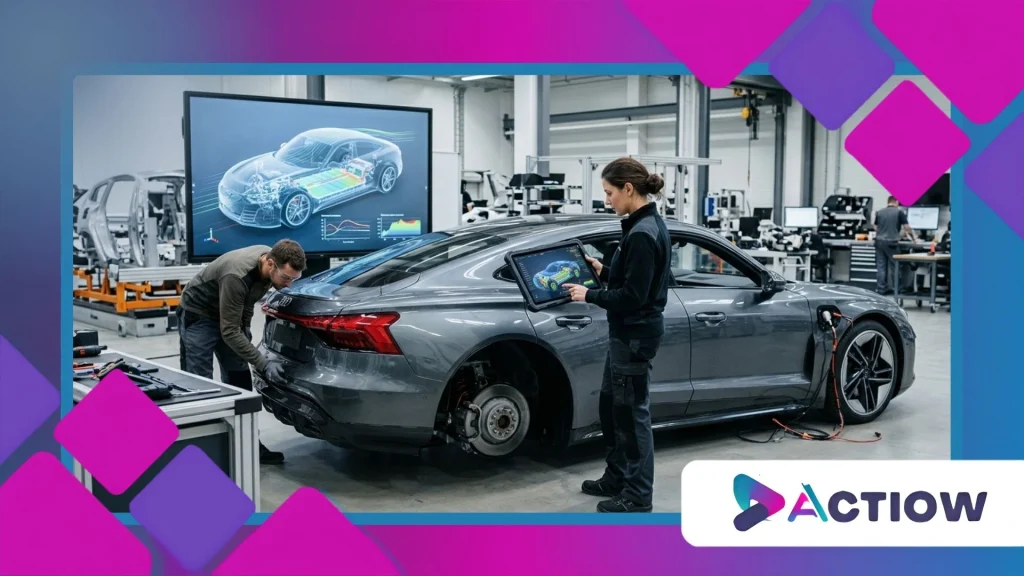
How does virtual testing reduce physical prototype construction costs?
Building physical crash-test vehicles requires months of manual fabrication, specialized tooling, and expensive raw materials that ultimately get destroyed during compliance assessments.
By replacing dozens of physical prototypes with high-fidelity software iterations, manufacturers save millions of dollars per vehicle platform while shrinking overall time-to-market.
Industry case studies from major European automotive brands demonstrate that virtual validation cuts pre-production testing phases by nearly twelve months.
Thus, financial capital is redirected toward software innovation and user experience enhancements rather than repetitive crash destruction.
Also read: How Solid-State Batteries Could Change Electric Cars in 2026
What role do cloud platforms play in collaborative vehicle design?
Cloud-based simulation infrastructure enables global engineering teams across different time zones to collaborate simultaneously on shared vehicle architecture models without latency bottlenecks.
Mechanical designers in Detroit, software developers in Munich, and aerodynamics experts in Tokyo can inspect stress simulations on the exact same digital asset.
This seamless collaboration eliminates traditional siloed communication barriers that historically slowed down complex multinational automotive manufacturing projects.
As a result, design iterations that once took weeks now happen within a matter of single afternoons.
Read more: How digital rearview mirrors Improve Visibility in Traffic
How do engineers optimize electric powertrain efficiency using simulation?
Electric vehicle powertrains demand meticulous thermal management to prevent battery degradation and maximize driving range under aggressive acceleration profiles and variable ambient temperatures.
Simulation frameworks model electrical resistance, inverter switching frequencies, and coolant flow rates dynamically to identify optimal operating thresholds before hardware assembly.
By testing thousands of virtual battery discharge cycles, engineers maximize energy density and thermal stability effortlessly.
This digital optimization directly translates into superior real-world electric vehicle performance and extended battery lifespan for everyday drivers.
Why Are Major Automakers Rapidly Adopting Simulation Technologies Today?
What competitive advantages do early adopters gain in the market?
Automotive brands that fully integrate advanced simulation frameworks into their core workflows achieve significantly faster release cycles and superior product quality compared to traditional competitors.
Consumer expectations for frequent over-the-air software updates and advanced driver assistance systems require an agile engineering approach that legacy physical testing cannot support alone.
By leveraging virtual validation ecosystems, brands can test hundreds of software patches daily across diverse virtual driving environments.
This agility ensures compliance with evolving international safety regulations while delighting tech-savvy car buyers.
How do predictive maintenance models enhance post-purchase vehicle support?
Beyond factory assembly lines, virtual replicas follow individual vehicles throughout their operational lifespans by analyzing driving habits and component telemetry gathered via cloud connections.
When abnormal mechanical wear or battery cell degradation is detected in the digital counterpart, automated diagnostic alerts prompt preemptive maintenance appointments at local service centers.
This proactive service model reduces catastrophic roadside failures and significantly boosts customer satisfaction scores across luxury and economy segments alike. Preventive software diagnostics represent the future of reliable automotive ownership.
What future trends will shape the evolution of vehicle simulation?
Artificial intelligence and generative design algorithms are poised to merge with simulation software, enabling automated optimization of chassis geometry based on specific performance criteria provided by engineers.
As autonomous driving algorithms grow increasingly complex, virtual testing grounds will host millions of simulated corner cases that would be dangerously impossible to replicate physically.
Industry pioneers predict that fully autonomous vehicle validation will rely almost entirely on hyper-realistic digital simulation environments by the end of this decade.
Embracing these advanced engineering tools is no longer optional for modern automotive manufacturers.
| Feature / Metric | Traditional Physical Testing | Modern Digital Simulation |
| Prototype Cost | High expense due to physical material fabrication and destruction. | Cost-effective software iterations running on cloud infrastructure. |
| Development Speed | Slow feedback loops requiring weeks of physical teardown analysis. | Instantaneous telemetry feedback and real-time stress visualization. |
| Test Scenario Scope | Limited by weather conditions, track availability, and physical safety risks. | Infinite virtual scenarios including extreme weather and complex edge cases. |
| Collaboration Efficiency | Siloed local teams with cumbersome physical document and model sharing. | Global multidisciplinary cloud access for simultaneous real-time engineering. |
Shaping the Future of Mobility
The rapid integration of virtual prototyping and cloud-based engineering tools marks a permanent milestone in automotive history.
Digital Twins empower manufacturers to build safer, more efficient vehicles while drastically reducing environmental impact and production overhead.
As artificial intelligence and edge computing continue to evolve, the boundary between physical machinery and software intelligence will blur even further.
What are your thoughts on how virtual simulation will transform the cars we drive tomorrow? Please share your insights in the comments below.
Frequently Asked Questions
What defines a digital twin in the automotive industry?
A digital twin represents a dynamic virtual replica of a physical vehicle or component, powered by real-time sensor data and cloud simulation frameworks.
How do virtual models reduce overall vehicle manufacturing costs?
They eliminate the need for expensive physical prototypes and destructive crash tests by enabling comprehensive virtual validation during early design phases.
Can simulation technology improve electric vehicle battery performance?
Yes, engineers use virtual testing to model thermal dynamics and electrical loads across thousands of discharge cycles to maximize battery lifespan.
Why are global engineering teams adopting cloud-based simulation tools?
Cloud platforms allow multidisciplinary teams across different continents to collaborate simultaneously on shared vehicle architecture models without latency delays.
What role does real-time telemetry play in vehicle development?
Real-time telemetry feeds actual track performance data back into the virtual model, ensuring high simulation accuracy and reliable software calibration.
